
Call center business continuity means having processes, teams, and cloud-based technology in place so all customer channels stay live and responsive, even during outages. Omnichannel coverage and AI automation help you safeguard CX when disruptions strike.
A single hour of downtime in your call center can unwind months of CX investment, tank trust, and drive customers elsewhere. I have seen this risk many times—leadership learns once a critical channel goes dark, it is already too late.
Modern customer journeys span voice, chat, SMS, email, and apps. This complexity is a blessing and a challenge. Supporting every touchpoint requires new thinking and better technology to keep service running—even amid disruptions most teams never saw coming.
This guide will give you practical strategies for building resilient, omnichannel continuity in your contact center. I will cover real scenarios, what to prioritize, where others fall short, and how to use modern tools the right way.
Why Business Continuity is Essential for Call Centers
Business continuity for call centers is about maintaining uninterrupted customer service—across every channel—if disaster strikes. This goes far beyond just having backup phones or a recovery plan.
In my experience, the modern risk landscape is unforgiving. Natural disasters, cyberattacks, or even local network issues can shut down contact operations with little warning. Meanwhile, customers expect instant answers—by phone, chat, email, or app—no matter what. A single channel failure can erode brand trust and drive high-value customers to competitors. That’s why true business continuity is not just good practice—it’s non-negotiable for CX leaders who want to protect revenue, reputation, and long-term loyalty.
Business Continuity in Call Centers: Key Elements and Frameworks
Continuity planning is only as strong as its weakest link. For call centers, this requires a stepwise approach—starting with risk mapping and ending with channel continuity and human factors, not just IT fixes.
Risk Assessment and Business Impact Analysis
A sound plan begins with honest risk assessment and business impact analysis. I have seen too many teams skip this and end up blindsided by something as mundane as a construction outage.
Identify threats such as:
- Human errors and absenteeism
- Technology breakdowns or cyber attacks
- Environmental issues—power outages, storms
- Compliance breakdowns
Define the business impact, both operational and to customer trust. Prioritize channels and operations most critical for customer experience.
Critical Staff and Remote Work Enablement
Critical staff continuity hinges on more than backup lists. You need remote work protocols, cross-training for key roles, and clear access plans.
During the pandemic, I saw well-prepared centers pivot to remote agent pools within hours, while others scrambled for weeks. The difference? Proactive remote work enablement, tested ahead of time.
Omnichannel Communication Continuity
Modern continuity means keeping every customer channel operational—voice, chat, SMS, email, WhatsApp, and more. Risks multiply with every disconnected system.
A unified communication platform links these channels, reducing the chance that a local failure will take down your whole operation. In my POV, this is where old-school, voice-only plans collapse—and where omnichannel resilience becomes the single most important factor for CX survival.
Technology and Data Redundancy
Every plan needs multiple fail-safes:
- Cloud-native platforms with no single point of failure
- Backup sites (hot, warm, cold) and mobile options
- Data backup, regular integrity checks, and rapid-channel rerouting
- Automated failover for both inbound and outbound contact flows
If you can’t reroute or recover a channel in minutes, the risk is too high.
Vendor, Outsourcer, and Compliance Integration
Often, your suppliers are your weakest (or strongest) link.
Key items:
- Reciprocal site and overflow agreements with outsourcers
- Solid contracts covering operational, regulatory, and data requirements
- Pre-defined escalation partners for crisis activation
Communication, Escalation, and Notification Protocols
When things go wrong, delays in internal and external communication make everything harder.
Develop:
- Clear internal escalation trees and roles
- Customer notification templates for every channel
- Stakeholder alerts tailored to each disruption
Test these flows—don’t just document them.
Step-by-Step: Developing an Effective Call Center Business Continuity Plan
A strong BCP covers risk, technology, workflows, and people. Here is a structure that works in real life.
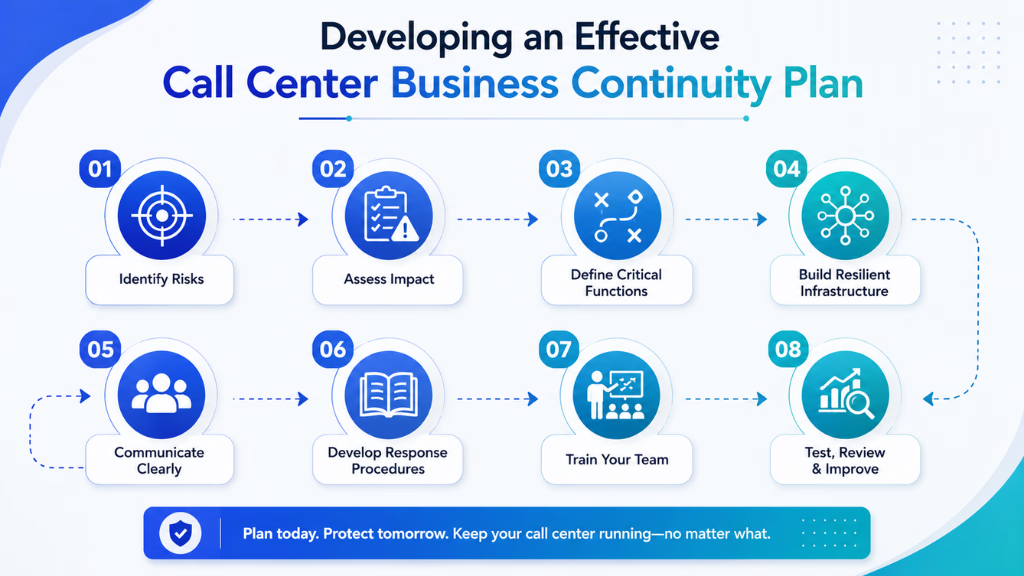
Risk Identification and Scenario Planning
You start by mapping every threat—natural, technical, human, or cyber. Identify high-impact disruption scenarios.
Scenario planning is underused—I have seen teams over-index on rare disasters (“what if the building floods?”) and miss more likely threats like regional ISP failures or a spike in sick leave.
Prioritizing Critical Customer Services and Operations
Not all channels and processes matter equally. Define which services must never stop: sales, emergency support, sensitive customer cases.
I recommend mapping each journey touchpoint and flagging those with the highest revenue, compliance, or loyalty impact.
Selecting and Configuring Continuity Solutions
Here is where modern tech transforms resilience. You must select solutions for:
- Remote agent enablement (VPN, cloud desktops, mobile tools)
- Channel rerouting (voice, chat, SMS, WhatsApp to alternative routes)
- Cloud platforms and backup sites for rapid failover
This is where AI agents and workflow automation become crucial. For example, an AI-powered workflow might reroute chats from an unavailable channel, update customers via SMS, and flag issues for human follow-up—reducing manual workload and customer confusion during a crisis.
Training, Documentation, and Drill Testing
Good plans fail without practice.
Train every agent and supervisor—not just on tasks, but on how escalation and cross-channel coverage work. Keep documentation simple and actionable.
Drill-test the plan regularly. Tabletop exercises and live-fire tests expose gaps and build team confidence.
Continuous Monitoring and Improvement
Every incident is a learning opportunity.
Use analytics to track recovery times, escalation rates, and customer impact. After-action reviews should feed directly into BCP updates, not sit in a report archive.
In my experience, skipping this loop is the biggest missed opportunity for true resilience.
Common Gaps and Pitfalls in Call Center Business Continuity
I have seen many teams struggle—not for lack of effort, but from misplaced priorities or outmoded tools. The real issue is not updating plans to fit true omnichannel risk.
Common mistakes include:
- Over-reliance on voice, neglecting chat, SMS, or social channels
- Outdated BCPs that don’t address remote work or recent compliance needs
- Poor communication protocols in live crises
- Too little use of automation and analytics to speed recovery
- Failing to analyze incidents for future improvement
Modern Solutions: How Unified, AI-Native Platforms Strengthen BCP
A unified, cloud-based, AI-native platform is now the foundation for real omnichannel resilience. This shifts you from patching single channels to sustaining customer trust whatever happens.
Modern solutions like Commplify help solve core problems I see in real operations:
- Unified inbox connects voice, chat, SMS, email, WhatsApp, so you never lose sight of the customer journey—even if a channel falters.
- AI agents monitor volume, triage questions, and automate first responses when staff are stretched thin or remote.
- Automated workflows reroute conversations or trigger real-time customer alerts based on live channel status.
- Built-in analytics and reporting surfaces not just what went wrong, but how to improve future continuity.
This model keeps both humans and AI adaptive—ensuring you maintain CX and regain control quickly when facing disruptions.
Conclusion
Business continuity in call centers is not about ticking boxes—it’s building the backbone for uninterrupted customer experience, regardless of crisis. Proactive planning, omnichannel coverage, and modern technology are no longer optional.
In my experience, organizations that rely only on old plans or voice-only setups face the sharpest losses. Teams who adopt unified, AI-native solutions like omnichannel communication platforms gain the agility and insight to serve customers flexibly, even when challenges arise.
Resilience is a living, evolving practice. Continuously test, train, and update your BCP. Use every incident or drill to improve. As new channels and risks emerge, modern CX demands a commitment to staying one step ahead.
AI-driven continuity—not just recovery—will define the next generation of trusted customer experience.
Call Center Business Continuity FAQs
What is a business continuity plan (BCP) for a call center?
A BCP outlines how a call center will maintain customer service across all channels during disruptions such as outages, disasters, or high absence.
How is business continuity different from disaster recovery in a call center?
Business continuity keeps operations running during a crisis. Disaster recovery focuses on restoring systems after an event.
What are the key risks to call center operations?
Risks include natural disasters, network failures, cyberattacks, staff shortages, and vendor issues.
What should a call center business continuity plan include?
A BCP should cover risk assessment, channel coverage, remote work, data backup, vendors, communication protocols, and training.
How can cloud technology improve call center continuity?
Cloud platforms enable rapid rerouting, remote work, multi-channel coverage, and faster recovery from outages.
What role do vendors and outsourcers play in continuity preparedness?
They provide backup capacity, overflow handling, technology support, and reciprocal site agreements during disruptions.
How often should a call center test its business continuity plan?
Test BCPs at least annually, or after any major incident, to ensure effectiveness and uncover gaps.
How do you communicate with customers during a crisis or service disruption?
Use pre-drafted templates on all channels—voice, SMS, email, chat—and update customers regularly with situation status.
What’s the best way to keep multiple support channels available in an emergency?
Adopt a unified platform that can reroute, automate, or recover all channels quickly, and ensure both AI and human coverage.
This page was last edited on 29 July 2026, at 5:07 am