The best AI voice agents for outbound calls help businesses automate customer conversations, qualify leads, schedule appointments, and manage follow-ups. Leading platforms like Commplify, Vapi, and Synthflow AI offer different solutions based on business needs.
Your sales team may generate hundreds of leads. Now the question is, how many get a real conversation before losing interest? At the same time, your customer support team has follow-ups waiting, while call volumes keep growing.
Customers expect fast and personalized communication. On the other hand, traditional outbound calling is hard to scale.
AI voice agents solve this by automating conversations at scale. Based on our measurable data, AI-powered workflows can help businesses achieve up to 60% cost reduction and 2× faster resolution. It helps to improve automation across voice, chat, email, and other workflows.
Still, the right AI voice agent should do more than make calls. It should support natural conversations, CRM integrations, human handoff, compliance, and omnichannel communication.
In this guide, we compare the 10 best AI voice agents for outbound calls. Also, you can explore their features, use cases, and key strengths.
What Are AI Voice Agents for Outbound Calls?
AI voice agents for outbound calls are AI-powered software agents that automatically initiate phone conversations with prospects or customers, understand spoken language, provide real-time responses, and complete tasks such as lead qualification, appointment booking, follow-ups, and customer engagement.
Unlike traditional auto-dialers that rely on pre-recorded scripts, AI voice agents use Conversational AI, Natural Language Processing (NLP), Large Language Models (LLMs), Automatic Speech Recognition (ASR), Speech-to-Text (STT), and Text-to-Speech (TTS) to create natural, two-way voice conversations.
They connect with CRM platforms, telephony infrastructure, calendars, and business workflows to personalize interactions, update customer data, and trigger automated actions. For example, an AI voice agent can call a new lead, understand their requirements, qualify their interest, schedule a meeting, or transfer the conversation to a human agent when needed.
Why AI Voice Agents Are Moving Beyond Traditional Calling
“A B2B SaaS company using Commplify deployed AI voice agents to follow up with trial users within five minutes of signup. Before automation, the sales team manually contacted leads several hours later due to limited SDR capacity. After implementation, the company increased CSAT from 78% to 86% and allowed SDRs to focus on qualified conversations instead of repetitive outreach.”
10 Best AI Voice Agents for Outbound Calls in 2026
The best AI voice agent depends on your business goal, technical requirements, and communication workflow.
Some platforms focus on developer flexibility, while others are designed for sales automation, enterprise contact centers, or no-code deployment. When evaluating AI voice agents for outbound calls, businesses should consider factors such as conversation quality, real-time latency, CRM integration, scalability, compliance, and the ability to connect voice interactions with broader customer journeys.
Below are some of the leading AI voice platforms businesses should consider in 2026.
1. Commplify: Best Omnichannel AI Voice Agent Platform
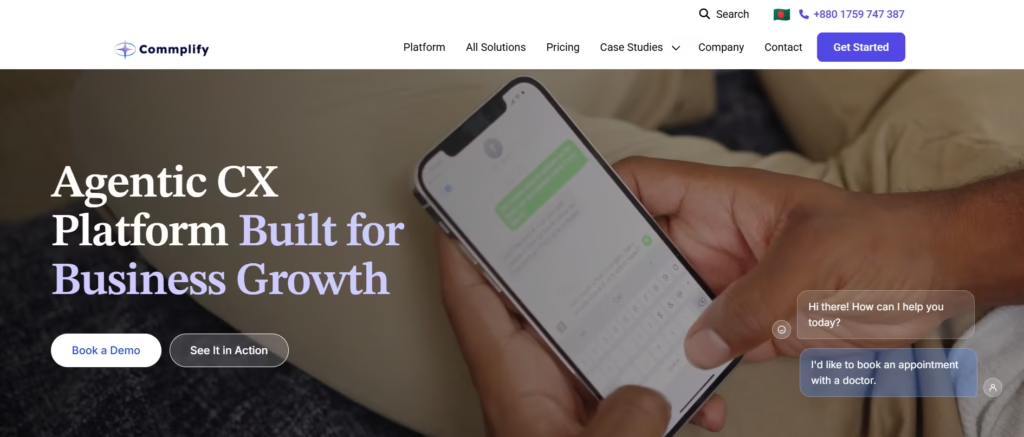
Commplify is an omnichannel AI platform designed to help businesses automate outbound calling while connecting voice conversations with broader customer engagement workflows.
Unlike traditional AI phone systems that focus only on calls, Commplify combines AI voice agents, conversational AI, chat, email, and workflow automation to create connected customer experiences.
The platform helps businesses automate outbound communication while maintaining customer context across different channels. This is especially valuable for sales teams, customer experience teams, and enterprises that need more than standalone calling automation.
Commplify uses AI-powered conversations to help businesses qualify leads, schedule meetings, manage follow-ups, and route complex conversations to human agents when necessary.
Key Features
- AI voice agents for outbound prospecting and customer engagement
- Conversational AI with multi-turn conversations and contextual understanding
- CRM integration with platforms like Salesforce, HubSpot, Pipedrive, and Zoho
- Lead qualification and automated lead scoring
- Speed-to-lead automation for immediate customer outreach
- Appointment setting and demo booking with calendar integrations
- Conversation intelligence and sentiment analysis
- Automatic CRM logging and call disposition
- Warm transfer and human-in-the-loop workflows
- Omnichannel AI platform capabilities across voice, chat, and messaging
- Workflow automation through APIs and integrations
Best For
- Sales and SDR teams
- Customer support and CX teams
- Contact centers
- Enterprise organizations
- AI automation agencies
Pricing
Commplify offers flexible usage-based pricing designed for different AI communication needs. Businesses can start with AI voice calls from $0.10/minute (outbound US calls from $0.14/minute) or choose resolution-based pricing starting at $0.30 per resolved case. Chat automation starts from $0.05 per conversation, while enterprise plans provide custom solutions for high-volume, regulated, and complex customer experience operations.
Why Choose Commplify?
Businesses looking for more than a standalone AI calling tool can choose Commplify because it combines AI voice agents with omnichannel communication, CRM workflows, and customer context preservation. This makes it suitable for organizations that want AI-powered conversations across voice, chat, and messaging.
2. Vapi: Best Developer-Focused Voice AI Platform
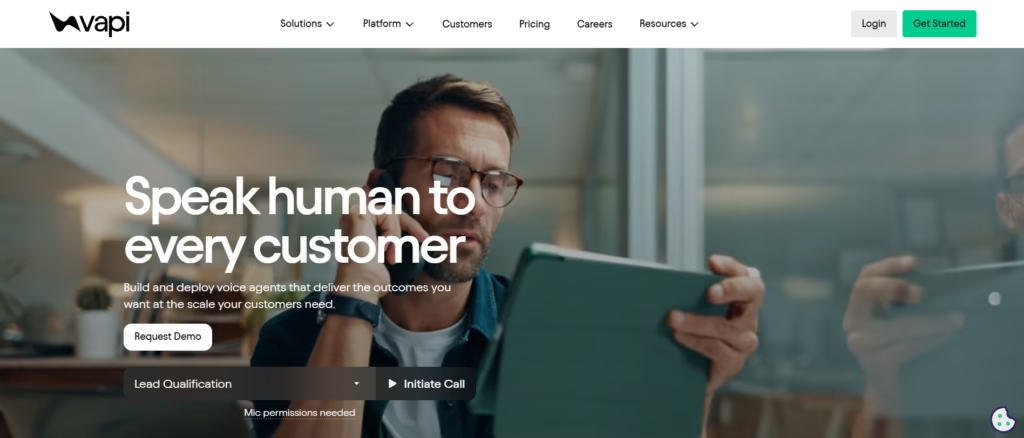
Vapi is a developer-focused voice AI platform that allows businesses to build customized AI voice agents through APIs and developer tools.
Unlike all-in-one business communication platforms, Vapi focuses on giving developers flexibility over the voice AI technology stack. Teams can connect their preferred Large Language Models (LLMs), Speech-to-Text (STT) providers, Text-to-Speech (TTS) engines, and telephony infrastructure to create customized voice applications.
Vapi is commonly used by startups, developers, and AI automation agencies that want to build specialized AI calling solutions rather than use a fixed out-of-the-box system.
The platform supports real-time conversations by combining speech recognition, AI reasoning, and voice generation technologies to create interactive voice experiences.
Key Features
- Custom AI voice agent development through APIs
- Support for different LLM providers and AI models
- Real-time conversational AI capabilities
- Speech-to-Text and Text-to-Speech integrations
- Low-latency voice processing
- Telephony integrations using SIP and voice providers
- Webhooks and REST API support
- Custom conversation workflows
- Voice assistant customization
Best For
- AI developers
- Software companies
- AI automation agencies
- Startups building voice applications
Pricing
api uses a usage-based pricing model, starting at $0.05 per minute for calls. Additional costs for voice providers, LLM usage, Speech-to-Text (STT), Text-to-Speech (TTS), and telephony services are charged separately based on usage. Businesses can also choose enterprise plans with custom pricing for higher call volumes, advanced support, and additional requirements.
Considerations
Vapi provides strong technical flexibility, but businesses without development resources may require additional technical support. Companies looking for complete customer engagement workflows, built-in sales automation, or omnichannel communication may need additional solutions.
3. Thoughtly: Best No-Code AI Phone Agent Platform
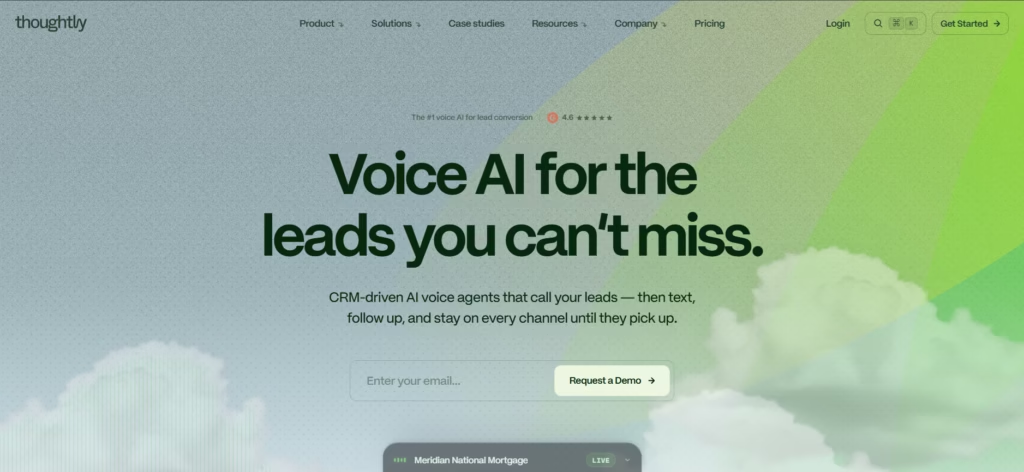
Thoughtly is a no-code AI phone agent platform that helps businesses create and deploy automated voice agents without requiring extensive programming knowledge.
The platform focuses on making AI calling accessible for businesses that want to automate customer conversations quickly. Users can create AI phone agents for sales outreach, customer support, appointment scheduling, and follow-up campaigns through configurable workflows.
Thoughtly is designed around simplicity, allowing non-technical teams to create AI-powered calling experiences without building complex voice infrastructure.
Businesses can use the platform to automate repetitive conversations while allowing employees to focus on higher-value interactions.
Key Features
- No-code AI voice agent creation
- Automated outbound calling campaigns
- AI-powered customer conversations
- Lead qualification workflows
- Appointment scheduling automation
- Customer follow-up campaigns
- Call routing and escalation
- Conversation analytics
- Voice workflow customization
Best For
- Small and medium-sized businesses
- Service-based businesses
- Teams without technical resources
- Companies looking for fast AI calling deployment
Pricing
Thoughtly offers flexible pricing plans based on business needs, starting with the Flex plan at $500/month. The platform includes AI voice agents, SMS, email, workflows, CRM integrations, and automation features. Higher-volume businesses can choose Scale and Enterprise plans with custom pricing for advanced requirements such as higher concurrent calls, compliance support, dedicated infrastructure, and custom integrations.
Considerations
Thoughtly is focused mainly on AI phone automation. Businesses requiring broader omnichannel communication, advanced CRM workflows, or enterprise-level customization may need additional capabilities.
4. Bland AI: Best for Programmable AI Calling Workflows
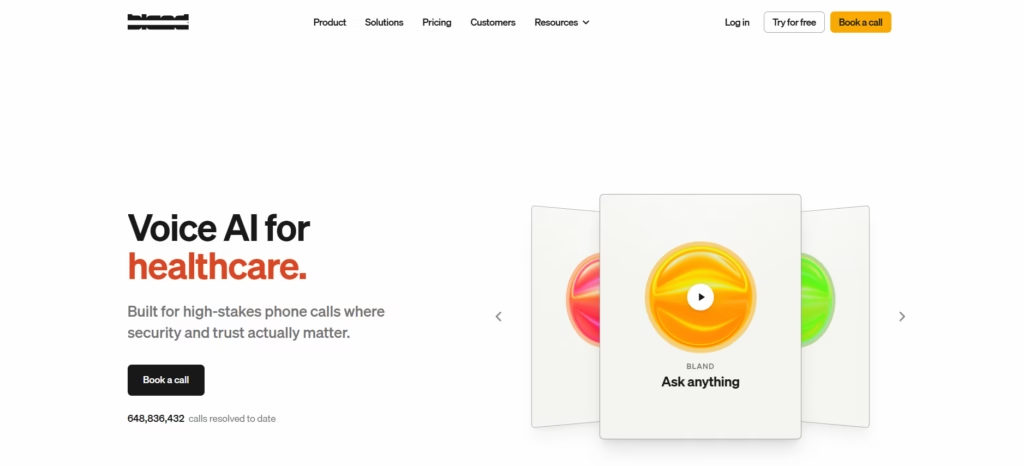
Bland AI is a programmable AI calling platform designed for businesses and developers that want to create customized phone-based AI applications.
The platform provides infrastructure for building AI voice agents that can make and receive calls while following custom business logic. It is commonly used for outbound campaigns, customer verification, surveys, and automated business workflows.
Bland AI focuses heavily on developer control, allowing teams to customize call behavior, connect external systems, and create tailored voice experiences.
It combines AI models with telephony infrastructure to automate conversations at scale.
Key Features
- Programmable AI voice agents
- Automated outbound calling
- Custom call workflows
- API-based integrations
- Telephony infrastructure support
- Voice automation at scale
- Call monitoring and analytics
- Custom conversation logic
Best For
- Developers
- Startups
- Businesses building custom AI calling solutions
Pricing
Bland AI uses a usage-based pricing model with plans starting at $0.14/minute for the Start plan. Higher-volume teams can choose paid plans with lower rates, including $0.12/minute (Build plan with $299/month) and $0.11/minute (Scale plan with $499/month). Enterprise customers can get custom pricing based on their calling volume, infrastructure, and requirements.
Considerations
Bland AI is powerful for customized workflows but may require technical expertise compared with business-focused AI voice platforms.
5. Retell AI: Best for Real-Time Conversational Voice Agents
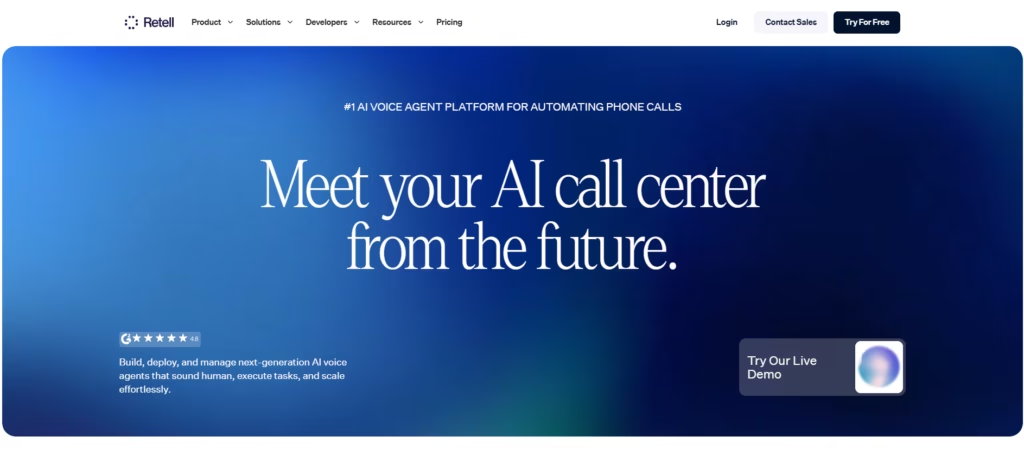
Retell AI is a voice AI platform focused on creating realistic, low-latency AI voice conversations for businesses.
The platform emphasizes natural interactions by combining speech recognition, AI reasoning, and voice generation technologies. It is designed for companies that want AI agents capable of handling dynamic conversations rather than simple scripted interactions.
Retell AI supports real-time voice experiences where customers can interrupt, ask follow-up questions, and have more human-like conversations.
The platform is often used for customer service automation, sales conversations, and AI-powered phone applications.
Key Features
- Real-time AI voice agents
- Low-latency conversational experiences
- Speech recognition and voice synthesis
- Multi-turn conversation handling
- Interruption handling
- Custom AI workflows
- Call analytics and monitoring
- Voice agent customization
Best For
- Companies building voice AI applications
- Customer experience teams
- Developers requiring realistic voice conversations
Pricing
Retell AI uses a pay-as-you-go pricing model, starting from $0.07–$0.31 per minute for AI voice agents. Businesses only pay for the usage they consume, with no platform fees or seat-based charges. Enterprise customers can access custom pricing with additional scalability, security, and support options.
Considerations
Retell AI is ideal for businesses prioritizing realistic voice conversations and low-latency AI interactions. However, companies looking for broader omnichannel engagement, advanced CRM workflows, and complete customer journey automation may need additional solutions.
6. Synthflow AI: Best No-Code Sales Voice Automation
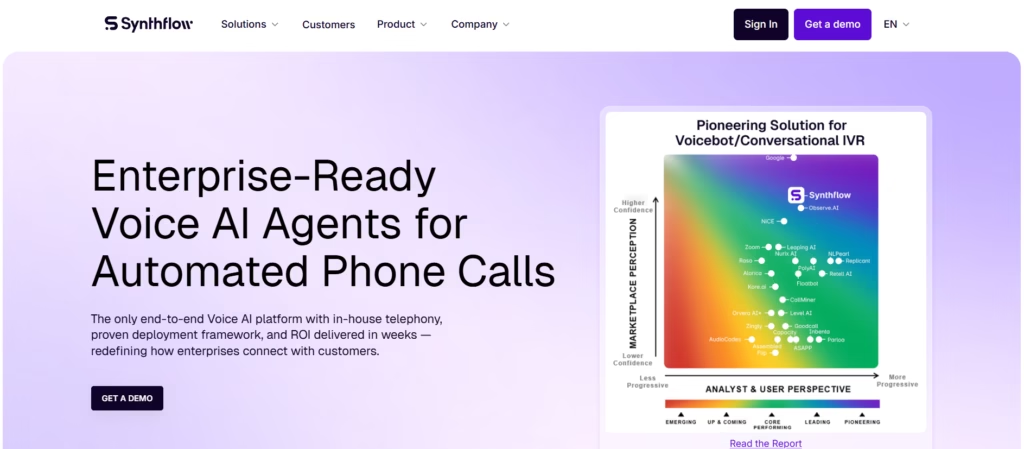
Synthflow AI is a no-code conversational AI platform that helps businesses build and deploy AI voice agents for sales, customer support, and business automation workflows.
The platform is designed for teams that want to create AI calling experiences without depending heavily on developers. Through a visual workflow builder, businesses can define conversation paths, connect integrations, and automate phone-based processes.
Synthflow AI focuses strongly on business users who need practical voice automation for tasks such as lead qualification, appointment booking, customer follow-ups, and inbound call handling.
The platform combines Conversational AI, Large Language Models (LLMs), Speech-to-Text (STT), and Text-to-Speech (TTS) technologies to enable more natural customer interactions.
Key Features
- No-code AI voice agent builder
- Automated outbound calling campaigns
- Sales outreach and lead qualification
- Appointment setting and calendar synchronization
- CRM integration capabilities
- Workflow-based conversation design
- Call routing and escalation
- AI-powered customer support automation
- Multilingual voice support
- Analytics for monitoring AI conversations
Best For
- Small and medium businesses
- Sales teams
- Marketing agencies
- Appointment-based businesses
- Teams without dedicated developers
Pricing
Synthflow AI offers usage-based pricing with enterprise contracts starting at $30,000 annually. Final pricing depends on call volume, concurrency, telephony setup, integrations, security requirements, and launch support.
Considerations
Synthflow AI is a strong option for businesses that prioritize quick deployment. However, organizations requiring highly customized AI infrastructure, complex enterprise workflows, or deep developer-level control may need more flexible platforms.
7. CloudTalk: Best AI-Powered Sales Calling and Contact Center Platform
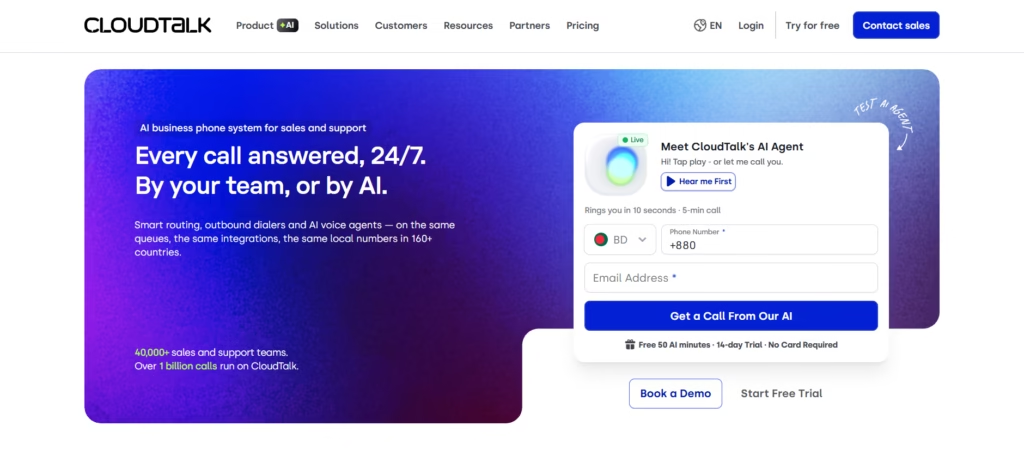
CloudTalk is an AI-powered cloud calling platform designed for sales teams and customer service organizations that want to improve outbound communication, call productivity, and customer engagement.
Unlike fully autonomous AI voice agent platforms, CloudTalk focuses on helping human teams make smarter and more efficient calls through advanced telephony, automation, analytics, and AI-powered features.
The platform helps businesses manage outbound campaigns, improve sales workflows, and maintain better customer conversations through features such as intelligent dialing, call analytics, and CRM-connected workflows.
Key Features
- AI-powered call automation and sales workflows
- Smart outbound calling capabilities
- Power Dialer and automated dialing tools
- CRM integration with platforms like Salesforce, HubSpot, and Pipedrive
- Call recording and conversation analytics
- Real-time customer insights
- Call routing and workflow automation
- International calling and local number support
- Integration with business tools and communication platforms
Best For
- Sales teams
- SDR organizations
- Customer support teams
- Growing businesses
- Contact centers
Pricing
Starts at $25/user/month (annual billing), with advanced AI calling features and enterprise plans available based on requirements.
Considerations
CloudTalk is a strong choice for businesses that need reliable cloud telephony and AI-powered sales calling workflows. However, companies looking for fully autonomous AI voice agents that independently handle complex conversations may require a dedicated conversational AI platform.
8. ElevenLabs Conversational AI: Best for Voice Quality
ElevenLabs is known for advanced voice synthesis technology and highly realistic AI-generated speech.
While many AI voice platforms focus mainly on workflow automation, ElevenLabs has built strong expertise around Generative Voice AI, synthetic speech, and realistic voice experiences.
Its conversational AI capabilities combine advanced voice generation with AI models to create more natural and expressive voice interactions.
The platform is especially valuable for businesses where voice quality, brand personality, and realistic speech are critical parts of the customer experience.
Key Features
- Advanced Text-to-Speech (TTS)
- Realistic voice synthesis
- Generative Voice AI
- Custom voice personas
- Voice cloning capabilities
- Multilingual voice generation
- Expressive synthetic speech
- Conversational AI capabilities
Best For
- Companies prioritizing voice quality
- Voice-first applications
- Developers building conversational experiences
- Brands requiring custom voice identity
Pricing
ElevenLabs offers flexible pricing plans based on usage, including AI voice generation, conversational AI, and voice synthesis needs. Plans start with a free tier, while paid plans begin at around $5/month and scale based on higher character limits, advanced voice features, API usage, and enterprise requirements.
Considerations
ElevenLabs is particularly strong in voice technology, but businesses looking for complete outbound sales workflows, CRM automation, and contact center capabilities may need additional platforms or integrations.
9. PolyAI: Best Enterprise Conversational AI
PolyAI provides enterprise-grade conversational AI solutions designed for organizations that manage large volumes of customer interactions.
The platform focuses on automating complex voice conversations for industries such as banking, healthcare, travel, and customer service.
Unlike simple voice bots that rely on rigid decision trees, PolyAI uses advanced conversational AI models to understand customer intent and handle complex requests through natural dialogue.
It is commonly used by large enterprises and contact centers looking to improve customer experience while reducing pressure on human agents.
Key Features
- Enterprise conversational AI
- Advanced voice assistants
- Contact center automation
- Complex query handling
- Natural language understanding
- Customer service automation
- Enterprise scalability
- Integration with CCaaS platforms
Best For
- Large enterprises
- Global contact centers
- Regulated industries
- Organizations requiring enterprise-grade AI automation
Pricing
Custom enterprise pricing based on usage and requirements. PolyAI charges per minute of voice agent usage, with costs varying by call volume, integrations, and deployment scope.
Considerations
PolyAI is designed primarily for enterprise customer service environments. Businesses focused mainly on outbound sales automation or SDR workflows may require more specialized sales-focused solutions.
10. Orum: Best AI Sales Dialing Platform
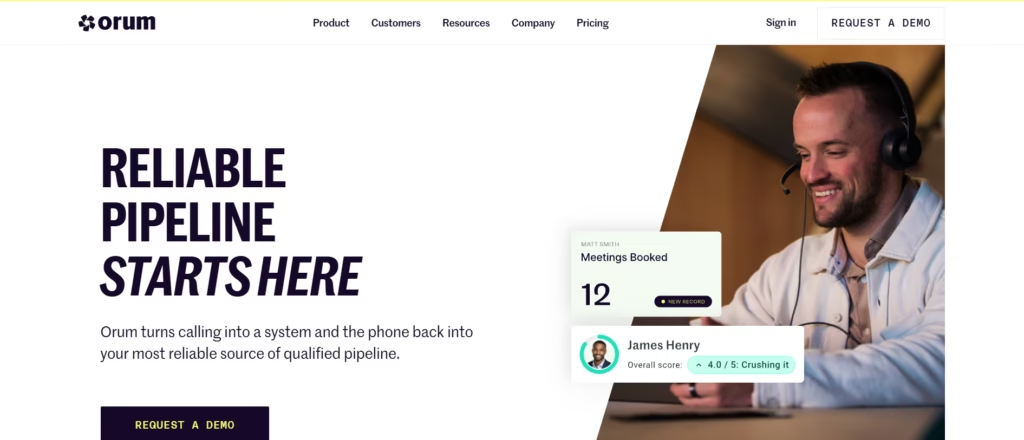
Orum is an AI-powered sales engagement platform designed to help SDR teams increase outbound prospecting efficiency.
Unlike conversational AI platforms that focus primarily on autonomous voice agents, Orum specializes in improving sales calling productivity through advanced dialing technology.
The platform helps sales representatives connect with more prospects by automating parts of the dialing process and reducing time spent waiting between calls.
It is commonly used by B2B sales teams that rely heavily on outbound prospecting.
Key Features
- AI-powered sales dialing
- Parallel dialing technology
- SDR productivity automation
- Prospecting workflow optimization
- Call engagement tools
- Sales activity tracking
- Sales pipeline support
Best For
- B2B sales teams
- SDR organizations
- Sales development departments
- Revenue teams
Pricing
Custom pricing with a 9-seat minimum. Includes AI-powered dialing, unlimited calls, parallel dialing, analytics, and sales productivity features.
Considerations
Orum focuses more on sales acceleration and dialing efficiency rather than fully autonomous AI voice conversations. Businesses looking for complete AI-led customer conversations may need dedicated AI voice agent platforms.
Best AI Voice Agents for Outbound Calls Comparison
The best AI voice agent for outbound calls depends on what your business needs most. However, businesses looking for a complete customer engagement solution should consider platforms that go beyond phone automation.
To make the comparison easier, here is a quick overview of the best AI voice agents for outbound calls and their key strengths.
| Platform | Best For | Main Strength |
|---|---|---|
| Commplify | Omnichannel business automation | Voice + chat + email + CRM workflows |
| Vapi | Developers | Custom voice AI development |
| Thoughtly | No-code businesses | Fast AI phone agent deployment |
| Bland AI | Developers & startups | Programmable AI calling |
| Retell AI | Voice AI builders | Real-time conversations |
| Synthflow AI | SMB automation | No-code workflows |
| CloudTalk | Contact centers | AI-powered cloud calling, and smart dialing |
| ElevenLabs | Voice applications | Realistic AI voices |
| PolyAI | Enterprises | Complex customer conversations |
| Orum | SDR teams | Sales prospecting automation |
How AI Voice Agents Make Outbound Calls
AI voice agents make outbound calls by combining AI-powered conversation technology, telephony infrastructure, and business automation workflows to initiate calls, understand customer responses, and complete specific actions. Unlike traditional auto-dialers that only play fixed messages, modern AI voice agents use Conversational AI, Large Language Models (LLMs), and Generative Voice AI to handle real-time, two-way conversations.
The process usually involves four key stages:
Step 1: Contact Selection and Automated Dialing
The process begins when an AI voice agent receives a list of prospects or customers from connected business systems such as a CRM platform.
Through CRM integrations with tools like Salesforce, HubSpot, Pipedrive, or Zoho, businesses can define who the AI should contact and why.
The AI agent then uses outbound calling infrastructure such as:
- Auto-Dialer
- Power Dialer
- Parallel Dialer
- SIP Trunking
- PSTN (Public Switched Telephone Network)
- WebRTC (Web Real-Time Communication)
to automatically place calls at scale.
For example, a sales team can use AI voice agents for speed-to-lead automation by instantly calling new website leads instead of waiting for an SDR to manually follow up.
Advanced platforms may also support:
- Local Presence / Local Number Matching to improve answer rates
- Answering Machine Detection (AMD) for identifying voicemail
- BYOC (Bring Your Own Carrier) for flexible telephony management
Step 2: Understanding Customer Speech and Intent
Once the call connects, the AI voice agent converts the customer’s speech into actionable information using Automatic Speech Recognition (ASR) and Speech-to-Text (STT) technology.
The AI then uses:
- Natural Language Processing (NLP)
- Large Language Models (LLMs)
- Conversational Context
- Cross-Campaign Memory
to understand the customer’s intent and generate relevant responses.
For example:
A prospect says:
“I’m interested, but I’m currently using another CRM. I need to know if your platform integrates with Salesforce.”
Instead of following a fixed script, the AI can understand the objection, answer the question, and continue the conversation naturally.
This capability enables:
- Lead Qualification
- Dynamic Objection Handling
- Multi-Turn Conversation
- Sentiment Analysis
- Conversation Intelligence
Step 3: Generating Natural Voice Responses in Real Time
After understanding the customer, the AI generates a response and converts it into human-like speech using:
- Text-to-Speech (TTS)
- Voice Synthesis
- Speech-to-Speech (S2S) Models
- Custom Voice Personas
- Voice Cloning
Modern AI voice agents focus heavily on reducing real-time latency so conversations feel natural. With lower latency and continuous conversation handling, customers can interrupt, ask follow-up questions, and interact more naturally.
Advanced platforms also support:
- Multilingual Support
- Accent Adaptation
- Interruption Handling
- Natural conversational pacing
This creates a more human-like experience compared with traditional IVR systems or scripted voice bots.
Step 4: Taking Actions After the Conversation
The role of an AI voice agent does not end when the call finishes. The best platforms connect conversations with business workflows and automatically complete follow-up actions.
Depending on the use case, an AI agent can:
- Schedule appointments through Google Calendar, Calendly, or Outlook integrations
- Update CRM records through automatic CRM logging
- Trigger workflows using Webhooks and REST APIs
- Send follow-up messages through connected channels
- Transfer complex conversations through warm transfer or live agent handoff
For example:
A prospect completes a qualification call → AI updates Salesforce → schedules a demo → transfers the conversation to an SDR if immediate assistance is required.
This creates an Outbound-to-Inbound Loop, where customer context is preserved across voice, chat, email, and other communication channels through an Omnichannel AI Platform.
What Features Should Businesses Look for in AI Voice Agents?
Choosing the best AI voice agents for outbound calls requires looking beyond basic calling automation. A reliable AI voice agent should deliver natural conversations, understand customer intent, integrate with existing business systems, and scale across different outbound use cases such as sales prospecting, appointment setting, and customer follow-ups.
Here are the key features businesses should evaluate:
1. Natural Human-Like Conversations
The biggest difference between basic voice bots and advanced AI voice agents is the ability to handle natural conversations.
Modern platforms use conversational AI, natural language processing (NLP), large language models (LLMs), speech-to-text (STT), and text-to-speech (TTS) to understand customer requests and respond naturally.
Businesses should look for capabilities such as:
- Human-like voice synthesis and Generative Voice AI
- Speech-to-Speech (S2S) models for smoother conversations
- Multilingual support and accent adaptation
- Continuous conversation and interruption handling
- Sentiment analysis for understanding customer emotions
For example, an AI agent handling outbound prospecting should be able to answer unexpected questions instead of simply repeating a fixed script.
2. Low Real-Time Latency
In voice communication, response speed directly impacts customer experience.
A high-quality AI voice agent should provide sub-second latency so conversations feel natural without awkward pauses.
Low latency depends on several technologies, including:
- Fast Speech-to-Text processing
- Efficient LLM response generation
- Optimized Text-to-Speech conversion
- Reliable telephony infrastructure
This is especially important for sales calls, customer support follow-ups, and high-volume outbound campaigns where delays can make interactions feel robotic.
3. Conversational Context and Memory
A good AI voice agent should remember relevant information throughout and across conversations.
Features like conversational context, cross-campaign memory, and context preservation allow AI agents to understand:
- Previous customer interactions
- Customer preferences
- Sales history
- Support conversations
- Campaign objectives
For example, during a customer reactivation campaign, the AI agent should know that the person was previously a customer instead of treating them like a completely new lead.
This capability supports a better Outbound-to-Inbound Loop, where customers can move between voice, chat, email, and human support without repeating information.
4. Dynamic Objection Handling
Outbound calls often involve questions, concerns, and objections. The best AI voice agents should handle these situations through dynamic objection handling instead of following rigid scripts.
Using LLMs and multi-turn conversation capabilities, AI agents can:
- Understand customer concerns
- Provide relevant responses
- Ask follow-up questions
- Adjust conversations based on customer intent
For sales teams, this is especially valuable for:
- Cold calling
- Lead qualification
- SDR automation
- Demo booking
For example, if a prospect says, “We already use another solution,” the AI agent can respond based on the objection rather than ending the conversation.
5. CRM and Workflow Integration
An AI voice agent becomes more valuable when it connects with existing business systems.
Businesses should look for:
- CRM integration with Salesforce, HubSpot, Pipedrive, and Zoho
- Calendar integrations with Google Calendar, Calendly, and Outlook
- Webhooks and REST APIs
- Zapier and Make integrations
- Automatic CRM logging and call disposition
These integrations allow AI agents to automatically:
- Update customer records
- Score leads
- Schedule meetings
- Trigger follow-up workflows
- Transfer qualified prospects to sales teams
For example, an AI agent can complete a lead qualification call, update Salesforce automatically, and schedule a demo without manual input.
Additional Features to Consider
For businesses managing large outbound operations, other important capabilities include:
- Scalability: Support for concurrent calls and high-volume dialing
- Auto-Dialer Support: Integration with power dialers, parallel dialers, and outbound calling systems
- Telephony Flexibility: Support for SIP, WebRTC, PSTN, BYOC, and providers such as Twilio, Plivo, and Bandwidth
- Human Handoff: Warm transfer and human-in-the-loop workflows for complex conversations
- Compliance: Support for TCPA Compliance, GDPR Compliance, STIR/SHAKEN protocols, A2P 10DLC, DNC filtering, SOC 2 Type II, and HIPAA requirements
Ultimately, the best AI voice agents for outbound calls are not just tools that make phone calls. They are intelligent communication systems that combine voice technology, automation, business integrations, and customer context to help organizations create faster and more personalized customer interactions.
Common Outbound Calling Use Cases for AI Voice Agents
The best AI voice agents for outbound calls are helping businesses proactively engage customers instead of waiting for them to reach out. By combining Conversational AI, Large Language Models (LLMs), Natural Language Processing (NLP), Speech-to-Text (STT), and Text-to-Speech (TTS), these agents can initiate conversations, understand customer responses, and complete actions at scale.
Here are some of the most common outbound calling use cases:
1. Appointment Reminders and Scheduling Follow-Ups
Missed appointments create revenue loss and operational inefficiencies, especially in healthcare and service industries.
AI voice agents can proactively call customers to:
- Confirm upcoming appointments
- Offer available time slots
- Reschedule missed appointments
- Send reminders
- Answer basic questions before visits
For example, HealthPlus used Commplify’s AI scheduling automation to streamline patient communication and appointment workflows. AI-powered voice interactions helped reduce manual scheduling efforts while creating a smoother experience for patients.
This use case is valuable for:
- Healthcare providers
- Clinics
- Service businesses
- Appointment-based organizations
2. Customer Follow-Ups and Engagement Campaigns
Many businesses lose opportunities because customers are not contacted at the right time.
AI voice agents can automatically reach out for:
- Post-service follow-ups
- Customer updates
- Feedback requests
- Product announcements
- Retention campaigns
With CRM integration, conversational context, and automatic CRM logging, businesses can maintain personalized conversations without manually tracking every interaction.
For example, OmniRetail implemented AI voice automation with Commplify to improve customer communication workflows and manage customer interactions more efficiently.
3. Customer Notifications and Service Updates
Businesses often need to communicate important updates to large customer groups.
AI outbound calling can automate:
- Service notifications
- Delivery updates
- Account alerts
- Policy changes
- Customer reminders
For example, NetConnect used Commplify’s AI voice automation to improve customer communication processes and deliver more efficient voice-based interactions.
Instead of relying on manual calling teams, AI agents can contact customers quickly while maintaining consistent messaging.
4. Booking Confirmations and Travel Updates
Travel businesses frequently need proactive communication with customers before and after bookings.
AI voice agents can handle:
- Booking confirmations
- Travel reminders
- Schedule updates
- Customer notifications
- Follow-up assistance
For example, SkyTravel implemented AI travel automation with Commplify to improve customer communication and streamline travel-related workflows.
AI agents can provide timely updates while reducing the workload on customer service teams.
5. Payment Reminders and Financial Follow-Ups
Financial organizations often need consistent customer communication for payment-related activities.
AI voice agents can automate:
- Payment reminders
- Renewal notifications
- Account follow-ups
- Customer verification calls
For example, GlobalFin Bank implemented Commplify- AI voice automation to improve customer communication workflows and handle banking interactions more efficiently.
For financial use cases, businesses should ensure compliance with regulations such as TCPA Compliance, GDPR Compliance, DNC Registry Filtering, and security requirements.
6. Lead Qualification and Sales Prospecting
For sales teams, outbound calling remains one of the most important AI voice use cases.
AI voice agents can automate:
- Cold calling
- Lead qualification
- Lead scoring
- SDR automation
- Demo booking
They can call prospects, ask discovery questions, handle basic objections, and transfer qualified opportunities to sales representatives through warm transfer.
This allows sales teams to focus on high-value conversations while AI manages repetitive outreach.
How to Choose the Best AI Voice Agent for Your Business
Choosing the best AI voice agent for outbound calls requires more than comparing features. The right platform should match your business goals, communication volume, technical requirements, and customer experience expectations.
- Define the objective: Choose based on your primary use case like lead qualification, cold calling, appointment setting, customer reactivation, payment reminders, or surveys.
- Estimate call volume: Consider monthly calls, peak concurrency, and scalability requirements before selecting a platform.
- Evaluate AI conversation quality: Look for Conversational AI, LLMs, NLP, STT, and TTS capabilities that support natural conversations, context retention, and objection handling.
- Check voice performance: Review real-time latency, voice synthesis, generative voice AI, multilingual support, accent adaptation, and interruption handling for better customer experiences.
- Review calling infrastructure: Ensure support for Auto-Dialer, Power Dialer, Parallel Dialer, SIP, WebRTC, PSTN, BYOC, Local Presence, and Voicemail Detection.
- Verify integrations: Check compatibility with Salesforce, HubSpot, Pipedrive, Zoho, calendar tools, Webhooks, REST APIs, Zapier, and Make.
- Prioritize human handoff: Choose platforms with warm transfer, live agent handoff, human-in-the-loop workflows, and omnichannel capabilities.
- Check compliance requirements: Ensure support for TCPA, GDPR, HIPAA, SOC 2, STIR/SHAKEN, A2P 10DLC, CNAM, and DNC filtering.
- Match the platform to your team: Developers may prefer flexible tools like Vapi or Bland AI, sales teams may need solutions like Air AI or Orum, while enterprises may require platforms like PolyAI or omnichannel solutions like Commplify.
Limitations and Challenges of Outbound AI Voice Agents
While AI voice agents for outbound calls offer significant benefits, businesses should also understand their limitations before implementation. Successful deployment requires the right technology, workflows, and compliance strategy.
- Limited understanding in complex conversations: AI agents may struggle with highly nuanced questions, unexpected scenarios, or emotionally sensitive conversations that require human judgment.
- Maintaining natural conversations: Although Conversational AI, LLMs, STT, and TTS have improved significantly, challenges like latency, voice accuracy, and interruption handling can still impact customer experience.
- Customer trust and acceptance: Some customers may prefer speaking with human representatives, especially for sales, financial, or sensitive service interactions.
- Integration complexity: Connecting AI voice agents with existing systems like CRM platforms, telephony infrastructure, CCaaS solutions, and business workflows may require technical resources.
- Compliance and privacy concerns: Businesses must manage regulations such as TCPA Compliance, GDPR Compliance, DNC Registry Filtering, STIR/SHAKEN, and data security requirements when running outbound campaigns.
- Need for human escalation: The best AI voice agents should support warm transfer, human-in-the-loop workflows, and live agent handoff to handle situations where human expertise is required.
Despite these challenges, businesses can achieve better results by combining AI automation with human support, clear workflows, and responsible implementation.
Future of AI Voice Agents for Outbound Calling
The future of AI voice agents for outbound calls is moving toward more intelligent, personalized, and human-like customer interactions. Advancements in Conversational AI, Large Language Models (LLMs), Speech-to-Speech (S2S) models, Generative Voice AI, and real-time voice processing are helping AI agents understand customer intent, handle complex conversations, and complete business tasks more effectively.
Future AI voice agents will go beyond simple calling automation by supporting advanced workflows such as lead qualification, appointment setting, customer reactivation, follow-ups, and sales development automation. With better conversational context, CRM integration, sentiment analysis, and human handoff capabilities, businesses will be able to create smoother customer journeys across multiple channels.
Platforms like Commplify are helping businesses move toward this future by combining AI voice automation with an omnichannel AI platform, allowing companies to connect voice conversations with chat, email, CRM systems, and other customer engagement workflows.
As adoption grows, the best AI voice agents for outbound calls will not be measured only by call volume but by their ability to deliver meaningful conversations, maintain customer context, and drive measurable business outcomes.
Final Thoughts
AI voice agents are changing outbound calling by helping businesses automate repetitive conversations, improve response times, and create more personalized customer interactions. From lead qualification and appointment setting to customer follow-ups and large-scale outreach, these solutions help teams improve efficiency while reducing manual workload.
The best AI voice agent for outbound calls depends on your business needs, including conversation quality, integrations, scalability, compliance, and human handoff capabilities. As AI technology advances, businesses that combine AI automation with human expertise and omnichannel communication will create stronger customer experiences.
The future of outbound calling is not about making more calls, it is about creating smarter, more valuable conversations.
FAQs
Are AI Outbound Calls Legal?
No. AI outbound calling is not automatically illegal. However, businesses must follow communication regulations and responsible calling practices.
Can AI agents make outbound calls?
Yes. AI agents can make outbound calls by connecting conversational AI technology with telephony infrastructure, auto-dialers, and business systems.
They can handle conversations, qualify leads, schedule meetings, and update CRM records.
Which AI is best for voice calls?
The best AI voice platform depends on business needs.
For developers, platforms like Vapi provide customization.
For no-code automation, Thoughtly and Synthflow are suitable options.
For enterprises needing complete customer engagement workflows, Commplify provides an omnichannel AI approach combining voice automation with broader communication channels.
Can AI voice agents handle sales calls?
Yes. AI voice agents can handle sales activities such as:
Prospecting
Lead qualification
Follow-ups
Appointment scheduling
Customer reactivation
They work best alongside human sales teams.
Is AI calling expensive?
Pricing depends on:
Call volume
Voice minutes
AI model usage
Integrations
Customization requirements
For many organizations, AI calling reduces operational costs by automating repetitive communication tasks.
Can AI voice agents integrate with CRMs?
Yes. Many AI voice platforms support CRM integrations, including
Salesforce
HubSpot
Pipedrive
Zoho
CRM integration allows automatic logging of conversations, customer information, and follow-up actions.
Do outbound AI voice agents work with CRMs?
Many platforms integrate with CRMs to update lead status, log call outcomes, sync transcripts, assign reps, and trigger follow-up workflows.
What metrics should I track for outbound voice AI?
Track answer rate, contact rate, completion rate, qualification rate, booking rate, transfer rate, escalation rate, cost per qualified lead, meeting, complaints, opt-outs, and CSAT.
This page was last edited on 9 September 2026, at 12:33 am