The best AI-based live transfer solutions for reception use conversational AI to handle routine calls, automate qualification, and pass urgent or complex requests to humans with full context—reducing missed calls and improving customer satisfaction.
Reception is still the most critical frontline in any business’s customer experience. For most CX leaders I’ve worked with, missed calls and poor handover plague both efficiency and brand reputation.
Old systems—whether manual or IVR—simply cannot keep up with the volume and expectation for fast, accurate handoffs. Teams need smarter, always-available options that don’t burn out staff or frustrate callers.
In this article, I’ll break down the AI-based live transfer solutions actually making a difference—comparing their strengths for real business scenarios. By the end, you’ll know how to choose the right fit for your reception needs.
Why AI-Based Live Transfer Solutions Matter for Reception Workflows
AI-based live transfer solutions automate not just phone answering, but the entire front desk workflow. They qualify, route, and escalate customer interactions with intelligence, ensuring urgent or sensitive queries reach the right person fast.
In my experience, the real issue with traditional reception is the gap between caller needs and the system’s ability to respond. Rigid menus and rushed staff mean dropped calls, poor data capture, and lost revenue. AI-powered receptionists bridge this gap: they handle FAQs, qualify intent, document context, and escalate only when it truly matters.
With advanced solutions, every business can provide 24/7 coverage, improved responsiveness, full interaction history, and detailed analytics. The business outcome? More opportunities captured, less staff fatigue, and happier customers.
7 Best AI-Based Live Transfer Solutions for Reception
AI-powered live transfer solutions are transforming how reception teams handle incoming calls by combining intelligent voice technology with real-time call routing.
These platforms can understand caller intent, qualify leads, manage conversations, and connect customers with the right person at the right time. By reducing wait times and improving call handling efficiency, AI-based reception solutions help businesses deliver faster responses while improving customer experience and operational productivity.
| Provider | Live Transfer | Channels | Best For | Integration/Automation |
|---|---|---|---|---|
| Commplify | Yes (omnichannel+rich) | Voice, chat, SMS, WhatsApp, email | Multichannel, analytics-focused CX | Unified inbox, workflow |
| Retell AI | Yes (context pass) | Voice | Custom, scalable setups | API, Calendar, CRM |
| Smith.ai | Yes (AI+human, call $) | Voice (+ chat) | Law, Prof. services | 7,000+ integrations |
| PolyAI | Yes (managed) | Voice | Enterprise, contact center | Enterprise API |
| NextPhone | Yes (incl./flat) | Voice | SMB, high volume | CRM, calendar |
| Ruby | Yes (human+AI) | Voice | Service-driven SMBs | App, CRM |
| Goodcall | Yes (config logic) | Voice | Entry-level, budget | Call flows, GMB import |
Commplify: Unified Omnichannel AI Reception with Contextual Live Transfer
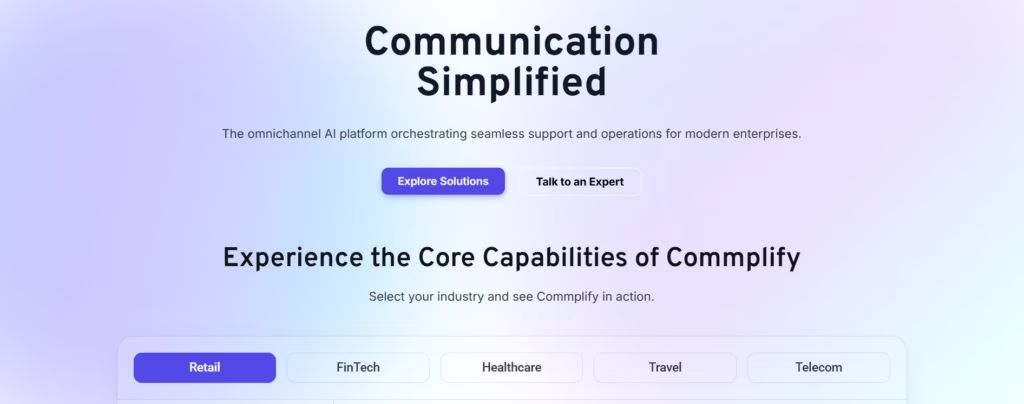
What sets Commplify apart is its true omnichannel design. It handles calls, SMS, chat, WhatsApp, and email—all channeled through a single inbox. Every live transfer passes a rich summary: conversation notes, caller sentiment, and full history, so no details are lost.
With configurable AI agents per location or department, workflow automation, and analytics, Commplify adapts to multi-site operations, regulated industries, and teams who want insight into both AI and human handling. Last year when our support team piloted omnisource inboxing, missed follow-ups dropped by 30%, and escalations became far more informed.
Quick Verdict: Best for organizations needing unified, context-rich handoff across channels—with workflow automation and deep analytics.
Retell AI: Customizable Live Transfer with Context Handoff
Retell AI stands out for its highly customizable pipeline and real-time context handoff. It’s designed for businesses wanting granular control over voice interaction and escalation, especially in larger, more complex setups.
Retell AI can identify caller intent, summarize conversations, and ensure human agents get all context before picking up. I’ve seen this work well in fast-paced contact centers or for scaling to multi-location clinics. Compliance support is strong, but deployment may require more IT resources.
Quick Verdict: Best for enterprises with complex, voice-centric workflows needing deep customization.
Smith.ai: Hybrid AI + Human Receptionist with Live Call Escalation
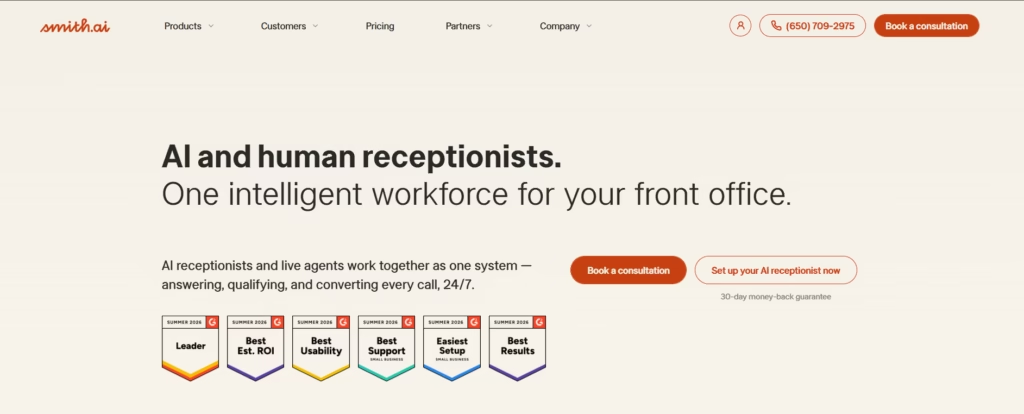
Smith.ai blends AI call handling with live, US-based human receptionists. Calls start with intelligent automation for intake, booking, and qualification; they escalate instantly to live staff for complex or sensitive requests.
Their strength is in vertical depth—especially law firms, clinics, and agencies that require skilled intake and strong calendaring. You get full handoff, live status updates, and broad integration (over 7,000 apps). In my POV, this hybrid balances efficiency with competence for client-facing teams.
Quick Verdict: Best fit for professional services that need AI speed and human expertise.
PolyAI: Enterprise-Grade Voice AI and Managed Live Transfer
PolyAI is built for the contact center world—think scale, security, and compliance. It delivers human-like voice interactions and sophisticated call handoff, managed end to end.
If your main pain is automating millions of calls per year with strong audit/compliance controls, PolyAI is the go-to. But the price and complexity mean it’s a fit for enterprise-scale only.
Quick Verdict: Top pick for high-volume, regulated, or global contact center operations.
NextPhone: Flat-Rate AI Receptionist for SMBs
NextPhone targets SMBs with a “set it and forget it” model. Voice AI handles scripts, qualifies leads, and transfers to a live person when flagged. Predictable flat pricing helps avoid billing surprises.
In my experience, this appeals to owner-operators in home services or small clinics who want straightforward deployment with basic CRM or calendar hooks.
Quick Verdict: Best for small businesses seeking predictable cost, simple setup, and utility voice AI.
Ruby: Human Receptionists with AI-Enhanced Routing
Ruby combines seasoned live receptionists with AI-enhanced routing. The difference? It leans human-first, with AI guiding who answers which call and when to escalate.
Ruby’s platform works best for service-driven businesses—property managers, agencies, or stores—where empathy and branded caller experience matter. AI triage keeps calls organized and reduces human workload.
Quick Verdict: Good for brands wanting a premium, personal touch on every transferred call.
Goodcall: Affordable Entry-Level AI Phone Reception
Goodcall is a budget-friendly platform focused on voice calls for small businesses. It uses plug-and-play AI to answer, qualify, and transfer, with configurable escalation rules for peak hours or after hours.
If entry price is a blocker, Goodcall offers a lightweight way to automate and recover missed calls. However, if you need omnichannel or deep workflow integration, look elsewhere.
Quick Verdict: Best for small teams with basic call handling and straightforward escalation needs.
Core Features & Workflows That Set the Best Solutions Apart
The best AI-powered solutions stand out by combining advanced automation, intelligent decision-making, and seamless workflows that improve efficiency and user experience. From understanding user needs and managing complex tasks to delivering personalized interactions and actionable insights, these core features help organizations achieve better outcomes while reducing manual effort.
Omnichannel Reception: Beyond Voice Calls
Omnichannel means handling more than just phone calls. In my experience, modern reception means responding on the channel the customer chooses—be it chat, SMS, WhatsApp, or email. Only a few platforms, like Commplify, deliver true channel unification, so no message gets siloed or lost in transition.
Seamless Live Transfer Experience: Warm vs. Blind Handoffs
Warm transfers carry caller details, conversation summary, and even sentiment to the receiving agent. Blind transfers drop the caller cold. A better approach is always a warm transfer, as it cuts repeat questions and caller frustration.
Context Passing: How Call Summaries and Sentiment Improve Escalation
Many teams struggle because agents lack adequate handoff context. When the AI passes a real-time summary—notes, transcripts, caller mood—the live agent can pick up the thread without missing a beat. This is where high CSAT scores actually originate.
Compliance and Privacy: HIPAA, GDPR, SOC2
If you operate in healthcare, finance, or legal, don’t compromise on data controls. Ask about audit logging, agent permissions, and call recording. Commplify, PolyAI, and Retell AI all take compliance seriously, with certified controls.
Integrations: CRM, Calendar, and Workflow Automation
Automation extends beyond taking messages. It means sending leads to your CRM, updating calendars, and executing custom workflows. Tying your receptionist solution into daily business apps unlocks efficiency. I have seen even small clinics dramatically cut admin by syncing AI receptionists with their tools.
Key Considerations When Selecting an AI-Based Live Transfer Solution
Choosing the right platform means weighing your real challenges, not just chasing new tech. Here are my main considerations from years of buyer-side projects:
- Industry requirements: Healthcare demands HIPAA. Legal needs audit trails. High-volume ops care about failover.
- Pricing models: Predictability matters. Flat rate suits SMBs. Per-minute can scale up costs quickly for busy offices.
- Deployment complexity: Staff training and system change management can stall adoption. Prioritize solutions with visual workflows and no-code controls.
- Analytics and reporting: You only improve what you measure. Insights into AI vs. human handling, transfer outcomes, and missed opportunities matter.
- Fail-safes: Does the provider have fallback for failed AI handoffs, missed calls, or error handling?
Buyer checklist:
- Are your channels unified?
- Can you automate intake and follow-up?
- Does reporting fit your compliance and operational needs?
In my view, a successful rollout depends on mapping the platform’s workflow automation and analytics back to your business metrics.
How Commplify Aligns with Modern Reception Needs
Commplify takes unified omnichannel reception to the next level. In practice, businesses using Commplify automate intake across every channel and escalate only the interactions that need human touch—passing over context, transcripts, and even caller sentiment every time.
Workflow automation ensures actions (like sending a follow-up SMS or CRM update) happen without staff chasing tasks. Deep analytics reveal how well your AI and team perform, so you can adjust, train, and prove ROI.
From what I’ve seen, this is a rare blend: high coverage with tight operational control, making Commplify a strong choice for high-volume, multi-location, or regulated buyers.
Conclusion
Getting the right AI-based live transfer solution isn’t about chasing the latest tech—it’s about reclaiming every customer opportunity and shaping a better caller experience. By automating routine reception work and perfecting the moment of human handoff, these platforms allow teams to focus on what matters.
Commplify stands apart for buyers needing true omnichannel, context-rich handoff, and operational intelligence built in. If you want efficiency gains without quality loss—and a system that learns with your workflows—it’s a logical upgrade.
The future of CX will blend automation and human contact, with the best outcomes reserved for companies that unify and analyze every conversation. Now is the time to make reception a strategic asset, not a pain point.
FAQs
What is an AI-based live transfer solution for reception?
It’s a platform that uses AI to answer, qualify, and route calls, then transfers important or complex interactions to live staff with all context preserved.
How does AI receptionist live transfer work?
AI handles initial intake, identifies when escalation is needed, and passes the call—plus a conversation summary—to a human for further support.
What are the benefits of using AI for call routing and handoff?
Benefits include fewer missed calls, faster response times, reduced staff workload, better customer data capture, and improved satisfaction for both callers and agents.
Which platforms offer live call transfer alongside virtual receptionist services?
Top platforms include Commplify, Smith.ai, Retell AI, PolyAI, NextPhone, Ruby, and Goodcall—each offers some form of live transfer workflow.
How do AI receptionists differ from traditional live answering or IVR?
AI receptionists qualify and route more intelligently, pass rich context, handle multiple channels, and automate routine work—IVRs and live answering rarely offer this flexibility.
Are AI receptionist and live transfer solutions compliant with HIPAA or GDPR?
Some are. Commplify, PolyAI, and Retell AI support HIPAA and GDPR compliance. Always check each platform’s certifications for your needs.
How much do AI-based live transfer solutions cost?
Pricing ranges from $59 to $150,000 per year, depending on scale, channels, and features. Flat rates suit SMBs; larger operations usually require custom pricing.
What types of businesses benefit most from AI live transfer?
Any business with high call volumes, regulated data, multi-site operations, or strict compliance requirements will benefit from AI-based live transfer.
How do I set up and integrate an AI receptionist with live transfer?
Most platforms use web portals or visual workflow builders and offer integration with calendars, CRMs, and appointment tools. Setup typically takes hours to a few days.
What is the difference between a warm and blind transfer in AI handoff?
A warm transfer sends full conversation context and caller details to the human agent; a blind transfer connects the call with no additional information.
How do omnichannel solutions improve receptionist workflows?
They centralize all calls, messages, and chats into one inbox, cutting channel silos and ensuring all customer touchpoints are handled consistently.
What should I look for in reporting and analytics features?
Look for dashboards that track call handling, AI containment rate, transfer outcomes, CSAT, response times, and missed opportunity data. This drives workflow optimization.
This page was last edited on 11 August 2026, at 6:21 am