Unified customer experience (UCX) connects customer data, communication channels, and AI tools into one system. It helps businesses deliver seamless, personalized interactions, maintain conversation continuity, and improve customer support across every touchpoint.
Your customer just explained their problem to your chatbot. A few minutes later, they reach out to your support team and have to explain everything again. Then the sales team calls without knowing the previous conversation.
But instead of continuing, the agent asks, “Could you explain your issue again?”
For the customer, it feels like your business has forgotten everything. Sound familiar?
This is a common challenge for growing companies. Sales teams cannot see support conversations. Support agents lack customer history. Contact centers manage disconnected tools. Valuable customer insights remain trapped in different systems.
The result? Slower resolutions, missed opportunities, higher support costs, and frustrated customers who expect better.
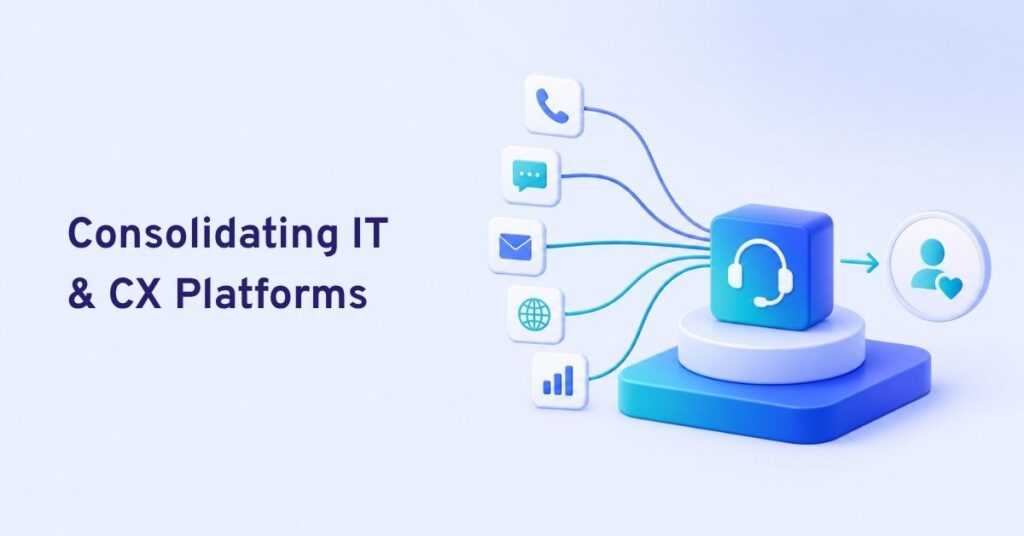
A unified customer experience brings everything together by connecting customer data, conversations, channels, and AI automation into one seamless journey.
In this guide, you will discover the details about unified CX, its key components, real-world use cases, and top platforms. Finally, it will be explained how AI can be used to help teams deliver smarter, faster, and more personalized customer experiences.
The Growing Challenge of Fragmented Customer Experiences (Our Real Experience)
A few months ago, a growing e-commerce company approached us with a common customer support challenge. Their customers were reaching out through multiple channels. Some started conversations through website chat. Others contacted them through WhatsApp, email, or phone calls.
The problem was not the lack of communication options. The problem was that every channel worked separately.
A customer might ask about an order through chat and later contact support through email. But the agent had no access to the previous conversation. The customer had to explain the same issue again. This created frustration and slowed down the resolution process.
Behind the scenes, the company’s customer information was spread across different systems. Sales data was stored in the Customer Relationship Management (CRM) platform. Support tickets were managed separately. Customer behavior data was kept in another system. Teams had no complete 360-degree customer view.
The support team also spent valuable time switching between tools to find information instead of focusing on solving customer problems.
This is one of the biggest challenges businesses face today. Customers expect connected experiences across every channel. But disconnected systems often create fragmented customer journeys.
A unified customer experience helps solve this gap by connecting customer data, communication channels, and AI-powered tools in one ecosystem. It enables businesses to maintain conversation continuity, improve personalization, and deliver smoother customer interactions at every touchpoint.
What Is Unified Customer Experience?
Unified customer experience (UCX) is a customer experience approach that connects customer data, communication channels, business systems, and AI technologies into one platform to deliver consistent and personalized interactions across every touchpoint.
It combines solutions like customer relationship management (CRM), customer data platform (CDP), contact center as a service (CCaaS), and unified communications as a service (UCaaS) to create a complete 360-degree customer view. Unified CX helps businesses maintain conversation continuity, automate support with AI Agent Assist, and improve customer journeys through technologies like Natural Language Processing (NLP), Retrieval-Augmented Generation (RAG), and predictive analytics.
Unified Customer Experience vs Omnichannel vs Multichannel CX
Businesses often confuse multichannel CX, omnichannel CX, and unified customer experience because all three focus on improving customer interactions. However, they differ in how they connect communication channels, customer data, and AI capabilities.
Multichannel CX offers multiple communication options but keeps each channel mostly separate. Omnichannel CX connects these channels to create smoother interactions. Unified customer experience takes this further by combining channels, customer data, AI, and business systems into one connected ecosystem.
The table below highlights the key differences between these three CX approaches:
| Aspect | Multichannel CX | Omnichannel CX | Unified Customer Experience |
|---|---|---|---|
| Customer channels | Multiple separate channels | Connected customer touchpoints | Fully integrated customer ecosystem |
| Customer data | Stored in separate systems | Partially shared | Centralized with real-time data synchronization |
| Customer journey | Fragmented experience | Smoother journey | Seamless customer journey |
| Conversation history | Often unavailable | Available across some channels | Complete conversation continuity |
| Agent experience | Agents switch between tools | Some integration available | Unified Agent Workspace with a single pane of glass |
| Personalization | Limited personalization | Better customer insights | Real-time personalization at scale |
| AI capabilities | Basic automation | Channel-based automation | AI agents, AI Agent Assist, RAG, and predictive analytics |
Core Components of a Unified Customer Experience Platform
A successful unified customer experience depends on more than connecting multiple communication channels. It requires a strong technology foundation that brings customer data, team workflows, and AI capabilities together.
A unified CX platform helps businesses remove data silos, create a 360-degree customer view, and deliver a seamless customer journey across every interaction. It combines customer information, communication tools, and intelligent automation into one connected ecosystem.
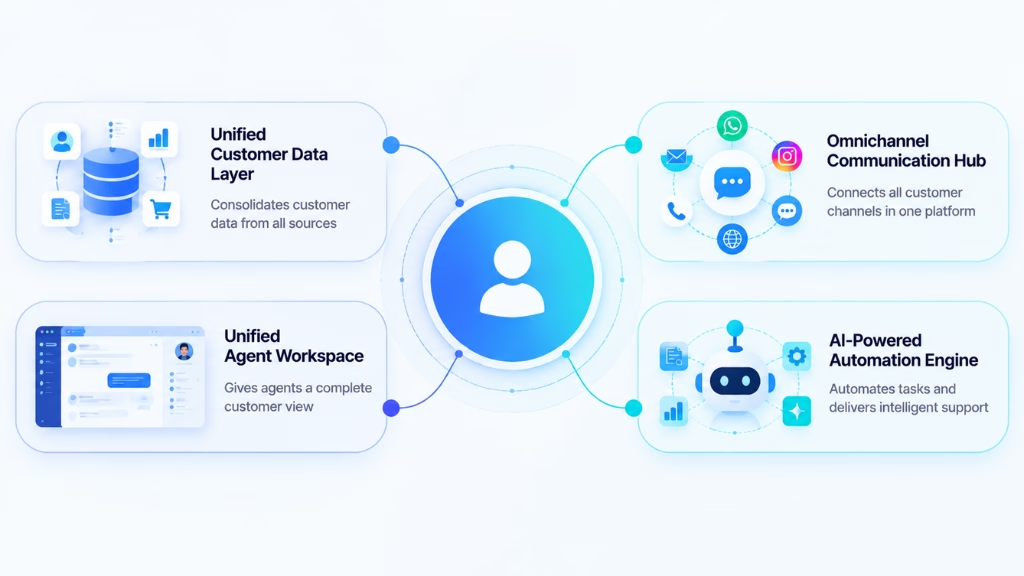
The four core components of a unified customer experience platform include:
1. Unified Customer Data Layer
The customer data layer is the foundation of unified CX. It connects customer information from different systems and creates a complete view of every customer.
Businesses often store data across separate platforms, such as customer relationship management (CRM) systems, support tools, e-commerce platforms, and marketing applications. This creates a fragmented customer experience because teams cannot access the full customer history.
A customer data platform (CDP) helps solve this challenge by collecting and organizing customer information from multiple sources. It creates a unified customer profile with details such as:
- Customer preferences
- Purchase history
- Previous conversations
- Support requests
- Engagement behavior
With real-time data synchronization, teams can access a 360-degree customer view and deliver real-time personalization at scale.
For example, a support agent can see a customer’s previous sales conversation, recent purchases, and open tickets before responding. This reduces repeated questions and creates more context-rich conversations.
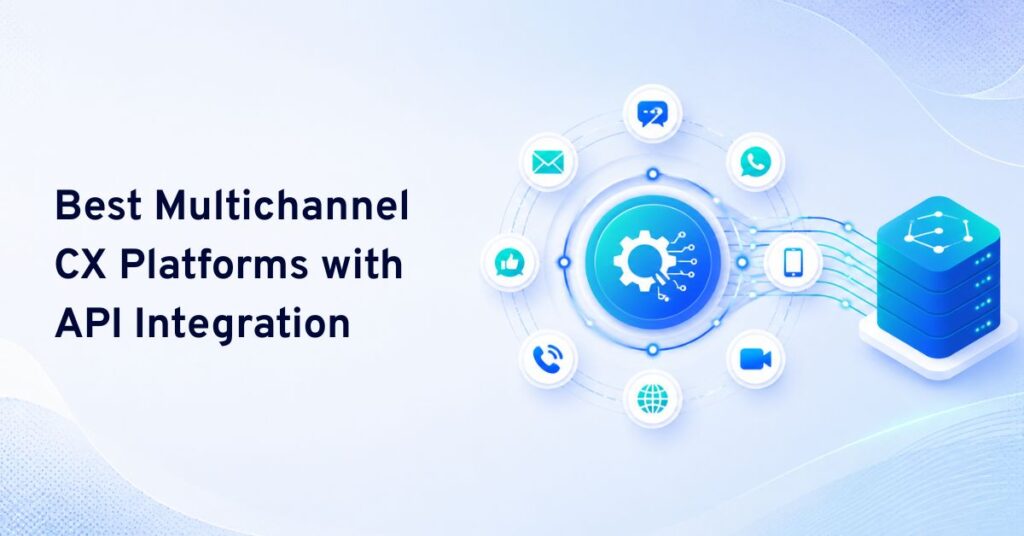
2. Omnichannel Communication Hub
Modern customers use different channels to communicate with businesses. They may contact a company through WhatsApp, web chat, IVR, SMS, email, or social DM.
An omnichannel communication hub connects these omnichannel touchpoints into one platform. It allows customers to move between channels without losing their conversation history.
Unlike traditional multichannel CX, where channels often operate separately, unified CX enables frictionless channel switching and better conversation continuity.
A strong communication hub is usually supported by technologies like:
- Contact Center as a Service (CCaaS)
- Unified Communications as a Service (UCaaS)
- API-first omnichannel platforms
These solutions help businesses centralize customer touchpoints and provide consistent experiences across every channel.
For example, a customer can start a product inquiry through web chat and continue through WhatsApp. The conversation context remains available for both AI assistants and human agents.
3. Unified Agent Workspace
Customer support teams often struggle with multiple tools and disconnected information. Agents may need to switch between CRM systems, ticketing platforms, communication tools, and knowledge resources.
A Unified Agent Workspace solves this problem by bringing everything into a single pane of glass.
It provides agents with:
- Customer profiles
- Conversation history
- Support tickets
- Product information
- Knowledge Base Systems
- AI recommendations
This helps reduce agent context switching and improves productivity.
With a unified workspace, agents can quickly understand customer needs and provide faster solutions. It also helps improve important CX metrics, such as:
- First Contact Resolution (FCR)
- Average Handle Time (AHT)
- Customer Satisfaction (CSAT)
For example, instead of searching through different systems, an agent can instantly access customer details, previous interactions, and recommended solutions from one place.
4. AI-Powered Automation Engine
AI is the intelligence layer that makes a unified customer experience more efficient and scalable.
An AI-powered automation engine helps businesses understand customer intent, automate repetitive tasks, and provide personalized support.
It uses technologies such as:
- Natural Language Processing (NLP)
- AI Agent Assist
- Retrieval-Augmented Generation (RAG)
- Predictive Analytics
- Intelligent Routing
- Multi-Agent Orchestration
These capabilities allow businesses to automate routine support tickets, improve response speed, and deliver smarter customer interactions.
For example, an AI assistant can understand a customer’s question using NLP, retrieve accurate information from a knowledge base using RAG, and provide a personalized response. If the issue requires human support, intelligent routing connects the customer with the right agent.
Advanced AI systems can also use multi-agent orchestration to manage complex workflows. Different AI agents can handle tasks such as sales inquiries, billing requests, and technical support while working together behind the scenes.
Key Features of Unified Customer Experience Platforms
A unified customer experience platform helps businesses connect customer data, communication channels, and AI-powered tools in one system. It removes fragmented customer experiences by creating a connected environment for sales, support, and service teams.
Unlike traditional systems that manage each channel separately, unified CX platforms centralize customer touchpoints and provide a complete view of every interaction. This helps businesses deliver a seamless customer journey with faster responses, better personalization, and more efficient workflows.
Here are the key features that make a unified CX platform effective:
- Unified customer data management: Connect customer information from multiple sources, including CRM, Customer Data Platform (CDP), and business systems to create a complete 360-degree customer view.
- Omnichannel communication support: Manage customer conversations across multiple omnichannel touchpoints, such as WhatsApp, Web Chat, IVR, SMS, Email, and Social DM, while maintaining conversation continuity.
- Unified Agent Workspace: Provide agents with a single pane of glass to access customer history, support tickets, knowledge resources, and AI recommendations. This helps reduce agent context switching.
- AI-powered automation: Use Natural Language Processing (NLP), AI agents, and AI Agent Assist to automate routine support tasks, understand customer intent, and improve response speed.
- Intelligent routing: Automatically connect customers with the right agent or department based on their needs, priority, and conversation context.
- Knowledge base integration: Connect Knowledge Base Systems with AI tools to provide accurate answers and support faster issue resolution.
- AI-driven personalization: Use predictive analytics and customer insights to deliver personalized interactions and proactive support.
- Workflow automation: Automate repetitive processes such as ticket creation, follow-ups, notifications, and customer requests through automated workflow orchestration.
- Advanced analytics and reporting: Track important CX metrics, including First Contact Resolution (FCR), Average Handle Time (AHT), Customer Satisfaction (CSAT), Net Promoter Score (NPS), and churn rate.
- Enterprise security and compliance: Protect customer information with enterprise data security practices and compliance support, including GDPR and CCPA requirements.
Benefits of Unified Customer Experience for Businesses
A unified customer experience helps businesses create connected and consistent interactions across every customer touchpoint. Instead of managing separate systems and disconnected conversations, teams can work with a complete view of customer needs, preferences, and previous interactions.
By connecting customer data, communication channels, and AI-powered tools, unified CX helps organizations deliver better experiences while improving internal efficiency.
1. Deliver Personalized Customer Interactions at Scale
Modern customers expect businesses to understand their needs and provide relevant support. However, personalization becomes difficult when customer information is scattered across different platforms.
A unified CX approach brings customer insights together and creates a complete view of each customer journey. Teams can understand previous interactions, preferences, purchase behavior, and support history before responding.
For example, when a customer contacts a business through WhatsApp after visiting the website, the support team can access the previous conversation and provide a more relevant response. AI technologies can further improve personalization by understanding customer intent, analyzing behavior patterns, and suggesting the right solutions.
This helps businesses deliver more meaningful conversations instead of generic responses.
2. Improve Customer Support Efficiency
Customer support teams often face challenges when they need to switch between multiple tools to find information. This slows down responses and increases agent workload.
Unified customer experience simplifies these processes by bringing important customer information, communication history, and support resources into one workspace. Agents can quickly understand customer issues without asking for the same details repeatedly.
AI-powered features such as automated assistance, intelligent routing, and knowledge retrieval help teams resolve requests faster. As a result, businesses can improve key support outcomes, including faster resolution times, higher first-contact resolution rates, and better customer satisfaction.
3. Reduce Operational Costs
Disconnected systems often create unnecessary manual work. Teams spend time managing repetitive requests, updating multiple platforms, and searching for customer information.
Unified CX reduces these challenges by automating routine processes and creating more efficient workflows. AI-powered self-service options can handle common customer questions, while automated workflows can manage tasks such as ticket creation, follow-ups, and notifications.
This allows customer support teams to focus on more complex issues that require human expertise. Businesses can also optimize resources, reduce operational complexity, and improve overall productivity.
4. Increase Customer Satisfaction and Loyalty
Customers remember experiences that are fast, simple, and consistent. A fragmented customer experience can lead to frustration when customers need to repeat information or receive different answers across channels.
Unified CX creates a seamless customer journey by maintaining context across every interaction. Customers can move between channels without losing conversation history, which creates a smoother and more reliable experience.
When businesses provide faster responses, personalized support, and consistent communication, they can improve customer satisfaction, strengthen loyalty, increase customer lifetime value, and reduce churn.
Ultimately, a unified customer experience helps businesses build stronger relationships by making every interaction feel connected and personalized.
Real-World Unified Customer Experience Use Cases
A unified customer experience strategy can benefit any industry that manages customer interactions across multiple channels. By connecting customer data, communication platforms, and AI-powered tools, businesses can create more consistent experiences and improve service efficiency.
From online shopping to healthcare services, unified CX helps organizations understand customer needs, reduce friction, and deliver faster support.
1. Retail & Ecommerce
Ecommerce businesses often struggle to handle increasing customer inquiries while maintaining fast and personalized support. OmniRetail faced a similar challenge with growing requests related to order tracking, delivery updates, returns, and exchanges across its retail channels.
Using Commplify’s AI-powered voice automation, OmniRetail automated repetitive customer interactions and connected conversations with essential business workflows.
This helped create a more unified customer experience by improving response speed, reducing manual workload, and maintaining conversation continuity. The solution reduced average answer time from 72 seconds to 14 seconds, resolved 64% of calls without human intervention, and improved CSAT from 78% to 86%.
This case demonstrates how AI-powered unified CX solutions can help ecommerce businesses deliver faster, smarter, and more consistent customer support at scale.
2. Banking and Financial Services
Banks often handle high volumes of customer requests related to accounts, cards, loans, and financial services. GlobalFin Bank faced challenges with increasing call volumes, longer wait times, and the need to provide faster customer support.
Using Commplify’s AI-powered voice automation platform, GlobalFin Bank automated routine banking conversations, improved call handling, and connected customers with the right support resources faster.
This created a more unified customer experience by improving response speed, maintaining conversation context, and delivering consistent support. The solution reduced average call answer time from 95 seconds to 18 seconds, achieved 89% first-call resolution for routine queries, and improved CSAT from 76% to 85%.
This case shows how AI-powered unified CX solutions can help financial institutions provide secure, personalized, and efficient customer support at scale.
3. Healthcare
Healthcare providers often face challenges with appointment scheduling, patient inquiries, and administrative workload. HealthPlus needed a scalable solution to manage growing scheduling demands while improving patient experience.
Using Commplify’s AI-powered scheduling automation platform, HealthPlus automated appointment booking, rescheduling, and routine patient conversations. The AI assistant helped reduce manual workload and provide faster support.
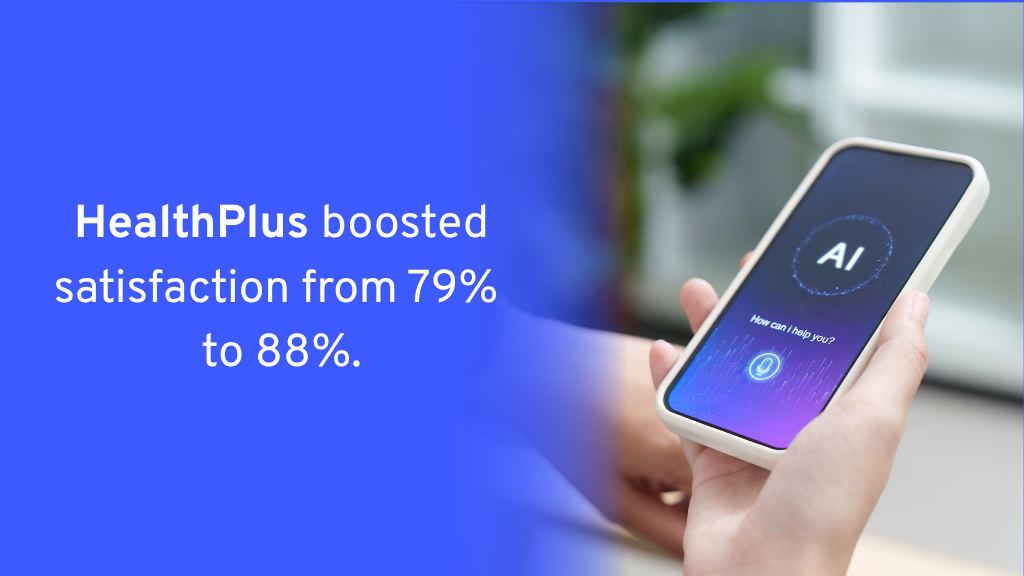
The solution reduced scheduling call wait time from 6.5 minutes to 1.8 minutes, lowered appointment no-shows from 14% to 8%, and reduced administrative call workload from 38 to 16 hours per week per site. It also handled 61% of calls without human intervention, reduced costs by 26%, and improved patient satisfaction from 79% to 88%.
This case shows how AI-powered unified CX solutions improve patient communication and operational efficiency.
4. SaaS Companies
SaaS companies often use unified customer experience solutions to manage customer onboarding, technical support, and product-related conversations more effectively.
For example, a SaaS company may receive customer requests about account setup, billing questions, feature guidance, and API integration issues through multiple channels. With a unified CX platform, customer conversations, product data, and support history can be connected in one place.
When a customer reports a technical issue, an AI assistant can understand the request, retrieve relevant solutions from knowledge resources using retrieval-augmented generation (RAG), and provide instant guidance. If the issue requires human expertise, the conversation can be transferred to the right agent with complete context.
This helps SaaS teams reduce repetitive support tasks, improve response times, maintain conversation continuity, and deliver a more personalized customer experience at scale.
Top Unified Customer Experience Platforms
A unified customer experience platform helps businesses connect customer data, communication channels, AI tools, and support workflows in one place.
These platforms reduce fragmented customer experiences. They help teams deliver faster and more personalized interactions.
Different platforms offer different capabilities. Some focus on CRM integration. Some focus on AI automation. Others focus on contact center management and customer insights.
Here are some popular unified CX platforms and their key features:
1. Commplify: AI-Powered Omnichannel CX Platform
Commplify is an AI-powered unified customer experience platform. It helps businesses automate customer conversations across voice and digital channels.
The platform connects customer interactions in one place. It helps teams improve sales, support, and customer engagement.
Key Features
- AI voice agents for automated customer conversations
- Omnichannel support across voice, chat, and messaging channels
- AI-powered customer support automation
- Lead qualification and sales automation
- AI Agent Assist for real-time agent support
- Natural Language Processing (NLP) for understanding customer intent
- Automated workflow orchestration
- Conversation analytics and customer insights
- CRM and business system integrations
2. Salesforce Service Cloud: CRM-Based Customer Experience Platform
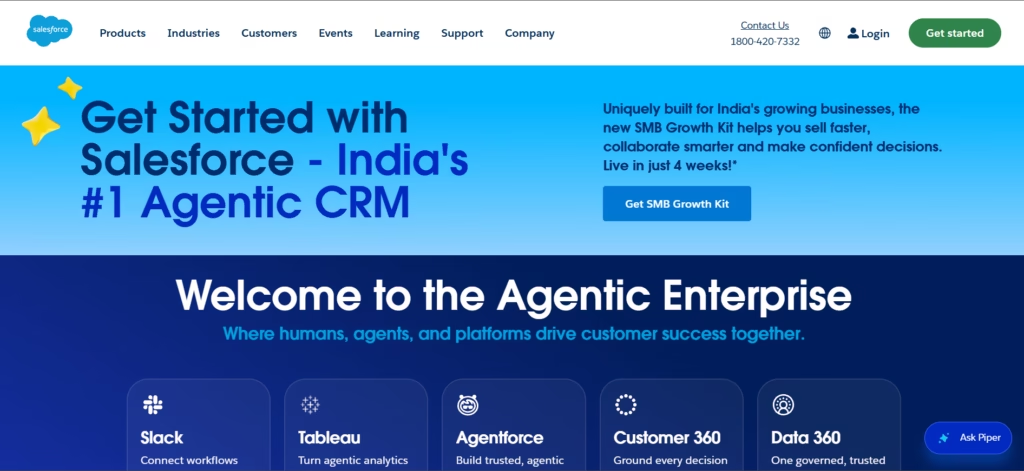
Salesforce Service Cloud is a CRM-based customer service platform. It helps businesses manage customer information, support cases, and service conversations.
It creates a complete customer profile. Teams can access customer data and interaction history from one place.
Key Features
- CRM-based customer data management
- 360-degree customer view
- Omnichannel customer support
- AI-powered service automation
- Case and ticket management
- Knowledge Base Systems integration
- AI Agent Assist features
- Workflow automation
- Customer analytics and reporting
3. Qualtrics XM: Enterprise-level Experience Management
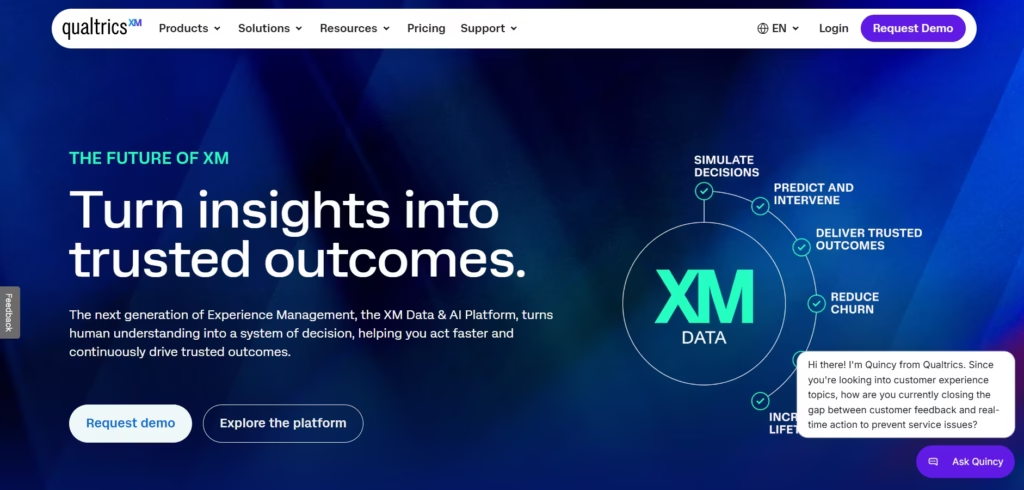
Qualtrics XM helps businesses understand customer experiences. It collects customer feedback and turns it into actionable insights.
The platform helps companies measure customer satisfaction. It also helps improve customer journeys.
Key Features
- Customer feedback management
- Experience surveys and research tools
- Customer journey analysis
- Sentiment analysis
- Customer Satisfaction (CSAT) tracking
- Net Promoter Score (NPS) measurement
- Predictive analytics
- Experience dashboards
- Automated feedback workflows
4. Zendesk AI: AI Customer Service Platform
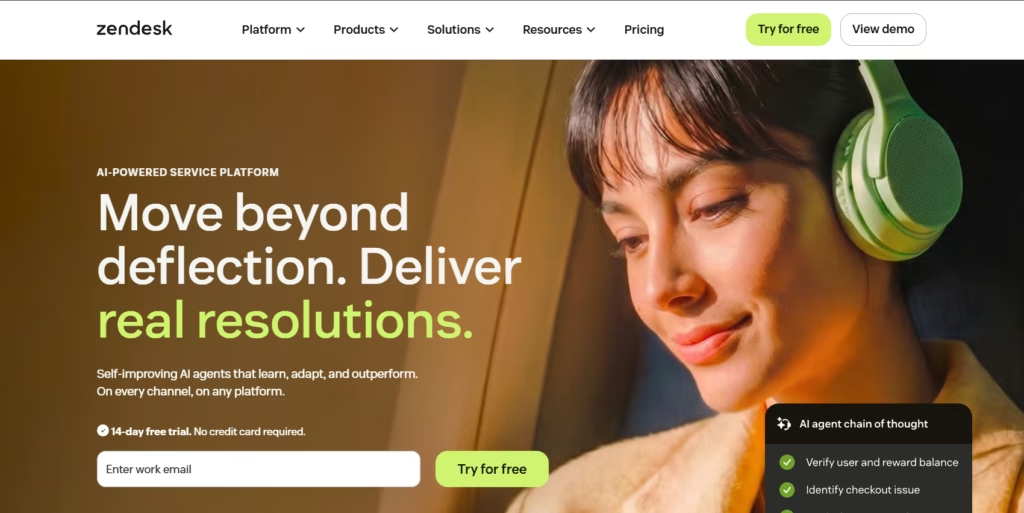
Zendesk AI helps businesses automate customer support. It combines customer conversations, tickets, and knowledge resources in one platform.
It helps support teams respond faster. It also reduces repetitive support tasks.
Key Features
- AI-powered customer support automation
- AI chatbots and self-service support
- Automated ticket classification
- Intelligent routing
- Knowledge Base Systems integration
- AI Agent Assist
- Omnichannel customer conversations
- Workflow automation
- Customer support analytics
5. Talkdesk CX Cloud: AI Contact Center Platform

Talkdesk CX Cloud is a cloud-based contact center platform. It helps businesses manage customer conversations across voice and digital channels.
It combines contact center tools with AI automation. It helps teams improve efficiency and customer service quality.
Key Features
- Contact Center as a Service (CCaaS) capabilities
- Omnichannel communication management
- AI-powered virtual agents
- Intelligent Routing
- Real-time agent assistance
- Conversation analytics
- Customer sentiment analysis
- Workforce management tools
- CRM integrations
How to Build a Unified Customer Experience Strategy
Building a successful unified customer experience strategy requires more than adding new communication channels. Businesses need to connect customer data, teams, technology, and AI capabilities to create a seamless customer journey.
A well-planned CX strategy helps eliminate data silos, improve customer interactions, and create consistent experiences across every touchpoint.
Step 1: Map Customer Journeys
Start by understanding how customers interact with your business across different stages. Identify every touchpoint, including website visits, sales conversations, support requests, and post-purchase interactions.
Analyze where customers face friction, such as repeated information requests, slow responses, or disconnected conversations. This helps businesses identify gaps in the existing customer journey and create opportunities for improvement.
A clear customer journey map helps teams understand customer expectations and design more personalized experiences.
Step 2: Connect Customer Data Sources
Customer data is often stored across different platforms, creating a fragmented customer experience. The next step is to connect these systems and create a unified data foundation.
Integrate platforms such as Customer Relationship Management (CRM) systems, Customer Data Platforms (CDP), e-commerce tools, and support applications.
Real-time data synchronization helps teams access a complete 360-degree customer view. It also helps bridge front-office and back-office data, allowing sales, marketing, and support teams to work with the same customer information.
Step 3: Unify Communication Channels
Customers expect businesses to provide support through their preferred channels. A unified CX strategy should connect all major communication channels, including WhatsApp, Web Chat, IVR, SMS, Email, and Social DM.
Using solutions like Contact Center as a Service (CCaaS), Unified Communications as a Service (UCaaS), and an API-first omnichannel platform, businesses can centralize customer touchpoints.
This enables frictionless channel switching and maintains conversation continuity when customers move between channels.
Step 4: Implement AI Automation
AI helps businesses scale customer interactions while maintaining personalization. Implement AI-powered capabilities to automate repetitive tasks and improve agent productivity.
Technologies such as Natural Language Processing (NLP), AI Agent Assist, Retrieval-Augmented Generation (RAG), and predictive analytics help teams understand customer intent and provide faster solutions.
AI-powered self-service virtual agents can handle routine support tickets, while Intelligent Routing ensures complex issues reach the right agents.
Advanced solutions with Multi-Agent Orchestration can also automate complex workflows across different business functions.
Step 5: Measure CX Performance
A unified customer experience strategy needs continuous measurement and improvement. Track key performance indicators to understand how customers interact with your business.
Important CX metrics include:
- Customer Satisfaction (CSAT)
- Net Promoter Score (NPS)
- First Contact Resolution (FCR)
- Average Handle Time (AHT)
- Customer Lifetime Value (CLV/LTV)
- Churn Rate
Businesses should also analyze customer sentiment across channels using cross-channel sentiment analysis. Regular performance reviews help identify improvement areas and ensure the CX strategy continues to meet customer expectations.
By combining connected data, unified communication, and AI automation, businesses can create a scalable unified customer experience strategy that improves efficiency and builds stronger customer relationships.
Challenges of Implementing Unified Customer Experience
Implementing a unified customer experience strategy helps businesses create connected customer journeys. However, moving from disconnected systems to a unified CX ecosystem requires proper planning, technology, and team alignment.
Some common challenges include:
- Data integration issues: Connecting CRM, Customer Data Platform (CDP), support tools, and business systems can be complex. Poor integration can create data silos and limit the 360-degree customer view.
- Data security and compliance: Managing customer information across platforms requires strong security practices and compliance with standards like GDPR and CCPA.
- Channel integration challenges: Connecting WhatsApp, Web Chat, IVR, SMS, Email, and Social DM requires reliable CCaaS, UCaaS, and omnichannel solutions to maintain conversation continuity.
- Team adoption and training: Employees need proper training to use new workflows, tools, and Unified Agent Workspace effectively.
- AI accuracy and optimization: AI features like NLP, RAG, and AI Agent Assist require quality data and continuous improvement to deliver accurate responses.
- Performance measurement: Businesses need to track metrics like CSAT, NPS, FCR, AHT, CLV/LTV, and churn rate to measure CX success.
Why Businesses Are Moving from Omnichannel to Unified Customer Experience
Omnichannel CX helps businesses connect multiple channels like WhatsApp, Web Chat, IVR, SMS, Email, and Social DM. However, many companies still face disconnected data, separate systems, and inconsistent customer interactions.
A unified customer experience approach connects customer data, communication channels, AI tools, and business workflows into one ecosystem.
Businesses are moving toward unified CX because it helps them:
- Create a 360-degree customer view by connecting CRM, Customer Data Platform (CDP), and customer interaction data.
- Maintain conversation continuity by enabling smooth channel switching without repeated customer information.
- Improve agent productivity with a Unified Agent Workspace and centralized customer insights.
- Automate customer support using NLP, AI Agent Assist, RAG, and predictive analytics.
- Deliver personalized experiences with real-time customer insights and intelligent automation.
- Improve CX metrics by increasing CSAT, FCR, and CLV/LTV while reducing AHT and churn rate.
Omnichannel connects customer channels. A unified customer experience connects channels, data, and intelligence to create seamless customer journeys.
How AI Transforms Unified Customer Experience
AI is changing how businesses deliver a unified customer experience. It helps companies connect customer data, understand conversations, and provide consistent support across different channels.
Many businesses still struggle with disconnected systems. They also lack complete customer context. AI helps solve these challenges. It analyzes conversations, identifies customer intent, and provides real-time insights.
Natural Language Processing (NLP) helps AI understand customer questions and sentiment. AI Agent Assist helps support teams with relevant suggestions and customer information. Retrieval-Augmented Generation (RAG) improves response accuracy by using trusted Knowledge Base Systems.
Platforms like Commplify combine AI automation with customer communication workflows. This helps businesses manage conversations, automate repetitive tasks, and maintain interaction history across channels.
With intelligent routing and predictive analytics, AI helps businesses create smoother customer journeys. It also improves team efficiency and enables more personalized experiences at scale.
Final Thoughts
Customer expectations are changing quickly. Businesses can no longer rely on disconnected channels and separate systems. Customers want faster responses, personalized support, and consistent experiences across every interaction.
A unified customer experience helps businesses bring customer data, communication channels, teams, and AI capabilities together. It removes data silos. It improves conversation continuity. It helps teams create smoother customer journeys.
AI is making unified CX more powerful. It helps automate routine tasks, support agents, and deliver real-time customer insights. However, the goal is not to replace human interactions. It is to help teams provide better and more meaningful experiences.
By adopting the right unified CX strategy and technology, businesses can improve customer satisfaction, increase operational efficiency, and build stronger long-term relationships. A connected customer experience is no longer just an advantage. It is becoming an important part of modern business growth.
FAQs
What is unified customer experience?
Unified customer experience connects customer data, communication channels, and business systems into one platform to deliver consistent and personalized interactions across every customer touchpoint.
How is unified CX different from omnichannel CX?
Omnichannel CX connects multiple communication channels, while unified CX combines channels, customer data, AI, and workflows to create a complete and connected customer journey.
Why is unified customer experience important?
Unified CX helps businesses reduce fragmented interactions, improve personalization, increase support efficiency, and provide faster, more consistent customer experiences.
How does AI improve customer experience?
AI improves CX by automating customer conversations, understanding customer intent, assisting agents, providing personalized responses, and enabling faster issue resolution.
What features should a unified CX platform have?
A unified CX platform should include omnichannel communication, CRM and CDP integration, unified agent workspace, AI agents, knowledge base integration, intelligent routing, automation, and analytics.
Can unified customer experience reduce support costs?
Yes. Unified CX can reduce support costs by automating repetitive tasks, improving agent productivity, reducing manual work, and helping teams resolve customer issues faster.
This page was last edited on 30 September 2026, at 6:55 am