AI admissions assistant tools for higher education automate applicant inquiries, document handling, and screening across chat, voice, SMS, email, and WhatsApp. Key features include omnichannel communication, AI agents, workflow automation, analytics, and compliance, enabling higher efficiency and improved applicant experience.
The pressure on higher ed admissions leaders has never been greater. Applicant expectations for fast, helpful digital support are rising, while inquiry volumes are surging beyond what most teams can handle manually.
Many institutions are stuck managing email, voice calls, chat, and WhatsApp in silos—struggling to deliver the personal touch, speed, and accuracy needed to engage today’s students. Staff burnout, inconsistent messaging, and missed follow-ups are all common pain points.
Done right, an AI admissions assistant can free up teams, give applicants the support they expect, and provide leaders the insights needed to meet enrollment targets. In this guide, you’ll get a deep look at every feature that matters—and what to watch for—with examples experienced CX teams know well.
Core Features of AI Admissions Assistant Tools for Higher Education
AI admissions assistants offer a comprehensive toolbox, but not all features are created equal. A good system supports admissions teams and applicants alike—handling everything from multichannel communication to compliance and analytics. Let’s start with a high-level feature table for quick reference.
| Feature | Description | Value for Admissions |
|---|---|---|
| Omnichannel Communication | Unified inbox for chat, SMS, email, voice, WhatsApp | Whole-journey context, faster help |
| Configurable AI Agents | Agents per program/department, multilingual, compliance-aware | Personalized support, efficiency |
| Automated Inquiry Handling | 24/7 chatbot, intake, eligibility checks | Less manual work, no delays |
| Applicant Screening/Analytics | Predictive scoring, risk detection, intent & sentiment | Data-driven interventions |
| Document Processing | Transcripts, uploads, auto-validation | Faster decision cycles |
| Knowledge Intelligence | Dynamic policy & FAQ answers, semantic search | Up-to-date info, fewer errors |
| Workflow Automation | No-code triggers: follow-up, nudge, missed call | Higher yield, lower “melt” |
| Human Escalation | Intelligent handoff to counselors | Preserves human touch |
| Analytics & Reporting | Dashboards, trends, CSAT, escalation, compliance monitoring | Continuous improvement |
| Integration & Compliance | CRM/SIS/calendar hookup, FERPA/GDPR alignment, access control | Security, smooth operations |
Now, let’s walk through each core feature, explain why it matters, and give practical examples grounded in real admissions work.
Omnichannel Communication and Unified Conversation Management
AI admissions tools shine when they consolidate chat, SMS, email, voice, and messaging apps into one place. This removes channel silos, prevents messages from falling through the cracks, and gives staff the full applicant story at a glance.
I often see teams waste hours switching tabs just to track one applicant’s journey. Unified inboxes solve this. For instance, at one university, connecting WhatsApp, web chat, and email into a single view cut average response times by 40%—especially during decision deadlines.
Quick note: Commplify makes this easy with all channels fed into a central inbox, letting your team engage with students wherever they are—no more gaps in conversation history or missed context.
Configurable AI Agents and Personalized Engagement
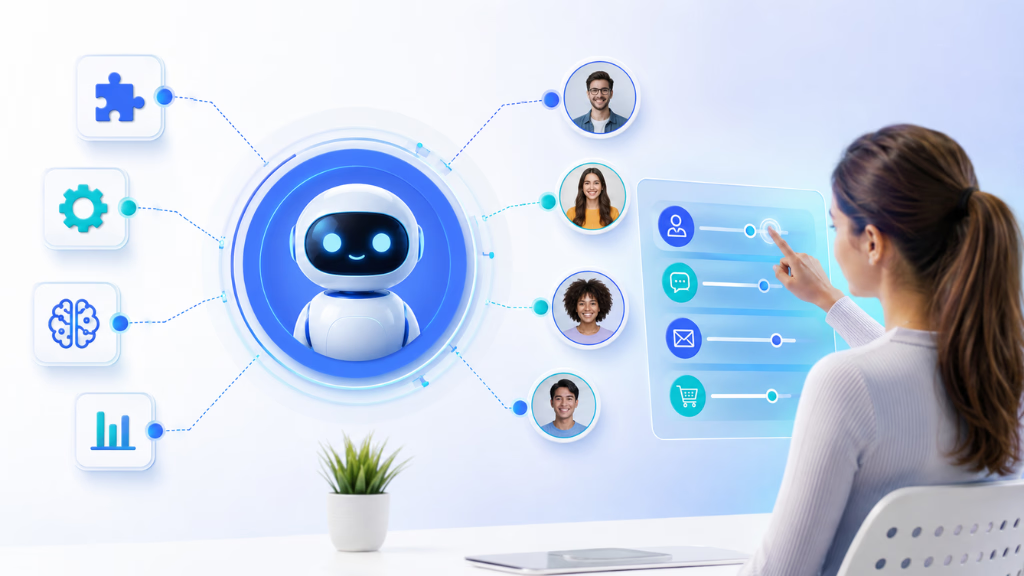
Every department, program, or applicant type is unique. Advanced AI assistants can be configured for tone of voice, supported languages, escalation logic, and compliance policies for each use case. This ensures that an international applicant, a transfer student, and a STEM candidate all get accurate, relevant help.
I’ve seen the impact: one institution’s custom AI persona for financial aid queries improved satisfaction ratings in that channel by 17%. The flexibility here is key—static chatbots simply cannot adapt fast enough to admissions needs.
Automated Inquiry Handling and Document Processing
The lion’s share of inquiries cover repeating FAQs or document requirements—ideal for automation. AI tools respond instantly 24/7, collect required documents, parse transcripts, and complete initial eligibility checks before passing to human review when needed.
In my experience, delegating repetitive intake to AI not only cuts workload but also reduces errors and applicant drop-off. For instance, automating transcript pre-screening sped up application routing at a Midwest college by two days during peak season.
Intelligent Applicant Screening and Predictive Analytics
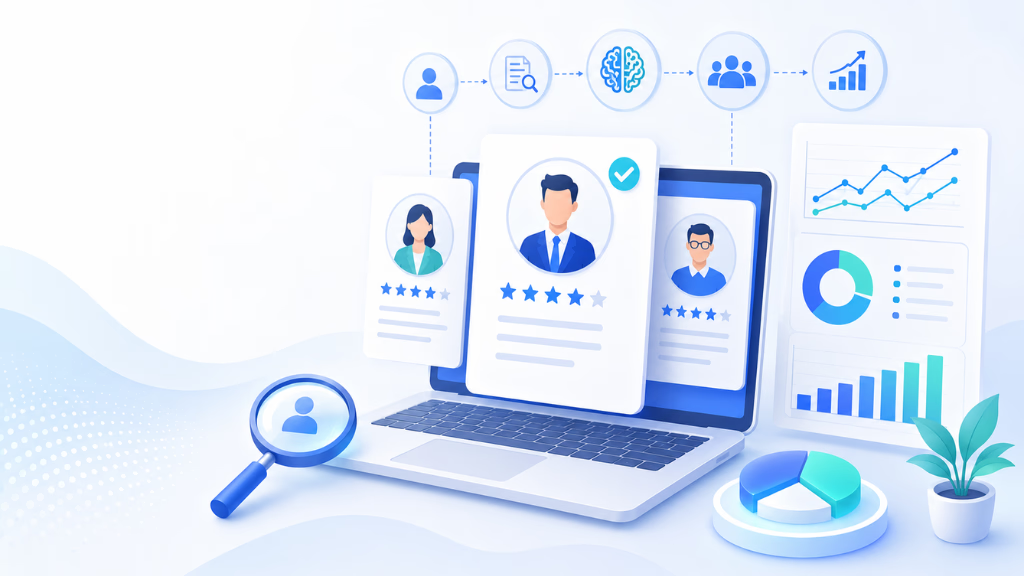
A modern AI admissions system goes beyond “respond and route” to proactively score and segment applicants based on likelihood to enroll or need for intervention. Using sentiment, intent cues, and application patterns, it can flag best-fit or at-risk candidates fast.
For leaders, this means no more “first-come-first-served” chaos. Actual applicant quality, risk, and engagement levels drive decisions. Screening down the funnel lets staff focus on those who need personal outreach most.
Knowledge Intelligence and Dynamic FAQ Management
The best AI doesn’t just dispense canned answers. It pulls up the latest program policies, deadline changes, or campus updates in real time, using smart search to match even fuzzy applicant questions.
This precision matters. “When does the nursing application close for international students?” isn’t a question you want mishandled mid-cycle. In my POV, live knowledge injection is a must for keeping policy answers both current and reliable, and reduces the time staff spend updating bot scripts.
Workflow Automation for Admissions
Great admissions tools automate more than just replies. They trigger follow-ups for incomplete applications, send reminders, or escalate after a missed call—no manual chasing required. The real leap comes when operations teams can build and adapt these automation flows themselves, without IT bottlenecks.
This is where many teams struggle. Underestimating complexity, they miss automations that drive yield (like re-engaging “melt risk” admits). Commplify, for example, lets staff set up these workflows with a simple visual builder—think drag, drop, connect, done. In my experience, the ability to tweak these flows in real time is what gives admissions teams their edge.
Human Handoff and Escalation
Not every case should be “AI only.” Real admissions moments—financial hardship disclosures, eligibility debates, parent concerns—demand human empathy and judgment. The best systems spot when AI hits its limits, then escalate to an assigned counselor with the full context in hand.
The mistake I see often is relying too much on automation and missing the “handoff moment.” Admissions is, at its core, still a service business. High-touch counseling is what wins skeptical or undecided applicants.
Analytics, Reporting, and Continuous Optimization

Good analytics go far beyond “How many chats did we answer?” They drill into:
- Response time by channel and agent
- Escalation and resolution rates
- Applicant sentiment and intent trends
- Yield impact by outreach sequence or channel
In my experience, surfacing these insights is what allows directors to optimize staffing, refine campaigns, and justify process investments. Dashboards should support both day-to-day triage and long-term strategy.
Integration, Access Control, and Compliance Safeguards
Admissions is data-intensive and highly regulated. Good AI platforms must plug smoothly into your CRM, SIS, email, and calendar systems. Role-based permissions, data isolation, and aligned compliance (FERPA, GDPR) aren’t optional—they’re table stakes.
Teams that skip this due diligence often face rework or serious audit risk later. I always advise clients to make sure integrations and access controls are part of their RFP checklist, not an afterthought.
Critical Considerations and Common Mistakes in Deploying AI Admissions Assistants
Selecting and implementing AI admissions assistants is not just a tech play—it is an operational shift. The real issue is balancing automation with human expertise, and making sure every applicant journey is seamless and compliant. Common pitfalls include:
- Failing to unify channels, leading to broken conversations and repeated questions.
- Over-automating, which can alienate students needing personal help.
- Skipping knowledge base updates, causing outdated or incorrect answers.
- Ignoring the need for no-code workflow tools, and becoming stuck with hard-to-change logic.
- Relying on analytic dashboards but never acting on underlying trends.
From what I’ve seen, institutions that bring IT, admissions, and compliance to the table together from day one avoid most headaches.
How Commplify Solves the Admissions CX Challenge
Let’s tie these features together with a practical lens. In my experience, Commplify’s unified omnichannel admissions assistant addresses the real “on the ground” needs of complex admissions operations.
Picture this: an applicant starts a conversation on your website chat about deadlines, switches to WhatsApp on their commute, then follows up via email. With Commplify, every message appears in a single conversation thread—visible to both AI and staff. If the applicant uploads a transcript or misses a call, a visual workflow triggers an automated reminder and, if unaddressed, escalates to a human counselor with the full context. Leaders see real-time analytics tracking which channels convert best and where drop-offs occur.
There’s no pitch here—just an honest illustration of how a unified, AI-powered platform makes life easier for both applicants and teams. This model helps admissions teams regain control, boost response speed, and drive better outcomes across the board.
Conclusion
AI admissions assistant tools for higher education are transforming the applicant journey. By automating inquiry handling, personalizing outreach, and providing data-driven insights, they help institutions boost efficiency, reduce burnout, and improve enrollment.
The true value lies in unifying every channel and process—chat, voice, SMS, email, and WhatsApp—eliminating silos and building a full view of each applicant’s history. In my POV, platforms with no-code workflow automation and dynamic knowledge management are essential for operational agility and compliance.
Teams that get this right see higher applicant satisfaction and more successful enrollments, with less manual grind and fewer errors. As AI-driven admissions evolve, keeping humans in the loop and ensuring transparent, responsible AI practices will define the sector’s leaders. Smart, unified solutions are now the baseline for competitive enrollment management.
FAQs
What is an AI admissions assistant tool?
It is a digital solution that automates and manages applicant communications, document handling, and screening across multiple channels using artificial intelligence for higher education admissions.
How does AI work in higher education admissions?
AI supports admissions by responding to applicant inquiries, screening and routing cases, processing documents, and providing data insights—freeing up staff for complex tasks.
What are the common features of AI-powered admissions platforms?
Key features include omnichannel communication, configurable AI agents, workflow automation, document processing, applicant analytics, and system integration.
How do AI admissions assistants personalize the student experience?
They can tailor conversations, provide program-specific information, support multiple languages, and route sensitive cases to the right staff.
What are the benefits and drawbacks of using AI for admissions?
Benefits include faster response, lower workload, and data-driven yield; drawbacks may include reduced human touch and risks of incorrect or biased answers if not managed well.
How secure and compliant are AI admission tools with student data?
Secure platforms follow FERPA and GDPR, use robust access controls, and offer audit trails to protect applicant data and maintain compliance.
How is human intervention preserved in AI-driven admissions?
AI assistants escalate complex, sensitive, or policy-based queries to human counselors, ensuring important cases get personal attention.
Can AI admissions assistants integrate with existing systems like CRM/SIS?
Yes, leading platforms offer APIs and direct integrations with university CRM, student information systems, email, and calendars.
How does my institution implement an AI admissions assistant?
Start by auditing current workflows, selecting a platform, configuring AI agents, connecting systems, and training staff before deploying in phases.
What infrastructure or resources are required?
Typically, a cloud-based platform, internet access, CRM/SIS integration, and trained admissions/counselor staff are needed.
How do we train staff and ensure adoption?
Provide hands-on demos, role-based training, clear escalation guidelines, and regular feedback loops to build staff skills and trust in the system.
Are there case studies of universities using AI admissions tools successfully?
Yes, many universities have seen improved response times, higher applicant engagement, and better yield after deploying AI admissions assistants.
This page was last edited on 31 July 2026, at 1:42 am