AI analyzes customer sentiment in sales pitch calls by converting speech to text, then using natural language processing and voice analytics to detect emotion, tone, and intent—providing real-time insights to improve outcomes and automate follow-up.
Every sales leader knows the weight of a single conversation. Missing the subtle change in a prospect’s tone or the hesitation in their words can be the difference between a closed deal and a lost opportunity.
In my experience, even the best sales teams struggle to capture these hidden signals—especially when managing hundreds of calls a week. Relying on gut feel, or on spotty manual reviews, leads to coaching blind spots and rising pressure on performance.
This guide shows how AI—when used with real-time voice intelligence—can help you hear what’s between the lines, decode buyer emotion, and turn raw sales pitch calls into business results. You’ll learn how this technology works, where it shines, and how to avoid common mistakes that undermine real value.
How AI Analyzes Customer Sentiment During Sales Pitch Calls
AI sentiment analysis helps sales teams understand more than what a prospect says during a call. It evaluates how the prospect responds, how their attitude changes throughout the conversation, and which parts of the sales pitch create interest, hesitation, or resistance.
Instead of relying entirely on a salesperson’s memory or interpretation after a call, AI can analyze the conversation automatically and turn customer reactions into structured insights. This makes it easier to identify buying signals, objections, weak parts of the pitch, and opportunities for follow-up.
1. AI Captures and Transcribes the Sales Conversation
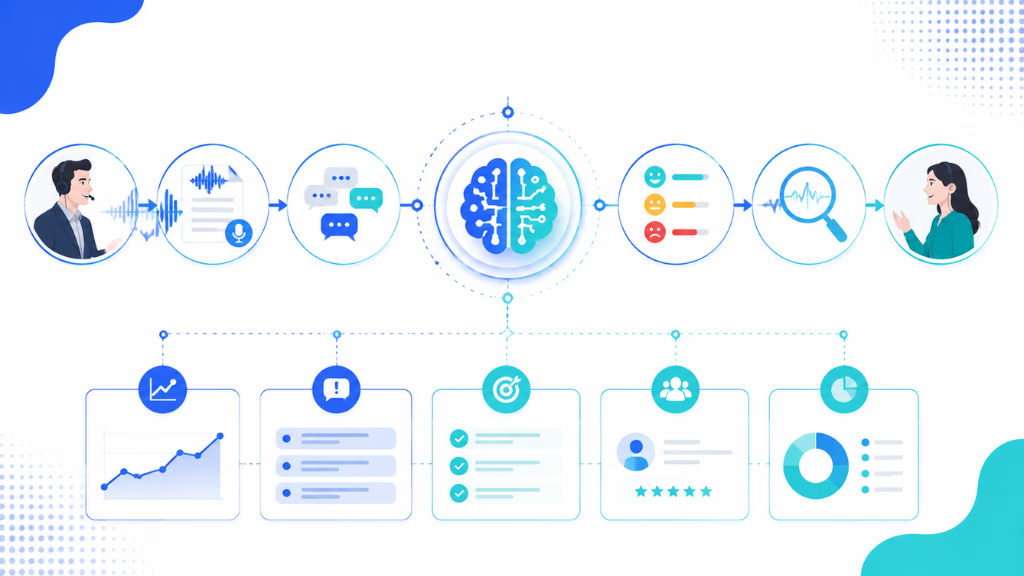
The process usually starts by converting the sales call into a searchable transcript. Speech recognition technology identifies the spoken words and separates the conversation between the sales representative and the prospect.
A good transcription layer is important because sentiment analysis depends heavily on context. AI needs to understand whether a statement came from the salesperson or the customer before it can correctly interpret the customer’s reaction.
For example, a prospect saying:
“That could actually solve one of our biggest problems.”
indicates a very different sales signal from:
“I’m not sure we would use that enough to justify the cost.”
Once the conversation is transcribed, AI can evaluate these responses individually and within the broader context of the call.
2. AI Detects Positive, Negative, and Neutral Sentiment
The most basic form of sentiment analysis classifies customer statements as positive, negative, or neutral.
Positive sentiment may appear when a prospect expresses interest, agreement, excitement, or confidence. Statements about useful features, good pricing, successful integrations, or clear business value may increase the positive sentiment score.
Negative sentiment may appear when the prospect discusses concerns such as pricing, implementation difficulty, missing features, contract terms, or uncertainty about results.
Neutral sentiment normally appears during informational parts of the conversation where the customer is asking questions or providing facts without expressing a strong opinion.
AI can calculate these signals continuously instead of assigning one sentiment score to the entire sales call. That distinction matters because the prospect’s attitude may change several times during a conversation.
3. AI Tracks Sentiment Changes Throughout the Pitch
One of the most useful applications of AI is identifying where sentiment changes during the sales pitch.
A prospect may begin a call with neutral interest, respond positively when the salesperson explains a relevant feature, become negative when pricing is introduced, and return to positive sentiment after hearing about expected ROI.
AI can map these changes against specific moments in the conversation.
For example:
Product demonstration → positive sentiment
Pricing discussion → negative sentiment
ROI explanation → improving sentiment
Implementation timeline → neutral sentiment
This gives sales leaders much more useful information than simply knowing whether the overall call was positive or negative. It shows exactly which topics influenced the prospect’s attitude.
4. AI Identifies Customer Emotions and Intent
Advanced sentiment analysis can go beyond basic positive and negative classifications. AI may also identify conversational signals associated with emotions or intentions such as:
- Interest
- Excitement
- Curiosity
- Confusion
- Frustration
- Skepticism
- Urgency
- Hesitation
These signals help sales representatives understand where a prospect may need additional explanation.
For instance, repeated questions about integration may indicate uncertainty rather than rejection. Questions about pricing plans, implementation dates, contracts, or deployment timelines may indicate stronger purchase intent.
The goal is not to treat every emotion as a guaranteed buying signal. Instead, sentiment analysis gives sales teams another layer of evidence for understanding customer behavior.
5. AI Detects Objections Automatically
Customer objections are among the most important parts of a sales conversation.
AI can identify phrases and conversational patterns related to common objections, including:
Price objections:
“The cost is higher than we expected.”
Feature objections:
“We would need integration with our existing CRM.”
Timing objections:
“This probably isn’t something we can implement this quarter.”
Authority objections:
“I’ll need to discuss this with our management team.”
Competitor objections:
“We’re already evaluating another platform.”
Once these objections are detected, they can be categorized and associated with the prospect’s sentiment.
Sales managers can then analyze hundreds or thousands of calls to discover which objections appear most frequently and which responses are most effective at changing customer sentiment.
6. AI Evaluates Customer Reactions to Different Parts of the Sales Pitch
Not every part of a sales pitch performs equally well.
AI sentiment analysis can help determine how customers react to different talking points, including:
- Product capabilities
- Pricing
- Competitor comparisons
- Case studies
- Customer success stories
- Security features
- Integrations
- ROI claims
- Implementation requirements
- Free trials or demonstrations
Suppose prospects consistently show strong positive sentiment when sales representatives explain automation features but negative sentiment when contract terms are introduced.
That pattern tells the sales organization something important: the product value proposition may be working, while the commercial terms could be creating friction.
The company can then improve both its pitch and its overall sales strategy based on real customer conversations.
7. AI Analyzes Tone, Pace, and Conversational Behavior
Sentiment analysis is not always limited to the words appearing in a transcript.
Depending on the technology used, AI may also evaluate vocal and conversational signals such as changes in speaking pace, interruptions, hesitation, pauses, or variations in tone.
These signals can provide additional context.
A prospect saying “That sounds interesting” enthusiastically may communicate something different from the same sentence spoken hesitantly.
However, vocal signals should be treated as supporting information rather than absolute indicators. Accents, communication styles, language differences, call quality, and individual personalities can influence speech patterns.
Combining linguistic context with conversational signals generally produces more useful insights than relying on tone alone.
How AI Turns Sentiment Analysis Into Sales Insights
Analyzing sentiment is only valuable when the information can help the sales team make better decisions.

After processing a call, AI can convert the conversation into actionable information such as:
Overall customer sentiment:
Shows whether the prospect was generally positive, neutral, or negative.
Sentiment timeline:
Shows how the customer’s attitude changed during different stages of the pitch.
Key positive moments:
Highlights topics or statements that generated strong customer interest.
Negative moments:
Identifies sections where the prospect showed concern or resistance.
Customer objections:
Summarizes pricing, product, timing, competitor, or implementation concerns.
Buying signals:
Highlights questions or comments that may indicate stronger purchase intent.
Recommended follow-up topics:
Identifies issues that should be addressed in the next sales conversation.
Instead of listening to an entire recording again, a sales representative can quickly review these insights before following up with the prospect.
Example of AI Sentiment Analysis During a Sales Call
Consider a salesperson presenting an AI customer service platform to a potential customer.
During the opening conversation, the prospect sounds neutral while discussing their existing support process.
When the salesperson explains how the platform can automate repetitive customer inquiries, the prospect asks several questions and says the capability could reduce pressure on their support team. AI detects increasing positive sentiment.
Later, pricing is introduced. The prospect becomes more hesitant and says the budget may be difficult to approve. Sentiment shifts toward negative.
The salesperson then explains potential labor savings and shares a relevant customer use case. The prospect’s sentiment improves, and they begin asking about integration requirements and deployment time.
The AI-generated analysis could summarize the call as the following:
Strongest interest: Customer support automation
Primary objection: Pricing
Sentiment improvement: After ROI explanation
Buying signal: Questions about integration and deployment
Recommended follow-up: Provide ROI calculation and implementation plan
This type of summary gives the salesperson clear direction for the next interaction.
How Sales Teams Can Use Customer Sentiment Data
Sentiment analysis becomes even more valuable when sales teams analyze patterns across many conversations rather than looking at one call at a time.
Improve Sales Scripts
Teams can identify which questions, explanations, and value propositions consistently create positive customer reactions.
Weak sections of the sales script can then be rewritten or tested with different messaging.
Improve Objection Handling
Managers can discover the most common reasons prospects become hesitant and determine which salesperson responses are most successful at recovering positive sentiment.
Those examples can become part of sales coaching and training.
Prioritize Follow-Ups
Sentiment should not replace lead scoring, but it can provide another useful signal.
A prospect who shows strong interest, discusses implementation, and responds positively to pricing may deserve a faster follow-up than someone who remains disengaged throughout the conversation.
Personalize the Next Conversation
AI can help representatives remember exactly what mattered to the customer.
Instead of starting the next call with a generic sales pitch, the representative can address the prospect’s specific concerns, interests, and questions.
Coach Sales Representatives
Sales managers can compare call patterns across their team and identify opportunities for improvement.
For example, sentiment data may show that one representative creates strong engagement during product demonstrations but frequently loses customer confidence during pricing conversations.
The manager can then provide targeted coaching rather than reviewing calls without a clear focus.
What Makes AI Sentiment Analysis Accurate in Sales Calls?
Sentiment analysis works best when AI considers the entire conversational context instead of evaluating isolated words.
For example, the word “expensive” may appear negative, but the sentence:
“It looked expensive initially, but the potential savings make sense.”
has a different meaning.
Accurate systems therefore need to consider sentence structure, earlier statements, speaker identity, conversation topics, and changes in sentiment over time.
Call quality also matters. Poor audio, overlapping speakers, background noise, specialized terminology, and transcription errors can affect the accuracy of downstream analysis.
For this reason, businesses should treat AI sentiment scores as decision-support signals rather than unquestionable judgments about a customer’s emotions.
From Customer Sentiment to Better Sales Conversations
The biggest advantage of using AI to analyze customer sentiment in sales pitch calls is not simply assigning customers a positive or negative score. It is understanding what changed their reaction and why.
When businesses can connect sentiment changes with pricing discussions, product features, objections, competitor mentions, and buying signals, every sales conversation becomes a source of structured customer intelligence.
Sales representatives can follow up more intelligently, managers can coach based on real conversation patterns, and sales teams can continuously improve their pitch using evidence from actual prospect reactions.
Why a Unified, Real-Time Voice Intelligence Platform Like Commplify Makes the Difference
A unified, real-time voice intelligence platform can do more than just measure sentiment—it analyzes, scores, and triggers actions on every call, across every channel. With Commplify, I have seen teams track every interaction—voice, chat, email, WhatsApp—all in one place. When a live call flags negative sentiment, Commplify can:
- Instantly notify a manager for intervention.
- Trigger an automated workflow to send a resource or escalate the case.
- Update the CRM and tag the call for follow-up.
- Unite emotion trends across all active deals and sales reps.
This unified approach means no channel is out of view, and no customer feeling is ignored. The platform’s conversation management and analytics add a layer of clarity and action that single-point voice tools cannot match.
Conclusion
Capturing and using customer sentiment in sales pitch calls isn’t about replacing intuition—it’s about strengthening it with facts and real-time insight. AI-powered analysis, especially with tools like voice intelligence, helps sales teams move from guessing at buyer intent to understanding it.
The real value is shifting from gut feel to data-driven coaching, automating the right next steps, and closing more deals. As channels multiply and customers demand better experiences, only teams with omnichannel sentiment insight will stay ahead.
In my experience, platforms like Commplify—combining real-time sentiment analysis with unified analytics and workflow—make the difference between chasing lagging indicators and leading with proactive action.
The future is intelligent, connected, and always listening: smart sentiment analysis is now a must-have for any modern sales team ready to grow.
FAQs
What is sentiment analysis in sales calls?
Sentiment analysis in sales calls uses AI to detect customer emotion, tone, and intent from conversations—helping teams understand how buyers feel as they speak.
How does AI detect emotion or sentiment during a sales pitch call?
AI uses speech-to-text, then applies natural language and voice analytics to assess tone, word choice, pace, and inflection—signaling positive, negative, or neutral sentiment.
Can AI analyze sales calls in real time?
Yes, advanced AI platforms offer real-time analysis—scoring emotion and alerting managers during the call for quick intervention or coaching.
What customer data does AI use for sentiment analysis in calls?
AI uses call audio, speech transcripts, language patterns, vocal tone, and sometimes historical customer data (where allowed) to determine sentiment.
What are the benefits of using AI to analyze sentiment in sales pitches?
Benefits include objective feedback, scalable coaching, improved conversion rates, early detection of buyer churn, and automated workflows for follow-up.
How accurate is AI in detecting real customer emotions in call recordings?
AI accuracy varies by language, accent, context, and training. It performs well for basic sentiment but may struggle with sarcasm or cultural nuance.
Can sentiment analysis work across chat, email, and messaging too?
Yes, modern AI tools can analyze text sentiment across chat, email, SMS, and WhatsApp, unifying emotional insights across all channels.
What steps are involved in implementing AI sentiment analysis for my sales team?
Identify goals, choose a platform, ensure compliance, integrate with call and messaging systems, train your team, then refine based on feedback.
Is it compliant to analyze customer sentiment in recorded calls?
It depends on your jurisdiction. Always secure customer consent and comply with regulations such as GDPR, CCPA, or local laws.
How can managers use AI-generated sentiment insights to coach sales reps?
Managers use sentiment scores and transcripts to highlight strengths, address weak points, and personalize coaching based on objective customer feedback.
This page was last edited on 11 August 2026, at 3:07 am