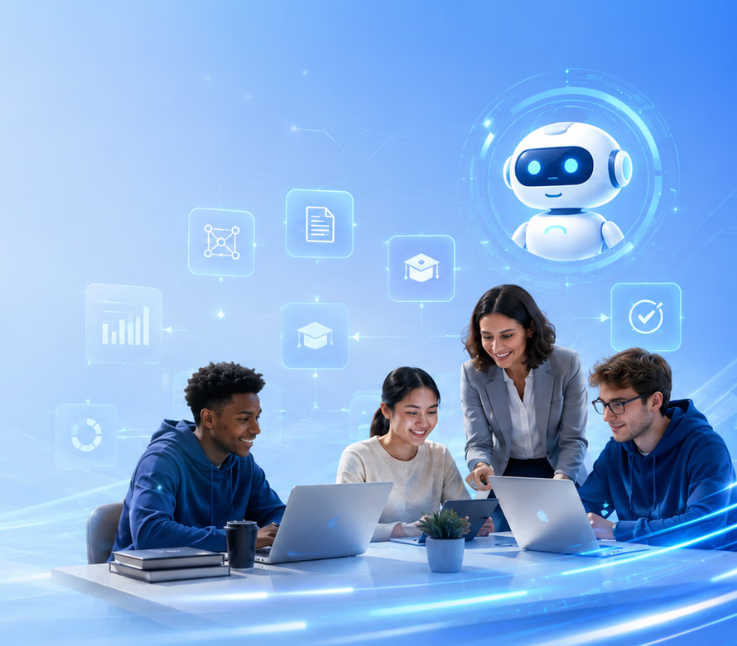
AI agents in education offer fast deployment of smart, omnichannel support across student journeys. They automate academic and administrative tasks, reduce staff workload, and improve enrollment, retention, and satisfaction—deployable in days with unified knowledge and workflow tools.
Any institution working in higher education will recognize the challenge: students expect instant, personalized help—at any time, on any channel—while staff already feel stretched thin. Budgets are tight, teams face burnout, yet the bar for student support keeps rising.
In my experience, traditional systems and legacy chatbots don’t cut it. They’re slow to adapt and leave crucial questions unanswered. This is where agile, agentic AI systems are changing the game for higher education.
This guide covers what modern AI agents are, how they differ from basic bots, where they drive the most value, how to deploy rapidly, and why an omnichannel, workflow-driven approach with strong governance is essential for real results—without losing the human touch.
What Are AI Agents in Education?
AI agents in education are intelligent software systems designed to assist students, teachers, and administrators by performing tasks that typically require human intelligence. These agents use technologies such as natural language processing (NLP), machine learning, and generative AI to understand questions, provide recommendations, analyze learning patterns, and complete educational tasks.
For example, an AI learning agent can identify where a student is struggling with a topic and provide customized explanations, additional resources, and practice exercises based on their learning pace. Similarly, an AI administrative agent can automate tasks like scheduling, student communication, and academic reporting.
How AI Agents Are Transforming Education
AI agents are reshaping education by making learning more personalized, interactive, and efficient. They can analyze student needs, provide real-time assistance, automate repetitive teaching and administrative tasks, and help educators make data-driven decisions.
From personalized tutoring and automated assessments to academic advising and student engagement, AI agents are helping educational institutions deliver more flexible and effective learning experiences.
1. Personalized Learning Experiences
One of the biggest advantages of AI agents in education is their ability to deliver personalized learning. Every student has different learning speeds, strengths, and challenges. Traditional classroom models often struggle to address these individual needs.
AI agents analyze student performance, learning behavior, and interaction history to create customized learning paths. They can recommend specific lessons, adjust difficulty levels, and provide real-time feedback to help students improve their understanding.
For example, if a student consistently struggles with mathematics concepts, an AI agent can identify the knowledge gap and provide targeted explanations, examples, and exercises instead of offering the same material to every learner.
2. AI-Powered Virtual Tutors
AI tutoring agents provide students with instant academic support beyond classroom hours. These virtual tutors can answer questions, explain complex concepts, assist with homework, and guide students through problem-solving processes.
Unlike static online learning platforms, AI tutors can engage in interactive conversations and adapt responses based on student needs. This creates a more engaging learning experience similar to one-on-one tutoring.
AI-powered tutors can support multiple subjects, including mathematics, science, languages, programming, and professional skills training.
3. Automated Student Assessment and Feedback
Evaluating student performance requires significant time and effort from educators. AI agents can streamline this process by automating assessments, analyzing responses, and generating meaningful feedback.
These systems can evaluate assignments, identify common mistakes, track progress, and provide suggestions for improvement. Teachers can use these insights to understand student performance trends and focus more on teaching strategies rather than manual evaluation.
AI agents can also support formative assessments by continuously monitoring learning progress and providing feedback before students fall behind.
4. Enhancing Teacher Productivity
AI agents are not designed to replace teachers but to support them by reducing repetitive tasks. Educators spend considerable time creating lesson plans, grading assignments, managing student queries, and preparing reports.
AI assistants can help teachers by:
- Generating lesson plans and teaching materials
- Creating quizzes and assignments
- Summarizing student performance data
- Answering common student questions
- Managing classroom communication
By automating administrative work, teachers can spend more time focusing on mentorship, creativity, and student engagement.
5. Intelligent Academic Advising
Choosing courses, planning careers, and understanding academic requirements can be challenging for students. AI academic advisors help learners make better decisions by analyzing academic records, interests, skills, and career goals.
These AI agents can recommend suitable courses, suggest learning resources, provide career guidance, and alert students about important academic deadlines.
Educational institutions can also use AI advisors to improve student retention by identifying students who may need additional support.
6. Improving Student Engagement and Retention
Student engagement is a major factor in learning success. AI agents can analyze interaction patterns, attendance records, and learning behavior to identify students who may be disengaged.
By detecting early warning signs, AI systems can recommend interventions such as additional learning support, personalized resources, or communication from instructors.
This proactive approach helps institutions support students before academic challenges become serious problems.
Applications of AI Agents in Education
AI agents are becoming valuable tools across different areas of education by automating tasks, improving learning experiences, and providing intelligent support to students, teachers, and institutions. These applications go beyond simple chatbots by using AI capabilities to understand context, analyze data, and provide personalized assistance.
1. AI-Powered Learning Assistants
AI learning assistants act as virtual companions that support students throughout their learning journey. They can answer questions, explain difficult concepts, provide examples, recommend study materials, and help students practice new skills.
Unlike traditional learning platforms that provide the same content to every student, AI agents analyze individual learning patterns and adjust their responses accordingly. For example, an AI agent can recognize that a student is struggling with a specific topic and provide simpler explanations, additional examples, or targeted exercises.
These learning assistants are especially useful for online education, where students often need immediate guidance without direct access to instructors. They provide 24/7 academic support and help learners maintain consistent progress.
2. Intelligent Tutoring Systems
AI-based tutoring agents provide personalized one-on-one learning experiences similar to human tutors. These systems evaluate student knowledge levels, identify learning gaps, and create customized learning paths.
For example, an AI math tutor can analyze a student’s previous answers, determine which concepts they misunderstand, and recommend specific lessons or practice problems. Similarly, language learning agents can evaluate pronunciation, vocabulary usage, and grammar skills to provide personalized improvement suggestions.
Intelligent tutoring systems help bridge the gap between traditional classroom learning and personalized education by allowing students to learn at their own pace.
3. Automated Assessment and Grading Assistance
Assessment is an essential part of education, but manually reviewing assignments, quizzes, and exams can consume significant time for teachers. AI agents can automate many parts of the evaluation process while providing detailed performance insights.
AI assessment agents can:
- Evaluate multiple-choice and structured responses
- Analyze written assignments for grammar, structure, and key concepts
- Identify common mistakes among students
- Generate performance reports
- Provide instant feedback for improvement
By handling repetitive grading tasks, AI agents allow educators to spend more time designing effective lessons and supporting students individually.
4. Personalized Learning Path Recommendations
Every student learns differently based on their knowledge level, interests, goals, and learning speed. AI agents can analyze these factors to create personalized learning recommendations.
These systems can suggest:
- Relevant courses and learning resources
- Additional practice materials
- Recommended study schedules
- Skill development activities
- Career-focused learning paths
For example, an AI career guidance agent can analyze a student’s academic performance and interests to recommend suitable subjects, certifications, or career opportunities.
This personalized approach helps students make better learning decisions and improves long-term academic outcomes.
5. AI-Based Administrative Assistants
Educational institutions handle many repetitive administrative tasks, including admissions, scheduling, student inquiries, and document management. AI administrative agents can automate these processes and improve operational efficiency.
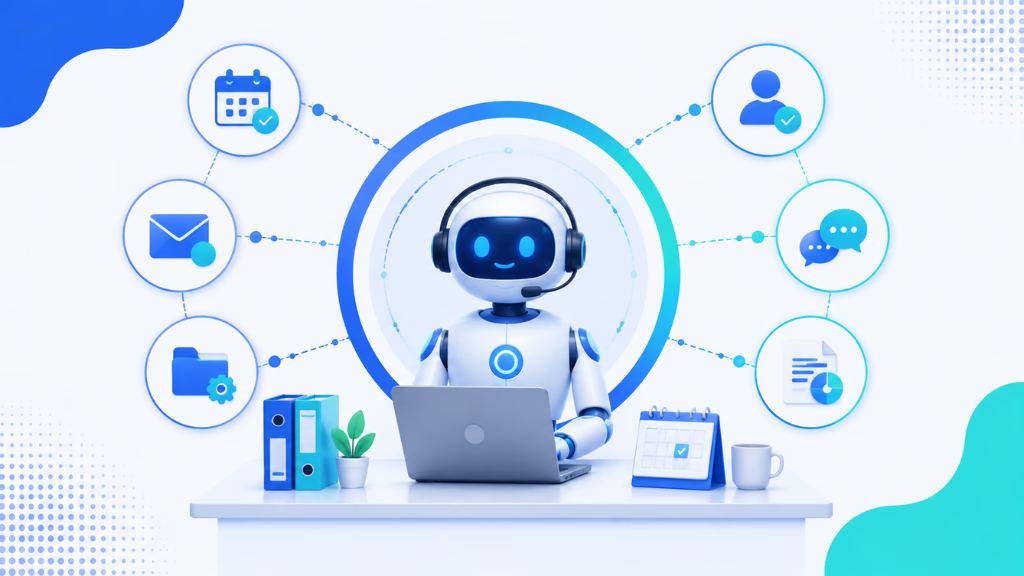
Administrative AI agents can assist with:
- Student enrollment and admission guidance
- Frequently asked questions about courses and policies
- Class scheduling and reminders
- Fee payment information
- Document submission processes
- Campus service requests
By reducing administrative workload, these AI agents help institutions provide faster and more efficient services to students.
6. Virtual Teaching Assistants for Educators
Teachers often manage large amounts of academic content, student communication, and classroom responsibilities. AI teaching assistants help educators prepare materials and manage daily teaching activities.
They can support teachers by:
- Creating lesson plans based on curriculum requirements
- Generating quizzes, assignments, and discussion topics
- Summarizing classroom performance data
- Answering common student questions
- Providing teaching recommendations
These AI assistants allow teachers to focus more on student interaction, creativity, and mentorship instead of spending excessive time on repetitive tasks.
7. Language Learning and Translation Support
AI agents are improving language education by providing interactive practice and real-time feedback. Language learning agents can simulate conversations, correct grammar mistakes, analyze pronunciation, and suggest vocabulary improvements.
For multilingual classrooms, AI translation agents can help students understand educational materials in their preferred language. This improves accessibility and supports learners from diverse linguistic backgrounds.
8. Student Engagement and Early Intervention Systems
Maintaining student engagement is one of the biggest challenges in education. AI agents can analyze learning activity, attendance patterns, assessment results, and interaction data to identify students who may need additional support.
These systems can detect early signs of academic difficulty and recommend actions such as:
- Additional learning resources
- Personalized study plans
- Teacher intervention
- Academic counseling
By identifying challenges early, AI agents help institutions improve student retention and learning success.
9. Research and Knowledge Assistance
AI research assistants help students, educators, and researchers manage large amounts of academic information. These agents can assist with literature reviews, summarizing research papers, organizing information, and generating research insights.
For higher education and research institutions, AI agents can reduce the time required for information discovery and help researchers focus more on analysis and innovation.
Benefits of AI Agents in Education
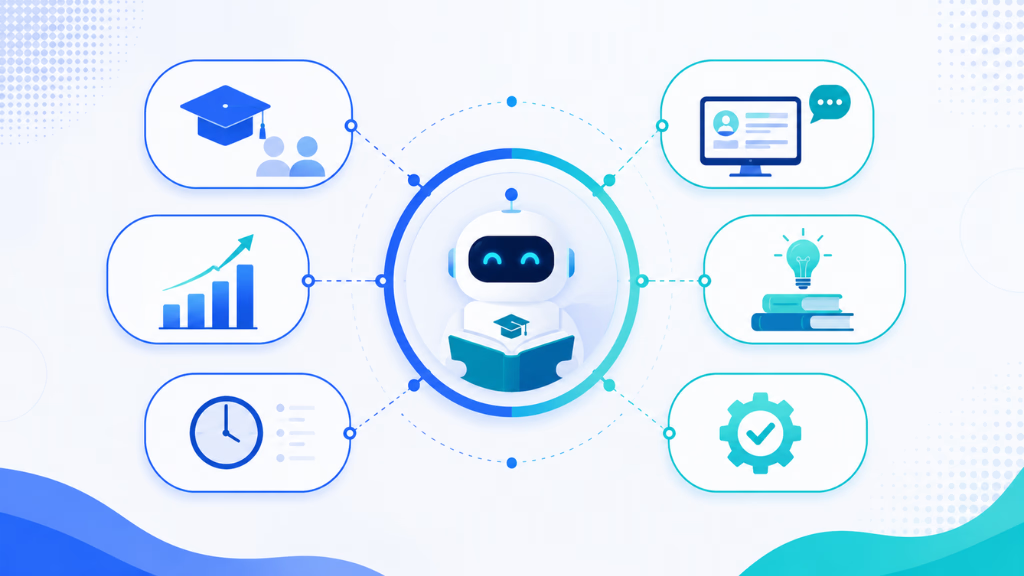
AI agents provide significant advantages by making education more personalized, accessible, and efficient. When implemented properly, they enhance both teaching and learning experiences while helping institutions improve educational outcomes.
1. Personalized Learning at Scale
One of the biggest benefits of AI agents is their ability to deliver personalized education to a large number of students simultaneously.
Traditional classrooms often follow a fixed teaching approach where all students receive the same materials and pace of instruction. AI agents overcome this limitation by analyzing individual performance and adapting learning experiences according to each student’s needs.
Students receive customized explanations, exercises, and recommendations, helping them understand concepts more effectively and improve their academic performance.
2. 24/7 Learning Support
Unlike traditional educational support that is limited to classroom hours, AI agents provide continuous assistance anytime and anywhere.
Students can use AI learning assistants to:
- Ask questions outside class hours
- Review difficult concepts
- Practice skills independently
- Receive immediate feedback
This constant availability is especially beneficial for online learners and students who require additional support beyond regular teaching sessions.
3. Improved Student Engagement
AI agents create more interactive and engaging learning experiences through conversational interfaces, personalized recommendations, and adaptive content.
Instead of passively consuming information, students can interact with AI systems through questions, discussions, and problem-solving activities. This active learning approach encourages curiosity and helps students stay motivated.
4. Reduced Workload for Teachers
Teachers spend significant time on administrative and repetitive tasks such as grading, preparing materials, and responding to common questions. AI agents automate many of these responsibilities.
By reducing workload, AI agents allow educators to focus on more valuable activities, including:
- Providing individual guidance
- Developing creative teaching methods
- Supporting student development
- Building stronger classroom relationships
AI acts as a support system that enhances teacher productivity rather than replacing educators.
5. Faster Feedback and Continuous Improvement
Timely feedback plays a crucial role in student improvement. AI agents can evaluate performance instantly and provide recommendations immediately after assessments.
Students can understand their mistakes, correct them quickly, and improve their learning process without waiting days or weeks for feedback.
Teachers also gain access to real-time insights into student progress, allowing them to adjust teaching strategies when necessary.
6. Better Accessibility and Inclusive Education
AI agents make education more accessible for students with different learning needs. Features such as voice assistance, translation, text simplification, and adaptive learning support help remove barriers to education.
Students with disabilities or those learning in a second language can benefit from AI-powered tools that provide alternative ways to access educational content.
7. Data-Driven Educational Decisions
AI agents analyze large amounts of educational data to generate meaningful insights. Institutions can use these insights to improve teaching methods, curriculum design, and student support programs.
For example, AI analytics can identify:
- Subjects where students commonly struggle
- Learning patterns across different groups
- Factors affecting student performance
- Opportunities to improve course effectiveness
These data-driven decisions help institutions create better educational strategies.
8. Cost-Effective Education Delivery
AI agents can help educational institutions reduce operational costs by automating routine processes and providing scalable learning support.
A single AI system can assist thousands of students simultaneously, reducing the need for additional resources for basic support tasks. This makes quality education more accessible, especially for online learning platforms and large educational organizations.
9. Improved Student Success and Retention
By continuously monitoring student progress and identifying potential challenges, AI agents help institutions provide timely support.
Early detection of learning difficulties, personalized recommendations, and academic guidance can improve student outcomes and reduce dropout rates.
AI agents enable institutions to move from reactive support—helping students after problems occur—to proactive support that prevents challenges before they become major issues.
10. Enhanced Learning Experiences Through Innovation
AI agents introduce new possibilities for education by combining automation, personalization, and intelligent decision-making. They create more flexible learning environments where students can learn according to their abilities, teachers can work more efficiently, and institutions can deliver better educational experiences.
As AI technology continues to evolve, AI agents will become an essential component of modern education, helping create smarter, more adaptive, and student-focused learning systems.
Challenges of Implementing AI Agents in Education
Despite their benefits, AI agents also introduce several challenges that educational institutions must address.
Data Privacy and Security
AI systems require access to student information, including academic performance and learning behavior. Institutions must implement strong security measures to protect sensitive data.
Accuracy and Reliability
AI-generated responses may sometimes contain incorrect information. Human supervision remains essential to ensure educational accuracy.
Digital Accessibility
Not all students have equal access to advanced technology and internet connectivity. Schools must ensure AI solutions do not increase educational inequality.
Maintaining Human Interaction
Education is not only about information delivery but also about communication, creativity, and emotional support. AI agents should complement teachers rather than replace human involvement.
The Future of AI Agents in Education
The future of education will likely involve collaboration between human educators and intelligent AI systems. As AI technology advances, educational agents will become more capable of understanding individual learning needs, predicting challenges, and providing proactive support.
Future AI agents may offer fully adaptive learning environments where courses, explanations, assessments, and feedback continuously adjust based on each student’s progress. Educational institutions will also use AI-driven insights to improve teaching strategies, curriculum development, and student success programs.
AI agents in education represent a major shift toward smarter, more personalized, and accessible learning. When implemented responsibly, they can empower teachers, support students, and create a more effective education system for the future.
How Modern Platforms Like Commplify Enable Omnichannel AI Rapid Deployment
Many institutions struggle to connect student conversations across voice, chat, SMS, WhatsApp, and email, or to automate academic workflows tied to each channel. Platforms like Commplify address this gap by uniting every channel into one conversation dashboard, configuring custom AI agents for each academic department, and automating routine actions—from admissions reminders to live advisor escalations—using workflow automation and knowledge intelligence.
In my POV, this unified, workflow-driven foundation is what enables higher ed teams to deploy solutions in days, not months, while keeping staff in control and ensuring that no student inquiry is lost or delayed.
Conclusion
AI agents for education now offer real results: faster response on every channel, less staff burnout, and measurable gains in student outcomes. Rapid deployment is possible only with platforms that combine workflow automation, unified conversation management, and flexible knowledge integration.
The big win is agility. Institutions that act now can deliver the always-available, personalized support students expect—and raise staff capacity for high-value work. Unified analytics and cross-channel automation turn every conversation into an opportunity for improvement and compliance.
If you’re planning to modernize your support or enrollment operation, the right omnichannel, agentic AI platform—skills found in Commplify—should be at the center of your blueprint for change.
Looking ahead, I see AI agents and humans working more closely, building adaptive, ethical systems where technology raises the standard for care, not just speed.
FAQs
What are AI agents in education, and how do they work?
AI agents are smart digital assistants that understand student queries, access knowledge bases, automate routine tasks, and escalate complex issues to staff across voice, chat, SMS, email, and WhatsApp.
How are AI agents different from chatbots in higher education?
AI agents hold multi-turn, context-aware conversations, understand intent, and support complex workflows, while chatbots rely on fixed scripts and handle only basic, rule-based responses.
What’s required to deploy AI agents rapidly in a university or college?
You need clear student journeys, integration with LMS/SIS/CRM, a unified knowledge base, workflow automation, staff training, and governance policies to deploy AI agents effectively and quickly.
What are the main benefits for students and staff?
Students get fast, 24/7 support on any channel. Staff see reduced repetitive workload, less burnout, and more time for high-impact advising and academic work.
How do AI agents integrate with LMS, CRM, and SIS systems?
Modern AI platforms support plug-and-play or API integrations with LMS, CRM, and SIS, allowing agents to pull and update academic data as part of student workflows.
Are AI agents replacing teachers or advisors?
No. AI agents automate routine requests and FAQ handling but leave complex, sensitive, or academic guidance to skilled humans, supporting staff rather than replacing them.
What ethical and privacy risks should institutions consider?
Risks include bias in AI responses, privacy breaches, and misuse of student data. Institutions must audit sources, govern access, and regularly check agent behavior.
How does omnichannel automation improve student support?
Omnichannel automation ensures all student interactions are managed centrally, so issues are not lost across channels, and students receive prompt, consistent support everywhere.
What real-world results have universities achieved with AI agents?
Universities report faster response times, higher first-contact resolution, increased enrollment conversion, improved student satisfaction, and significant reductions in staff workload.
How do you govern and monitor performance of AI agents in education?
Regularly audit agent data and outcomes, monitor for bias, measure CSAT and sentiment, review human escalation rates, and adapt policies based on analytics and incident reviews.
What is “agentic AI,” and why does it matter for higher ed?
Agentic AI refers to autonomous systems that interpret context, make decisions, and interact naturally with students, offering more personalized and effective digital support than basic bots.
What best practices ensure responsible, effective AI agent deployment?
Start with clear goals, use accurate knowledge sources, train staff, monitor agent output, integrate all channels, escalate sensitive issues to humans, and update governance regularly.
This page was last edited on 11 August 2026, at 5:44 am