
Finance automation uses software, AI, and workflows to optimize financial processes like invoicing, payroll, and compliance. This reduces errors, saves time, ensures accuracy, and gives teams real-time insights for smarter financial management.
Finance teams face more complexity and scrutiny than ever. Manual data entry, long reconciliation cycles, and constant compliance checks can slow growth and expose risk.
I have seen many teams stretched thin as demands for real-time data and cost efficiency keep rising. The real issue is that old processes cannot keep pace with modern business needs.
This guide shows how automation in finance helps leaders solve these pain points. You will see what works, which technologies matter, and how to build automation that connects your back office and customer experience for real results.
Why Finance Automation Is Transforming the Industry
Finance automation means using digital tools, software, and AI to perform key financial tasks automatically. These tasks include processing invoices, handling payroll, reconciling accounts, and ensuring compliance, all with less manual effort.
In my experience, automation is about more than just streamlining tasks. It supports business growth by cutting costs, removing errors, and making financial data available when you need it. It strengthens compliance, creates audit trails, and builds resilience at scale. Yet, proper implementation addresses control and security concerns—keeping finance teams confident and in charge.
How Does Finance Automation Work? Core Technologies and Processes Explained
Finance automation combines intelligent software, workflow solutions, and advanced AI agents to take over time-consuming, repetitive finance work. This section breaks down how these pieces fit together, the results you can expect, and the best ways to apply automation in finance.
Technologies like robotic process automation (RPA), conversational AI agents, and no-code workflow tools come together to automate processes and move data securely between systems. Modern automation platforms integrate with ERP, accounting software, and APIs. In my POV, combining workflow automation with smart conversation management is the key to end-to-end efficiency.
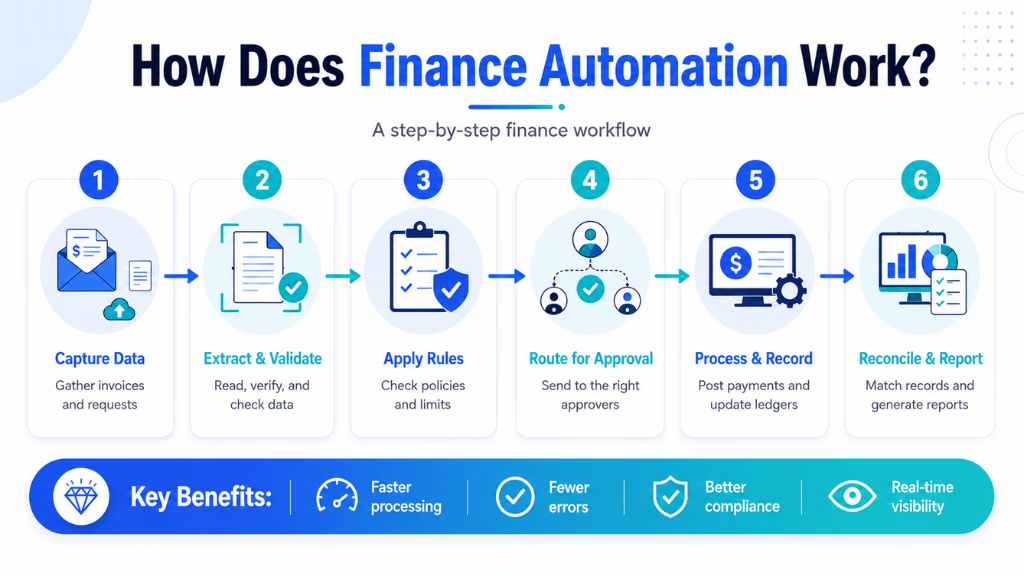
Let’s look at practical finance functions you can automate.
Automating Accounts Payable and Receivable
Automating AP/AR means digitizing invoice capture, approval, and payment. Systems match purchase orders with invoices, flag exceptions, and schedule payments automatically.
I have seen error rates drop sharply when teams replace manual entry with digital approval flows. This also speeds up payment cycles and reduces days sales outstanding (DSO) for AR.
Payroll and Expense Management Automation
Payroll and expense tasks eat up valuable time each month. Automated workflows route payroll approvals, validate entries, and issue payments without delay.
A better approach is setting up triggers for exceptions and automating routine validation, freeing up experts to review only the outliers, not every report.
Bank Reconciliation & Financial Close
Month-end used to mean late nights and rushed reconciliations. Automation tools now sync bank feeds, match transactions, and flag mismatches. Finance teams focus on investigating exceptions.
Last year, when our support team automated reconciliation, we cut close time by over 40 percent.
Automated Compliance and Regulatory Reporting
Regulatory filings and audits come with high risk if timelines slip. Automated tools collect, validate, and report key data per local rules.
This reduces errors and creates a defensible audit trail, something most auditors appreciate.
AI-Powered Finance Agents for Triage and Decision Support
AI agents extend automation by answering finance queries, handling exception cases, and guiding compliance tasks.
These agents follow business policies, learn over time, and can escalate sensitive issues to staff when needed. I have seen them handle high volumes of vendor and customer queries—improving service and letting skilled team members focus on complex questions.
Practical Steps to Implementing Automation in Finance
Implementing finance automation is not a switch you flip. It is a step-by-step project that involves technology and people.
Start by assessing where manual effort is costing you most—look for high-volume, error-prone, or deadline-driven workflows. Map and prioritize these for automation.
Use no-code automation platforms to design and test digital workflows. Engage cross-functional teams early, building trust and clarity about new processes.
Governance matters. Put human-in-the-loop safeguards and clear roles in place for exceptions and approval points.
In my experience, platforms like Commplify help finance leaders build no-code automation tailored to key pain points—such as auto-triaging payment reminders or flagging compliance events—while keeping teams firmly in control. This approach supports process improvement at your pace, not the software’s.
How Finance Automation Connects Back-Office and Customer Experience
Automation in finance often starts in the back office, but it has real impact on customers, partners, and vendors.
Many businesses face a disconnect between their financial systems and the channels where vendors or customers ask questions. Common pain points include missed invoice queries, delayed payment reminders, and confusion over payment status.
The real value comes when finance automation supports omnichannel conversation management. Automated workflows can:
- Send payment notifications or reminders via email, chat, or WhatsApp.
- Handle invoice queries from vendors by chat, SMS, or voice, routing complex cases to the right person.
- Track every financial interaction in a single conversation history for audit or follow-up.
In my experience, using a CX platform like Commplify unifies these finance-related conversations and automates escalations—connecting back-office accuracy with customer-facing clarity. This approach improves response times and reduces financial friction for everyone involved.
Overcoming Challenges in Finance Automation
I have seen many finance projects stumble on the same hurdles. Data security and privacy must always come first—be sure your automation tools are compliant and offer full audit trails.
Integration can be tough if you operate legacy ERP or siloed systems. Map out where data needs to flow and test integrations before going live.
Change management is the other critical factor. Teams resist change if it feels imposed or if they fear job loss. The best approach is to involve staff early, make training hands-on, and keep human control at every stage.
A short checklist to succeed:
- Confirm regulatory compliance and data security.
- Test integrations thoroughly.
- Involve finance and IT teams in mapping workflows.
- Set up feedback loops for process improvements.
- Keep a clear path for human override or intervention.
Avoid automating only for the sake of it. Focus on impact, not novelty.
Workflow Automation and Omnichannel Conversation Management in Finance
Finance teams can use Commplify’s no-code workflow automation to connect financial triggers with action—such as notifying teams of overdue payments or automating escalations for compliance cases.
With omnichannel conversation management, Commplify makes it easy to manage all finance-related queries—across chat, email, SMS, voice, or WhatsApp—in a single place. AI agents can triage routine questions and route urgent issues to finance professionals.
I have seen these capabilities unlock both efficiency and better customer experiences, especially where support and finance teams need to share insight quickly and securely.
Conclusion
Finance automation holds the key to greater efficiency, accuracy, and control. By deploying workflow automation for finance functions, leaders can reduce errors, cut costs, and accelerate cycles.
When automation connects both back-office operations and customer-facing finance tasks, the results reach beyond your team—improving response times and satisfaction for vendors, partners, and customers.
From my experience, incorporating platforms like Commplify helps teams take the next practical step, making automation approachable without losing control or security.
The future points to even smarter financial workflows—where AI agents, omnichannel communication, and intuitive controls transform not just process speed, but the whole experience of doing business.
FAQs
What is finance automation?
Finance automation means using software and AI to handle tasks like invoicing, payroll, reconciliation, and reporting without manual input.
Which finance functions can be automated?
You can automate accounts payable, accounts receivable, payroll, expense management, reconciliation, and compliance reporting.
What are the benefits of automating financial processes?
Key benefits include fewer errors, reduced manual work, faster processing, lower costs, better compliance, and real-time financial data.
How do you start automating finance in your company?
Begin by mapping manual processes, prioritizing high-impact ones, and using no-code automation tools to create and test digital workflows.
What are the challenges or risks in finance automation?
Main risks are data security, integration with old systems, resistance to change, and error propagation if workflows are not well-designed.
What are some real-world examples of finance automation?
Examples include automated invoice approval, payment notification by SMS, payroll disbursement, and compliance reporting workflows.
How does automation impact finance team roles?
Automation shifts finance team focus from repetitive tasks to analysis, exception handling, and process control.
What tools or software are commonly used for finance automation?
Common tools are ERP systems, RPA software, workflow automation platforms, AI agents, and integration APIs.
This page was last edited on 31 July 2026, at 7:11 am