Quick Answer
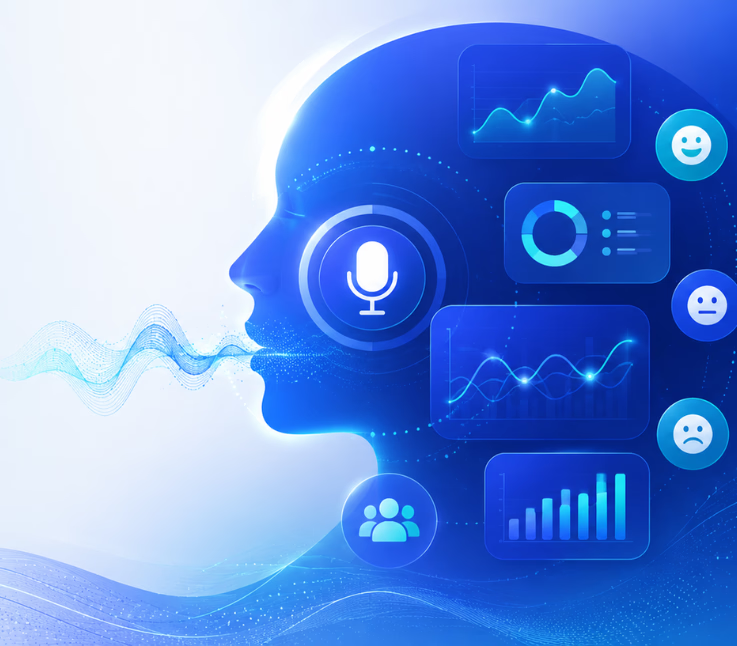
Voice AI sentiment analysis uses artificial intelligence to analyze customer calls and detect sentiment, emotion, intent, urgency, and topics. It transforms spoken conversations into actionable customer insights for CX, support, QA, sales, churn prevention, and Voice of Customer programs.
Most organizations record thousands of customer calls, but only review a tiny sample. Those missed insights can be the difference between losing customers and turning every call into business intelligence.
In my experience, over-reliance on surveys or basic call metrics hides the real reasons for churn, complaints, and negative experiences. Sifting emotion, urgency, and intent from voice data feels impossible without the right approach.
This article shows CX leaders, operations teams, support heads, and business owners 15 practical ways voice AI sentiment analysis for customer insights—not just scores. You’ll see real applications, operational best practices, and how voice intelligence fits your broader CX strategy.
Why Voice AI Sentiment Analysis Matters for Customer Insights
Voice AI sentiment analysis is the automated use of artificial intelligence, speech recognition, and natural language processing to detect customer sentiment, emotion, urgency, intent, and topics in spoken interactions. It goes beyond what customers say—capturing how they say it and why it matters to your business.
Emotion and context often get lost in text form. In my POV, voice data reveals true frustration, hesitation, or urgency far better than simple tickets or written surveys. Analyzing every call at scale opens a new layer of customer intelligence, connects voice data to other channels, and lets teams act early to protect CX and retention.
15 Voice AI Sentiment Analysis Customer Insights Applications
Voice AI sentiment analysis gives business leaders real-time and post-call understanding of customer needs, risks, and opportunities. Each application below is rooted in direct operational value, not AI hype.
According to an IEEE study, while 65% of users are satisfied with generic recommendations, satisfaction rises to 90% when recommendations are personalized using sentiment analysis.
1. Detect Customer Frustration in Real Time
Frustration destroys brand loyalty fast, but most teams only learn about it after the fact. Voice AI checks for tone, interruptions, negative language, and repeated complaints during calls.
- Signals to monitor: Negative words, repeated concerns, rising anger, long pauses, urgent escalation.
- Customer insight created: Identify which processes, products, or issues most often trigger live frustration.
- Business action: Alert supervisors, suggest agent empathy, trigger human takeover, or route the interaction to skilled staff.
Quick Verdict: Proactive frustration alerts lead to faster de-escalation and better CSAT.
2. Escalate High-Risk Conversations Before They Get Worse
Teams often struggle to spot churn risks or formal complaints before they escalate. Voice AI can flag conversations showing high emotional intensity or specific keywords tied to legal, financial, or cancellation risk.
- Customer insight created: Surface at-risk accounts and potential PR or compliance issues.
- Business action: Route cases to senior staff, launch retention or recovery plays, log for compliance review.
Quick Verdict: Early escalation protects brand reputation and prevents loss.
3. Prioritize Urgent Support Calls Based on Sentiment and Intent
Manual prioritization misses emotional urgency. Voice intelligence combines what is said with how urgently it is said, sorting calls by both issue type and customer mood.
- Customer insight created: Spot critical cases needing fastest response.
- Business action: Dynamic queue prioritization, adjust SLAs for vulnerable or high-value customers.
Quick Verdict: Customers with urgent needs feel heard and see faster results.
4. Improve Agent Coaching With Real Conversation Intelligence
Static QA sampling rarely reveals patterns that drive real customer emotion. Analyzing full call libraries uncovers which agent actions improve or damage sentiment.
- Customer insight created: Link actual agent AI phrases, tone, and handling to shifts in customer mood.
- Business action: Use live and post-call clips for training, highlight empathy gaps, celebrate positive moments.
Quick Verdict: Coaching based on real data leads to measurable agent improvement.
5. Automate Quality Assurance Across More Customer Calls
Manual call review is slow and subjective. Voice AI sentiment analysis automates QA, covering every interaction—revealing consistent issues and patterns.
- Customer insight created: Sentiment trends by agent, team, product, or workflow.
- Business action: Faster coaching, better compliance, reduce manual workload.
Quick Verdict: Automated QA ensures nothing slips through, improving quality and efficiency.
6. Identify Churn Risks Hidden in Voice Conversations
Churn often hides behind repeated negativity. Voice AI tags risk signals like cancellation language, complaint fatigue, or passive-aggressive tone.
- Customer insight created: Pinpoint accounts most at risk before renewal periods.
- Business action: Notify success managers, trigger outreach, and monitor sentiment up to renewal.
Quick Verdict: Early churn detection gives teams a real shot at saving accounts.
7. Understand the Drivers of Negative Customer Sentiment
Raw sentiment scores do not explain “why” issues occur. Analyzing voice data links emotion to specific policies, process gaps, or product flaws.
- Customer insight created: Uncover cause-effect relationships—like increased complaints after a new release.
- Business action: Data-driven roadmaps for fixing core friction points, not just surface symptoms.
Quick Verdict: Real-time root-cause reporting fuels smarter product and journey decisions.
8. Improve CSAT, NPS, and Voice of Customer Programs
Survey scores alone do not reflect full customer emotion. Mixing call sentiment trends with CSAT and NPS responses exposes gaps between what customers say and what they feel in conversation.
- Customer insight created: See the “why” behind scores.
- Business action: Identify drivers of satisfaction/dissatisfaction, improve survey questions, target real journey friction.
Quick Verdict: Richer analytics deliver more honest, actionable VoC reporting.
9. Discover Recurring Product or Service Issues
Support calls reveal what forms and FAQs miss. AI tags repeated references to bugs, missing features, or broken processes.
- Customer insight created: Surface recurring pain points and bubbling-up issues before they become widespread.
- Business action: Route insights directly to product or ops teams for urgent action.
Quick Verdict: Spot and fix high-impact issues earlier, reducing future support volume.
10. Reduce Repeat Contacts and Customer Effort
High call rates for the same topic signal broken experiences. By tracking sentiment per issue, voice AI shows where customer effort is excessive.
- Customer insight created: Identify processes that force customers to call more than once.
- Business action: Fix self-service gaps, update knowledge articles, redesign journeys.
Quick Verdict: Lower customer effort means happier customers and leaner operations.
11. Improve Sales Conversations and Lead Qualification
Sales teams rarely get real insight into why calls succeed or stall. Voice sentiment reveals buyer confidence, objections, urgency, and readiness.
- Customer insight created: Track success patterns, hesitation points, and hidden objections.
- Business action: Coach sales reps, adjust messaging, prioritize leads based on true intent.
Quick Verdict: More relevant follow-up means higher conversions.
12. Personalize Follow-Up Campaigns After Calls
Generic follow-ups miss the mark. With sentiment data, teams can tailor messages to mood, urgency, and intent uncovered in conversation.
- Customer insight created: Know if a customer left frustrated, confused, or eager to buy.
- Business action: Automate tailored SMS, emails, or offers based on post-call insight.
Quick Verdict: Targeted outreach increases retention and revenue.
13. Monitor Customer Journey Friction Across Touchpoints
Negative sentiment clusters often point to broken stages—like billing, onboarding, or claims. Voice AI highlights journey bottlenecks.
- Customer insight created: Map friction to channels, products, or workflows.
- Business action: Improve support content, upgrade digital journeys, rally cross-functional teams around real problems.
Quick Verdict: Journey friction drops when insights drive systemic improvements.
14. Support Compliance, Risk, and Sensitive Case Detection
Voice interactions in healthcare, finance, or insurance can signal legal, regulatory, or emotional risk. AI spot-checks for complaint words, escalation language, or signs of customer distress.
- Customer insight created: Surface sensitive cases for review and compliance logging.
- Business action: Trigger audit trails, loop in specialists, and meet industry mandates.
Quick Verdict: Risks get flagged early, protecting both customers and the business.
15. Build Customer Insight Dashboards From Voice Data
Insight only matters if teams see and act on it. Sentiment dashboards show trends, escalation rates, agent performance, and journey friction.
- Customer insight created: Integrate voice emotion, intent, and topics for a single CX view.
- Business action: Directly track impact, inform executive decisions, and guide continuous improvement.
Quick Verdict: Executive dashboards turn raw voice data into competitive advantage.
How Voice AI Sentiment Analysis Works
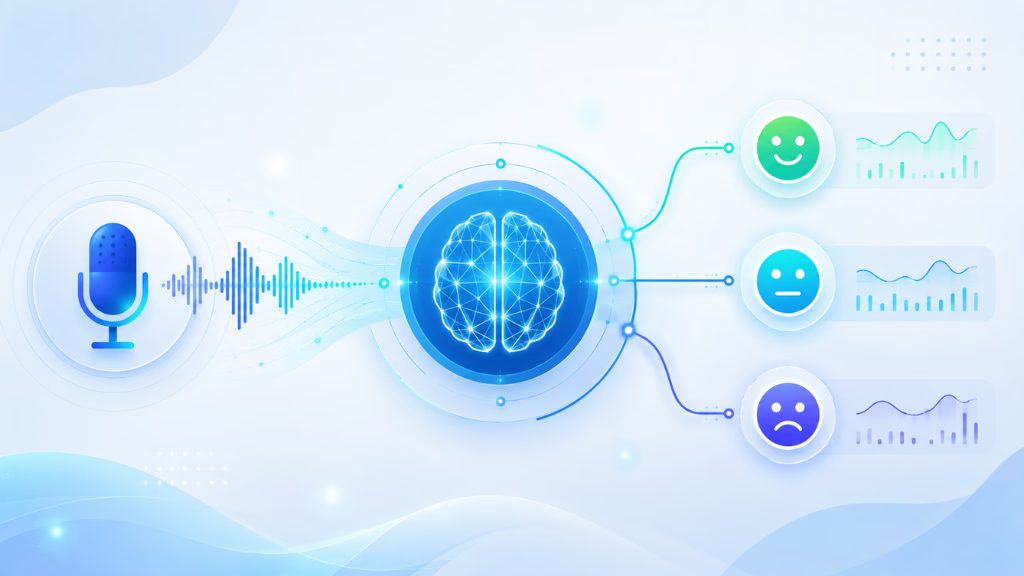
Understanding how voice AI sentiment analysis operates is critical for any team considering implementation. The process is more involved than keyword spotting.
Voice Capture and Speech-to-Text Transcription
All starts by ingesting customer calls. Whether inbound or outbound, the platform captures and processes audio, converting it accurately to text for further analysis.
NLP and Large Language Model Sentiment Detection
Once transcribed, AI models scan words and phrases for emotion, intent, and topic—using current large language models trained for CX language and nuance.
Tone, Pace, Pause, Pitch, and Acoustic Signal Analysis
Text alone misses emotional signals. Advanced systems review tone, speed, hesitation, raised voices, or interruption patterns to determine true mood.
Intent, Topic, Urgency, and Emotion Classification
Complex models assign tags to calls—classifying the real customer intent (“cancel,” “buy,” “complain”), urgency, and whether the emotion is positive, negative, or neutral.
Dashboards, Alerts, Workflows, and Human Escalation
The final step: turn insights into action with dashboards, email/SMS alerts, workflow triggers, or human handoff when high risk is detected.
Voice AI Sentiment Analysis vs Text Sentiment Analysis
| Feature | Text Sentiment Analysis | Voice Sentiment Analysis |
|---|---|---|
| Data Source | Written text/chats/emails | Spoken voice/calls |
| Detects Words | Yes | Yes |
| Detects Tone | No | Yes |
| Pace & Hesitation | No | Yes |
| Accent/Sarcasm | Limited | Better, but still challenging |
| Conversation Dynamics | No | Yes |
| Real-Time | Sometimes | Yes (with right platform) |
| Actionability | High for tickets/messages | Highest for urgent/emotional |
| Omnichannel | Yes | With integration |
Voice analysis adds another layer by integrating acoustic features. In my experience, hybrid analysis—merging text and voice sentiment—delivers the clearest picture of true customer experience.
Key Factors to Consider Before Implementation
- AI accuracy depends on high-quality data and nuanced model training.
- Accent, slang, and industry jargon can challenge even the best systems.
- Emotion and intent are rarely black or white—review cases that seem “off.”
- Privacy, consent, and compliance need clear ownership, especially with sensitive calls.
- Integration is what turns insight into business value.
In my experience, the mistake I see is treating sentiment dashboards as an end, not a trigger for deeper action.
How to Turn Voice Sentiment Insights Into Action
- Connect call transcripts with CRM or customer history for full context.
- Use triggers—like “frustration detected”—to launch workflows or supervisor alerts.
- Push negative or high-risk calls to humans instead of closing them with AI agents.
- Integrate chat, SMS, email, and WhatsApp so patterns appear across all channels.
- Regularly review sentiment distribution, escalation rates, and intent for real process improvement.
For example, in an AI-native omnichannel CX platform such as Commplify, voice calls, chat, SMS, email, and WhatsApp conversations all appear in one conversation inbox. This lets teams act on sentiment and intent signals—such as routing negative cases to humans or launching follow-up workflows—without hunting across siloed dashboards.
Conclusion
Voice AI sentiment analysis for customer insights is more than a contact center reporting buzzword. It is a real customer intelligence layer—helping teams understand emotion, root cause, urgency, and action from every spoken interaction.
The core value is clear: every voice conversation now produces insight you can actually use. This means faster escalation, better coaching, proactive churn control, improved CSAT, fewer missed opportunities, and richer Voice of Customer analytics.
In my experience, this capability pays off only when sentiment data triggers action—routing, coaching, workflow, or cross-channel follow-up. Platforms like Commplify bridge the gap between voice insight and real business impact.
As AI-driven CX matures, teams that make every customer interaction actionable will not just react—they’ll set the pace for loyalty and growth.
FAQs
What is voice AI sentiment analysis?
Voice AI sentiment analysis uses AI to detect sentiment, emotion, intent, and urgency in customer calls.
How does voice AI sentiment analysis help customer experience teams?
It reveals frustration drivers, churn risks, product issues, and agent gaps from every call, enabling faster action.
Can AI detect customer frustration during live calls?
Yes. AI can spot negative words, rising urgency, interruptions, and vocal tone shifts in real time.
What customer insights can be extracted from voice conversations?
Teams gain insight into emotion, intent, churn risk, product issues, journey friction, and agent performance.
Is voice sentiment analysis different from text sentiment analysis?
Yes. Voice analysis captures tone, pace, and emotion missed in text, providing deeper context.
What are the best applications of voice AI sentiment analysis?
Top uses include real-time escalation, agent coaching, QA automation, churn prediction, CSAT improvement, and product feedback.
How accurate is AI voice sentiment analysis?
Accuracy depends on model, call quality, and language. Good platforms reliably detect most emotion and intent with human review.
How can sentiment analysis improve agent coaching and QA?
It pinpoints real calls where agent behavior affects sentiment, guiding specific coaching and QA focus.
How do you integrate voice sentiment analysis with CRM and helpdesk systems?
Select a platform with APIs or built-in integrations to sync sentiment insights and trigger workflows automatically.
What are the risks of voice AI sentiment analysis?
Risks include bias, consent issues, misinterpretation, privacy, and over-automation. Human oversight is always required.
This page was last edited on 16 June 2026, at 2:45 am