Agentic AI impacts customer experience by enabling faster support, personalized interactions, proactive engagement, and automated workflows. It helps businesses understand customer needs, complete tasks, and deliver seamless experiences across multiple channels.
What happens when a customer needs help, but your team is already overloaded?
A support ticket waits for hours. A sales lead goes cold before the first follow-up. A customer repeats the same problem across different channels.
This is the CX challenge businesses face today. Customers want instant answers, personalized support, and smooth conversations everywhere. But traditional systems often struggle with complex requests and disconnected customer data.
McKinsey research shows that 41% of AI deployments in customer-facing functions have already reached full scale. This reflects that customer experience is becoming a major area for AI adoption.
Agentic AI is taking this further. It helps businesses understand customer needs, make decisions, and complete tasks automatically.
In this guide, you’ll learn about the impact of agentic AI in customer experience. It also covers the real-world use cases and implementation strategies. Also learn how businesses can build smarter customer journeys.
What Is Agentic AI in Customer Experience?
Agentic AI in customer experience (CX) is an autonomous AI system that understands customer intent, makes decisions, and completes tasks to deliver personalized customer interactions with minimal human input.
It combines Large Language Models (LLMs), Natural Language Understanding (NLU), Retrieval-Augmented Generation (RAG), API integrations, and multi-agent orchestration to analyze context, access customer data, and take actions across channels.
Unlike traditional chatbots, agentic AI can resolve requests, update CRM systems, trigger workflows, and escalate complex issues through Human-in-the-Loop (HITL) support.
How Agentic AI Impacts Customer Experience
Agentic AI does more than make customer support faster. It improves the entire customer journey.
It understands customer intent, uses connected tools, and learns from previous interactions. This helps businesses provide faster solutions, personalized responses, and smoother support experiences.
By 2029, Gartner predicts that agentic AI will autonomously resolve 80% of common customer service issues without human intervention. This shift can help businesses reduce operational costs by around 30%.
The impact goes beyond automation. Agentic AI helps businesses reduce response times, improve customer satisfaction, lower repetitive tickets, increase agent productivity, and deliver consistent experiences across every channel.
1. Provides 24/7 Instant Customer Support
Customers expect quick answers at any time. However, support teams cannot always respond instantly to every request.
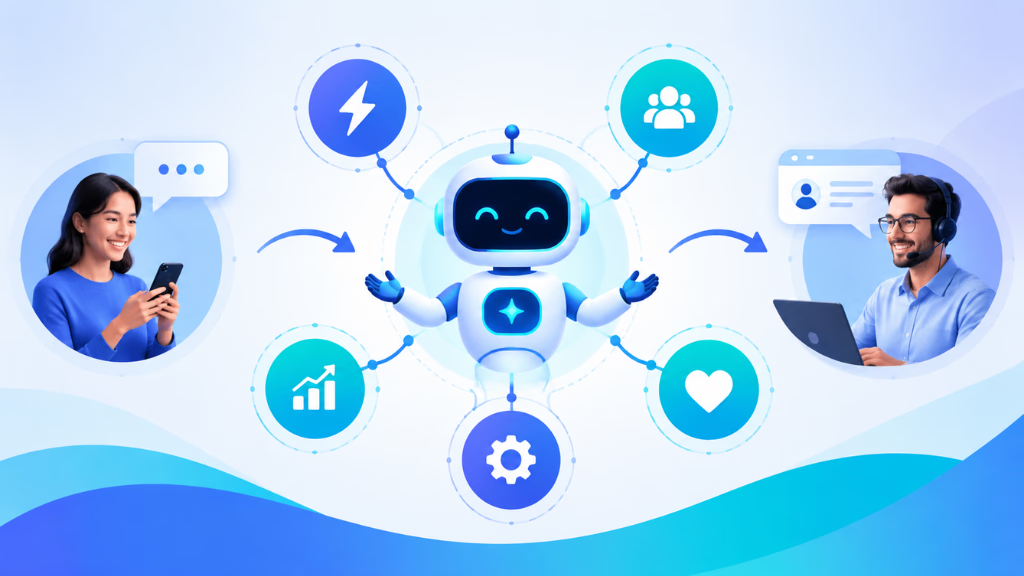
Agentic AI enables 24/7/365 self-service availability through AI customer support agents, voicebots, and conversational AI solutions. These AI agents can understand customer requests, provide accurate answers, and complete common tasks without waiting for human support.
For example, an AI customer support agent can:
- Track order updates
- Answer product questions
- Reset passwords
- Collect customer information
- Create support tickets
- Handle basic service requests
With API integrations and function calling, Agentic AI can connect with business systems and perform actions automatically. This reduces manual work and helps teams handle higher conversation volumes.
As a result, businesses can improve:
- First Contact Resolution (FCR)
- Self-Service Resolution Rate
- Average Handle Time (AHT)
- Customer Satisfaction (CSAT)
2. Improves Personalization with Customer Context
Customers do not want to repeat their problems every time they contact a business. They expect brands to remember their history and preferences.
Agentic AI improves personalization by using contextual memory, state management, and unified customer profiles.
When connected with customer data, AI agents can understand:
- Previous conversations
- Purchase history
- Customer preferences
- Current issues
- Support interactions
For example, when a customer contacts a business about a previous complaint, the AI agent can review the conversation history and continue from where it stopped.
Platforms like Commplify help businesses maintain customer context across conversations. This allows AI agents and human teams to deliver more relevant responses without asking customers to repeat information.
This creates hyper-personalized customer experiences and improves:
- Customer Effort Score (CES)
- Customer Retention Rate
- Net Promoter Score (NPS)
3. Enables Omnichannel Customer Experiences
Customers interact with businesses through different channels. They may start with website chat, continue through messaging, and later contact support through voice.
The challenge is keeping every interaction connected.
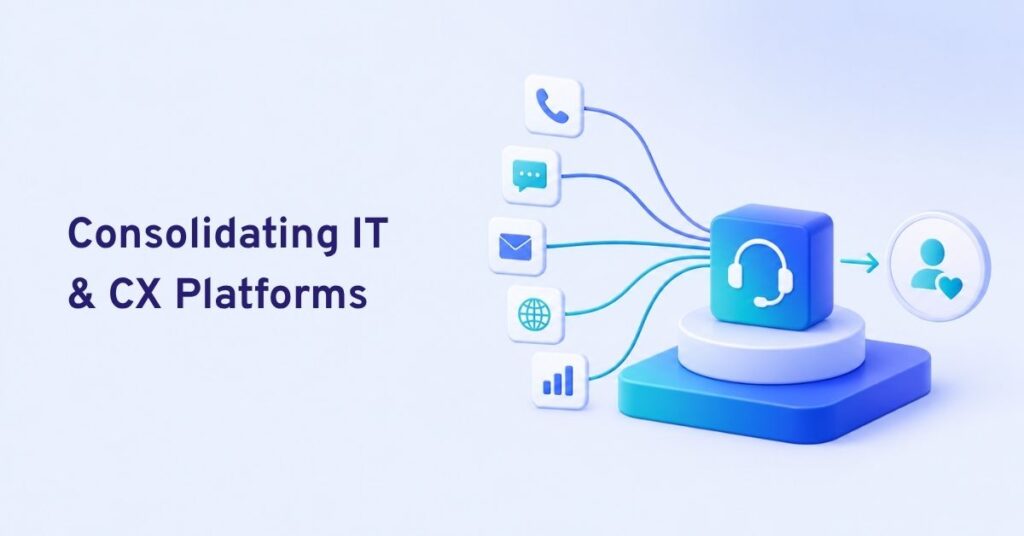
Agentic AI enables omnichannel support and cross-channel synchronization by maintaining the same customer context across:
- Voice calls
- Website chat
- SMS
- Messaging platforms
With a unified workspace, customer support teams can access complete conversation history and customer information from one place.
For example, a customer who starts a support request through chat can continue through a voice call without explaining the issue again.
This creates smoother customer journeys and helps businesses deliver consistent experiences across every channel.
4. Reduces Customer Effort and Improves Resolution Speed
A great customer experience is not only about answering questions. It is about solving problems quickly with less effort.
Many customers become frustrated when they need to:
- Wait for responses
- Repeat information
- Move between departments
- Follow complicated processes
Agentic AI reduces customer effort through autonomous task execution and multi-step workflow automation.
For example, a customer requests a refund. Instead of only sharing refund instructions, an AI agent can:
- Verify customer information.
- Check refund eligibility.
- Process the request.
- Send confirmation.
For complex issues, AI can use intent-based routing and escalation triggers to transfer the conversation to a human agent with complete context.
This improves:
- First Contact Resolution (FCR)
- Customer Effort Score (CES)
- Customer Satisfaction (CSAT)
- Resolution speed
5. Enables Proactive Customer Engagement
Traditional customer service is reactive. Customers report problems, and businesses respond.
Agentic AI changes this model by enabling proactive outbound engagement and predictive support.
Using customer data, behavior analysis, and sentiment analysis, AI agents can identify possible issues before they affect customers.
Examples:
- A SaaS company detects reduced product usage and sends helpful guidance.
- A telecom company identifies service problems and informs customers before complaints increase.
- An e-commerce company sends delivery updates before customers ask.
Agentic AI can also support sales and retention teams by identifying customer needs and recommending the next best action.
With proper AI guardrails, compliance frameworks, and data privacy protection, businesses can deliver proactive experiences while maintaining trust.
Agentic AI Use Cases in Customer Experience
The impact of agentic AI in customer experience is visible across support, sales, and customer engagement workflows. Businesses are using autonomous AI agents to handle repetitive tasks, understand customer needs, and support human teams.
Unlike traditional automation, agentic AI can use Large Language Models (LLMs), Natural Language Understanding (NLU), Retrieval-Augmented Generation (RAG), API integrations, and reasoning engines to understand conversations and take actions.
Here are the key agentic AI use cases transforming CX:
1. AI Customer Support Agents
Customer support teams handle thousands of repetitive requests every day. These include order updates, account questions, troubleshooting, and service requests.
AI customer support agents help businesses automate these interactions while maintaining customer context. They can:
- Understand customer intent
- Answer common questions
- Retrieve information from knowledge bases
- Update customer records
- Create support tickets
- Escalate complex issues to human agents
For example, Commplify helped OmniRetail automate customer order support with AI-powered voice agents. The solution improved self-service resolution rates by 2x while reducing support costs through automated customer interactions.
With Retrieval-Augmented Generation (RAG) and API integrations, Commplify’s AI agents can access business data, provide accurate responses, and complete actions instead of only sharing information.
This helps businesses improve key CX metrics, including:
- First Contact Resolution (FCR)
- Customer Satisfaction (CSAT)
- Self-Service Resolution Rate
- Average Handle Time (AHT)
2. AI Voice Agents for Customer Service
Voice remains a critical customer service channel. However, high call volumes often create long wait times and increase pressure on contact center teams.
AI voice agents help businesses handle customer calls through natural conversations. They combine conversational AI, automatic speech recognition (ASR), text-to-speech (TTS), large language models (LLMs), and sentiment analysis to understand customer needs and respond in real time.
AI voice agents can handle:
- Appointment scheduling
- Booking updates
- Account inquiries
- Troubleshooting
- Customer verification
- Call routing
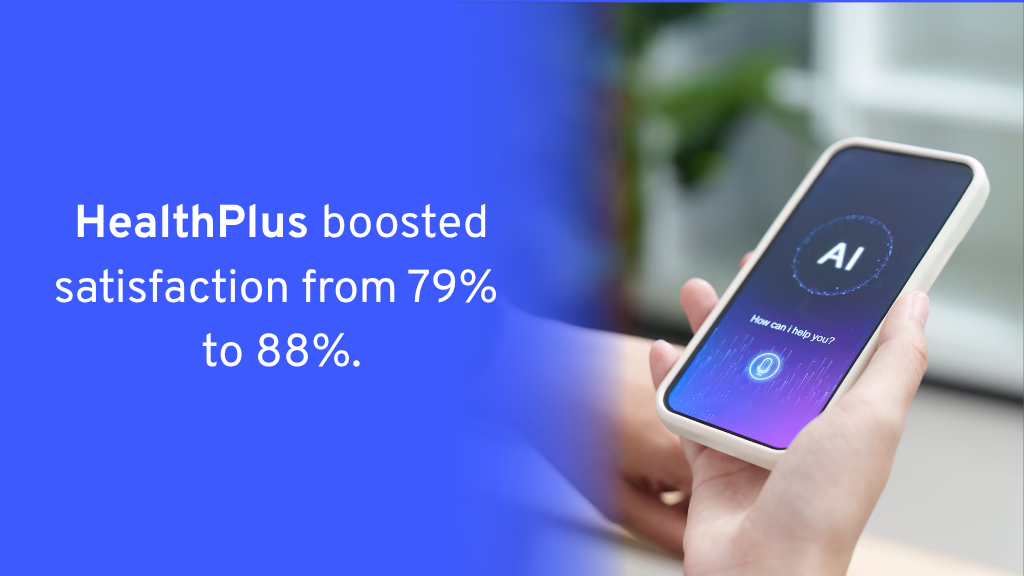
For example, Commplify helped HealthPlus automate appointment scheduling through AI-powered voice assistance. The solution improved patient satisfaction by 12 points while reducing administrative workload.
Commplify’s AI voice automation solutions also help businesses across industries improve customer communication. For example:
- NetConnect used Commplify’s AI voice automation to reduce average handle time by 25% and improve support efficiency.
- GlobalFin Bank implemented AI voice automation with Commplify to achieve 89% first-call resolution and deliver faster customer support.
These real-world examples show how AI voice agents can improve response speed, reduce operational pressure, and maintain human support for complex conversations.
3. Sales and Customer Engagement Automation
Many businesses lose potential customers because follow-ups are slow or inconsistent.
Agentic AI helps sales teams engage customers faster through automated conversations and personalized workflows.
AI sales agents can:
- Qualify leads
- Understand customer needs
- Recommend relevant solutions
- Schedule meetings
- Send follow-up messages
- Update CRM systems
For example, when a potential customer submits a website inquiry, an AI agent can start a conversation immediately. It can collect information, identify buying intent, and connect qualified leads with sales representatives.
This helps Sales and SDR teams spend more time on high-value conversations while AI handles repetitive engagement tasks.
4. AI Copilot for Human Agents
Agentic AI is not only about replacing manual work. It also helps human teams perform better.
An AI copilot works alongside customer service agents by providing real-time guidance during conversations.
It can provide:
- Customer history summaries
- Suggested responses
- Knowledge base information
- Sentiment insights
- Next-best actions
- Automated conversation notes
For example, when a customer contacts support with a complex issue, the AI copilot can analyze previous interactions and suggest the best solution before the agent responds.
This creates a human-AI collaboration model where:
- AI handles repetitive tasks
- Agents focus on complex problems
- Customers receive faster and more personalized support
Agentic AI vs Traditional Chatbots in Customer Experience
The impact of agentic AI in customer experience becomes clearer when we compare it with traditional chatbots. Traditional chatbots handle simple questions. Agentic AI can understand customer needs, make decisions, and complete tasks.
Agentic AI uses Large Language Models (LLMs), Natural Language Understanding (NLU), Retrieval-Augmented Generation (RAG), contextual memory, reasoning engines, and API integrations to create smarter customer interactions.
| Features | Traditional Chatbots | Agentic AI |
|---|---|---|
| Customer understanding | Follows rules and keywords | Understands intent and context using LLMs and NLU |
| Conversation memory | Has limited memory | Uses contextual memory to remember interactions |
| Problem-solving | Gives fixed answers | Finds solutions based on customer needs |
| Task execution | Shares information only | Uses API integrations and function calling to complete tasks |
| Personalization | Gives general responses | Uses unified customer profiles for personalized support |
| Omnichannel support | Works on limited channels | Connects voice, chat, email, and messaging channels |
| Human support | Basic escalation | Transfers conversations with full context using HITL workflows |
How Businesses Can Implement Agentic AI for Better CX
The impact of agentic AI in customer experience depends on how businesses implement it. A successful AI strategy is not only about adding an AI chatbot. It requires the right workflows, customer data, channels, and human support.
Businesses should start with simple use cases and gradually expand AI capabilities across customer journeys.
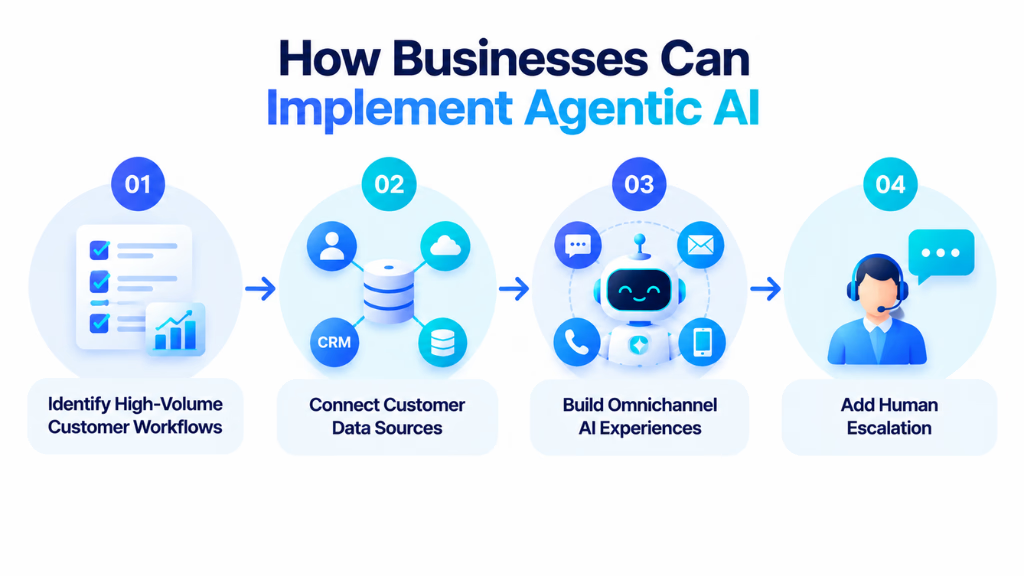
Step 1: Identify High-Volume Customer Workflows
The first step is to find customer interactions that happen frequently and require repetitive work.
Businesses should analyze:
- Customer support tickets
- Call center conversations
- Sales inquiries
- Common service requests
Good starting points include:
- Order tracking
- Appointment scheduling
- Password resets
- Product questions
- Lead qualification
These workflows allow AI agents to handle repetitive tasks while human teams focus on more complex customer needs.
Step 2: Connect Customer Data Sources
Agentic AI needs customer context to deliver personalized experiences.
Businesses should connect important data sources, including:
- CRM systems
- Customer service platforms
- Knowledge bases
- Product databases
- Order management systems
With a unified customer profile, AI agents can understand each customer’s history, preferences, and previous interactions.
Technologies like Retrieval-Augmented Generation (RAG) help AI agents find accurate information from business data. Contextual memory and state management help maintain conversation history.
For example, an AI agent can recognize a returning customer and continue a previous support conversation without asking the same questions again.
Step 3: Build Omnichannel AI Experiences
Customers use different channels based on their preferences. They may contact a business through:
- Website chat
- Voice calls
- SMS
- Social messaging
Businesses should create connected experiences across all channels.
With omnichannel CX support and cross-channel synchronization, AI agents can maintain the same customer context across conversations.
For example, a customer can start a conversation through chat and continue through a voice call. The AI agent or human support team can access the complete conversation history.
This creates a smoother experience and improves customer satisfaction.
Step 4: Add Human Escalation
Agentic AI works best when it supports human expertise.
Businesses should define clear escalation rules for situations that need human involvement.
AI agents should transfer conversations when:
- The issue requires empathy
- The request needs approval
- The problem is highly complex
- Sensitive customer data is involved
With Human-in-the-Loop (HITL) workflows, human agents receive important context before taking over.
A good handoff should include:
- Customer details
- Conversation summary
- Previous actions
- Recommended next steps
This allows human teams to solve problems faster while maintaining a personalized customer experience.
Challenges and Limitations of Agentic AI in CX
Agentic AI can transform customer experience, but businesses need the right strategy, data, and governance to use it effectively. AI agents can understand intent, make decisions, and take actions, but they also create challenges around accuracy, security, control, and trust.
- Data accuracy and context gaps: Agentic AI depends on customer data from CRM, helpdesk, and business systems. Poor-quality data can lead to inaccurate responses and inconsistent experiences.
- Human oversight and control: Complex customer issues need empathy and judgment. Human-in-the-Loop (HITL) workflows and escalation rules help maintain safe AI operations.
- Data privacy and security: AI agents handle sensitive customer information. Businesses need strong data protection, access controls, and compliance practices.
- System integration challenges: AI agents require secure API integrations and function calling to connect with CRM systems, ticketing platforms, and other business tools.
- Brand consistency and trust: Businesses need AI guardrails and monitoring to ensure AI responses match brand standards and customer expectations.
Future Trends of Agentic AI in Customer Experience
The future impact of agentic AI in customer experience will go beyond automated responses. AI agents will help businesses create proactive, personalized, and more connected customer journeys.
With advances in LLMs, NLU, contextual memory, reasoning engines, and multi-agent orchestration, AI systems will become more capable of understanding needs and completing complex tasks.
- More autonomous customer journeys: AI agents will move from answering questions to managing complete workflows. They will understand customer goals, plan actions, use business tools, and complete multi-step tasks.
- Proactive and predictive support: AI agents will analyze customer behavior, history, and feedback to identify needs before customers ask. Businesses will use AI for churn prediction, personalized recommendations, and early issue detection.
- Multi-agent collaboration: Businesses will use multiple AI agents that work together. Sales agents, support agents, and retention agents will share information through multi-agent orchestration to improve the complete customer journey.
- Deeper human-AI collaboration: AI will handle repetitive tasks, while human teams will manage complex conversations. Human-in-the-Loop (HITL) workflows will help businesses maintain control and deliver empathetic support.
- Personalized omnichannel experiences: AI agents will use unified customer profiles, contextual memory, and omnichannel support to maintain customer context across voice, chat, email, and messaging channels.
The future of agentic AI in CX will focus on creating intelligent systems that do more than respond. They will understand, decide, and act while working alongside human teams.
How Commplify Helps Businesses Build Agentic AI Customer Experiences
The impact of agentic AI in customer experience depends on the right data, tools, and workflows. Businesses need more than a chatbot. They need AI that can understand customers, take action, and support human teams.
Commplify helps businesses build agentic AI customer experiences with AI agents, omnichannel communication, and workflow automation.
It uses technologies like Large Language Models (LLMs), Natural Language Understanding (NLU), Retrieval-Augmented Generation (RAG), contextual memory, and API integrations to deliver smarter conversations.
Businesses can connect voice, chat, SMS, and messaging channels in one experience. AI agents can use customer context, complete tasks, and trigger workflows.
With Human-in-the-Loop (HITL) support, complex conversations can move to human agents with full context.
Commplify helps businesses create faster, more personalized, and scalable customer experiences.
Final Thoughts
The impact of agentic AI in customer experience is changing how businesses connect with their customers. AI is no longer limited to answering simple questions. It can understand customer needs, use business data, complete tasks, and support teams across the customer journey.
Businesses can use Agentic AI to deliver faster support, personalized interactions, proactive engagement, and seamless omnichannel experiences. However, success depends on the right balance between AI automation, accurate customer data, security, and human oversight.
The future of CX will not be about replacing human teams. It will be about creating better collaboration between AI agents and people. Businesses that adopt Agentic AI with a clear strategy can build smarter customer experiences, improve operational efficiency, and create stronger customer relationships.
Frequently Asked Questions
What is agentic AI in customer experience?
Agentic AI in customer experience refers to AI systems that reason through problems, access relevant data, and take autonomous actions to complete resolution tasks, such as processing a refund, booking an appointment, or sending a follow-up message, without requiring human intervention at each step. Unlike generative AI, which produces text, agentic AI produces outcomes.
How does Agentic AI improve customer satisfaction?
Agentic AI improves CX by providing faster responses and personalized support. It uses customer context and conversation history to deliver relevant solutions. It also reduces customer effort by automating common tasks.
What are examples of Agentic AI in CX?
Common examples include:
AI customer support agents
AI voice agents
Sales automation agents
Customer engagement agents
AI copilots for support teams
Proactive support systems
How is agentic AI different from chatbots?
Traditional chatbots provide predefined answers. Agentic AI understands context, accesses business data, and takes actions. It can complete tasks like updating records, creating tickets, and processing requests.
Can Agentic AI replace customer service agents?
No. Agentic AI supports human agents. It handles repetitive tasks while human teams manage complex issues that need empathy and judgment. Human-in-the-Loop (HITL) ensures safe collaboration.
What industries benefit most from Agentic AI?
Industries with high customer interaction volumes benefit most, including:
Healthcare
Banking
E-commerce
Telecom
Travel
SaaS
Contact centers
Is Agentic AI secure for customer support?
Yes, when implemented correctly. Businesses should use data protection, AI guardrails, access controls, and compliance frameworks to protect customer information.
This page was last edited on 15 September 2026, at 8:50 am