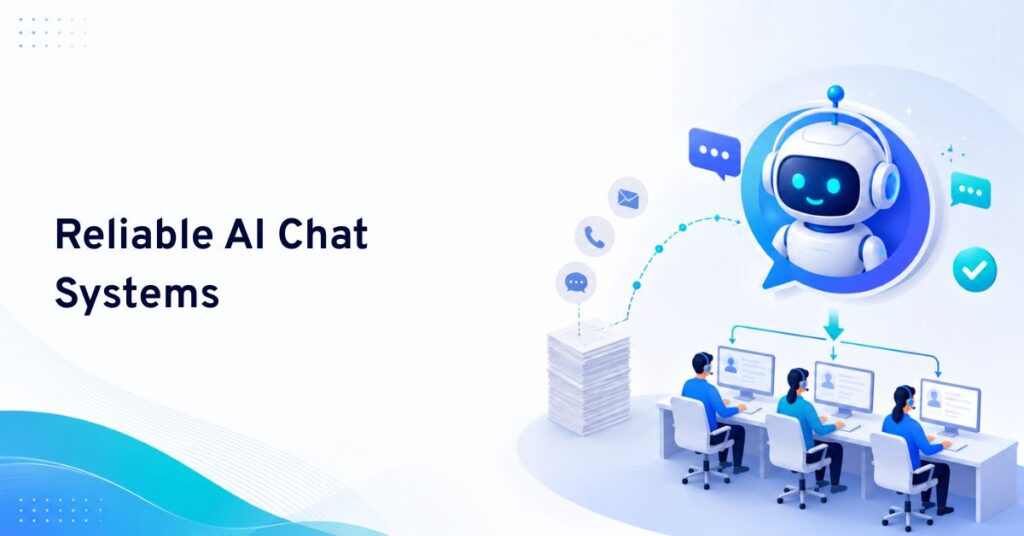
Conversational AI for healthcare uses AI-powered chat, voice, SMS, and messaging bots to automate patient intake, triage, scheduling, and support, enabling 24-7 efficient care, quick responses, and better staff workflows across all digital channels.
The need for better patient experience keeps rising, but healthcare teams face staff shortages, high costs, and admin overload. In my experience, this pressure often leads to rushed calls, missed messages, and low patient satisfaction.
Patients today expect quick, clear, and accessible help—across phone, chat, email, or messaging apps. The real issue is, legacy tools cannot keep up with these expectations or scale without breaking workflows.
This guide walks you through practical ways conversational AI for healthcare—across channels—can help your team work smarter, reduce stress, improve patient outcomes, and deliver care that feels personal and equitable. You will find real use cases, key benefits, risks, metrics, and expert tips for healthcare leaders.
What Is Conversational AI for Healthcare and Why Does It Matter?
Conversational AI for healthcare uses advanced technologies such as natural language processing, large language models, and voice AI to automate patient and staff interactions over channels like voice, chat, SMS, email, and WhatsApp. Unlike one-dimensional chatbots, modern conversational AI understands intent, keeps track of context, and routes requests—supporting real two-way dialog, not just scripted responses.
In my POV, the real impact of conversational AI is the ability to connect patients, clinicians, and administrators anywhere, at any time, in the right language and format. This means faster answers for patients, lighter admin load for staff, and the ability to scale support without losing empathy or quality. It matters because healthcare is now omnichannel, and automation plays a central role in removing friction while keeping humans available for the moments that matter most.
How Conversational AI for Healthcare Works: Core Use Cases and Real-World Examples
Conversational AI now powers always-on support for patients and staff—across every digital channel. In my experience, the shift from single-chat widgets to omnichannel platforms is what truly unlocks value. Let’s break down the core use cases that define real, measurable impact.
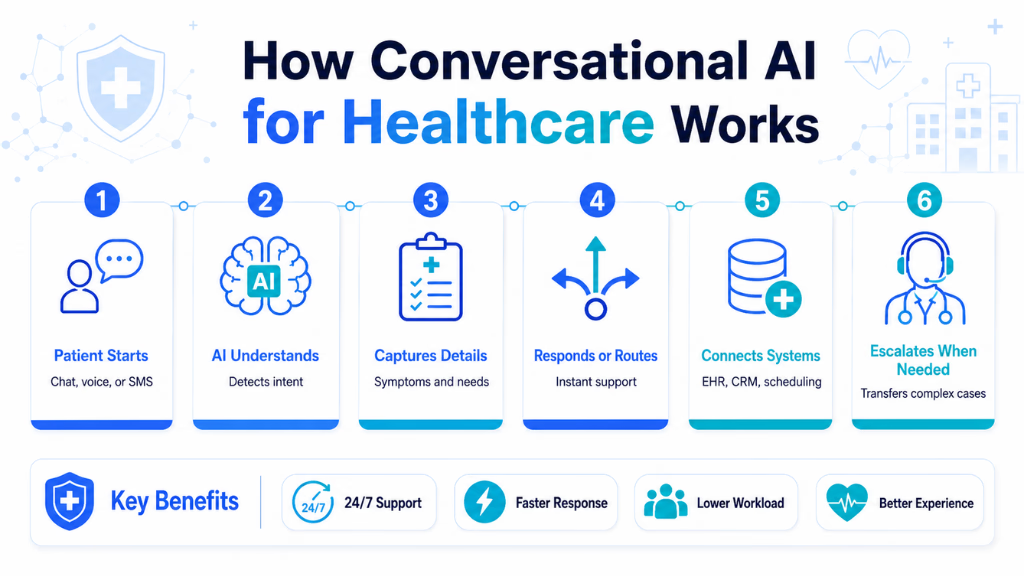
Patient Intake and Symptom Triage
AI agents quickly collect patient symptoms, medical history, and contact details before the visit. Smart triage flows ask the right questions and direct urgent cases to clinicians fast. This automates what used to be long phone queues or paperwork and guides patients to the right care—whether that’s self-serve information or a live provider.
Appointment Scheduling and Reminders
Automated scheduling bots allow patients to book, change, or confirm appointments by chat, voice, or messaging apps—24 hours per day. Smart reminders go out by SMS or WhatsApp and handle confirmation replies or rescheduling requests without human effort.
Administrative Support and EHR Documentation
AI-powered assistants help patients with billing questions, policies, and insurance FAQs. In my experience, embedding medical scribe features lets staff dictate or type notes, which are then structured and pushed into the EHR—cutting down after-hours work and copying errors.
Multilingual Engagement and Accessibility
Modern conversational AI supports dozens of languages and can deliver responses in plain language or large font for accessibility. This brings equity—patients of all backgrounds, ages, and abilities get the same access and service, not just English speakers or web users.
AI-to-Human Handoff and Hybrid Workflows
The real value comes from combining AI efficiency with human insight. Escalation logic routes complex or sensitive issues directly to staff, carrying over all prior context—so nothing is lost or repeated. For regulated advice, mental health, or any scenario where empathy and safety are key, human handoff keeps standards high.
Key Benefits of Conversational AI in Healthcare
The benefits go beyond just speed or convenience. From what I have seen overseeing CX programs, real success comes when the solution is embedded into every channel—and backs up staff, not replaces them. Here’s what truly matters:
- Lower Admin Burden: Automates repetitive tasks, freeing staff to focus on high-value care.
- Better Patient Engagement: Always-available, easy-to-use interfaces build trust, boost attendance, and support ongoing care.
- Increased Health Equity: Language and accessibility features allow patients of any background to get timely help.
- Smart Resource Use: AI triage, reminders, and follow-ups optimize scheduling, reduce no-shows, and allow proactive outreach.
Challenges, Risks, and Health Equity Considerations
While the promise is real, pitfalls exist. I have seen teams run into these issues if planning falls short:
- Data Privacy and HIPAA: Patient data must be protected at every touchpoint.
- AI Accuracy and Bias: AI must be trained and monitored to avoid dangerous errors or inequitable advice.
- Digital Divide: Some patients may lack access to devices or digital literacy. Offering telephone options and designing for accessibility are non-negotiable.
- Continuous Improvement: User feedback, regular audits, and transparency are critical to address bias and keep systems up to date.
Common strategies to address these risks include:
- Using encrypted infrastructure aligned with regulatory standards
- Testing bots for real-world accuracy and reviewing edge cases
- Providing multilingual, accessible entry points—across voice and digital
- Inviting patient and staff feedback to refine workflows
Omnichannel Conversational AI vs. Legacy Chatbots: Transforming the Patient Journey
Legacy chatbots cover only a single channel—usually a website. They handle FAQs but fall short if patients shift to voice, SMS, or WhatsApp, or if escalation is needed. I have seen operational gaps (missed messages, broken handoffs) create real frustration in these setups.
Omnichannel conversational AI platforms bring all channels—voice, chat, SMS, WhatsApp, email—into one coordinated system. For example, with platforms like Commplify, every patient conversation appears in a single, unified inbox. This means:
- No missed touchpoints, whatever channel patients choose
- Consistent, always-available support without channel silos
- Smart automation for routine questions, reminders, and scheduling
- Built-in escalation so complex cases move directly to staff, with full context
The result is a fluid, continuous patient experience—not fragmented journeys where context is lost between tools.
AI-to-Human Handoff: The Case for Hybrid Care Models
No AI platform can or should replace clinical judgment or the human touch in sensitive cases. AI should act as the first line—handling the routine, identifying urgent needs, and escalating when required. Last year, when our support team faced a surge in COVID queries, hybrid models made all the difference.
- The AI agent collects background, triages, and identifies risk or uncertainty
- Upon reaching a complexity threshold, the conversation is routed—by channel—to a nurse or specialist
- The human agent receives full chat/call history and context, so patients don’t need to repeat themselves
- Post-conversation, feedback and data can flow back into the system for learning and reporting
Platforms that support multi-channel, context-preserving escalation (as seen with Commplify) are essential for compliance, safety, and genuine empathy.
Measuring Success: Analytics and Outcome Metrics in Conversational AI
New technology must prove itself with hard numbers. In my experience, the smartest teams track:
- CSAT (Customer Satisfaction): Direct patient feedback after automated or human-handled conversations
- Intent Capture Rate: How well the AI understands and routes patient requests
- Escalation Rate: The frequency and type of cases moving from AI to human staff
- Average Response Time: Time to first and final response—across channels
- Call Deflection: The number of routine calls or chats fully handled by AI
- Staff Hours Saved: Tangible reduction in repetitive workload
Effective analytics should guide action. Platforms like Commplify include built-in dashboards that show AI vs. human ratios, channel breakdowns, and trends. This data is essential for proving ROI, getting buy-in, and driving continuous improvement.
Steps to Select and Implement Conversational AI in Healthcare
In my experience, success depends more on planning and culture than tech. Here’s a practical roadmap:
- Assess Needs and Goals: Start by mapping which workflows need automation and which require human touch.
- Vendor Evaluation: Ensure the platform supports all required channels, complies with HIPAA, and integrates with your EHR.
- Workflow Mapping: Document intake, triage, escalation, and post-visit steps; define what automation should (and should not) handle.
- Stakeholder Buy-In: Involve clinicians, IT, admin, and patient representatives early to smooth adoption and address concerns.
- Training and Testing: Use sandboxes to test bots, refine scripts, and train staff in hybrid workflows.
- Rollout and Monitor: Start small (pilot), measure outcomes, adjust, and scale carefully.
- Governance: Set up ongoing monitoring for privacy, data quality, and performance. Collect patient and staff feedback for continuous improvement.
Checklist for ongoing optimization:
- Review channel usage and satisfaction monthly
- Audit conversation transcripts for accuracy and empathy
- Update workflows as regulations, patient needs, or technology shifts
Common Mistakes and Key Considerations in Healthcare AI Deployment
A mistake I see often is treating conversational AI as a quick-fix widget, not a new layer of patient experience. Underestimating training or data governance leads to broken workflows and compliance pain. Key factors to keep in mind:
- Prioritize regulatory compliance (HIPAA, consent, audit trails)
- Focus on omnichannel—not channel silos—to meet real patient preferences
- Balance automation with human oversight, especially for sensitive scenarios
- Translate the tech into staff workflows; involve them in design and feedback
- Measure the right outcomes, not just process speed
How Commplify Solves Omnichannel and Hybrid Workflow Challenges in Healthcare
Many healthcare teams try several point solutions—chatbots for web, IVR for calls, separate SMS tools—but run into problems with fractured conversations and manual follow-up.
Platforms like Commplify are designed for exactly this scenario. With a single, unified inbox, all channels—voice, chat, SMS, WhatsApp, and email—flow together. The AI agent handles first-line tasks but, importantly, workflow automation and AI-to-human handoff mean staff can step in when complexity or empathy is needed.
Commplify’s analytics let teams track CSAT, escalation rates, and time saved in real time. In my experience, this transparency helps operations leaders optimize resources, support compliance, and see clear ROI from automation—all while making patient journeys more human and less stressful.
Conclusion
Conversational AI for healthcare moves beyond simple chatbots to deliver smarter, omnichannel patient support, efficient admin workflows, and genuine health equity. In my experience, the best outcomes come when automation and human expertise work side by side—AI clears the routine, people handle the critical.
For teams who need to handle a high volume of patient queries—without losing quality—an omnichannel platform like Commplify provides the unified approach and analytics needed to drive results. It fits within existing workflows, helps manage risk, and supports scalable patient-centered care.
Looking ahead, conversational AI will support richer personalization, real-time insights, and proactive outreach—helping healthcare teams meet patients where they are, every step of the way.
FAQs
What is conversational AI in healthcare?
Conversational AI in healthcare is technology that automates patient and staff conversations using AI across voice, chat, SMS, email, and messaging apps for tasks like triage, support, and reminders.
How does conversational AI differ from traditional healthcare chatbots?
Conversational AI uses advanced language understanding, context tracking, and workflow routing across channels. Traditional chatbots are usually rule-based, single-channel, and limited to scripted responses.
What are the top use cases for conversational AI in healthcare?
Top use cases include patient intake, symptom triage, appointment scheduling, reminders, FAQ support, billing queries, and real-time AI-to-human escalation.
How does conversational AI impact health equity and accessibility?
Conversational AI supports multiple languages, plain speech, and accessible interfaces. This helps close language and access gaps, serving diverse patient populations across regions and abilities.
What are the risks of using conversational AI in healthcare settings?
Risks include data privacy breaches, inaccurate AI responses, bias, and digital literacy gaps. Mitigation requires compliance, training, continual auditing, and accessible, human fallback options.
How can healthcare organizations ensure HIPAA compliance with conversational AI?
Ensure all data is encrypted, audit logs are kept, vendors sign Business Associate Agreements, and workflows are mapped to prevent unauthorized data sharing or accidental disclosures.
Does conversational AI replace human clinicians or support staff?
No, it automates routine tasks and first responses, while humans step in for clinical, complex, or sensitive needs. The AI supports staff, freeing them for high-value work.
What metrics should be tracked to measure the impact of conversational AI?
Track CSAT, response time, intent capture, escalation rate, channel usage, call deflection, and staff hours saved to measure efficiency, experience, and ROI.
What’s the difference between conversational AI and generative AI in healthcare?
Conversational AI is designed for dialog, intent, and workflow automation. Generative AI creates new content, like reports or summaries. In healthcare, conversational AI focuses on interaction, not content creation.
How do you implement conversational AI in a hospital or clinic?
Map workflows, pick a HIPAA-compliant platform, integrate with EHR, involve staff, pilot solutions, train teams, and track metrics to ensure safe, effective adoption and improvement.
This page was last edited on 30 July 2026, at 4:48 am